

ICC Upper Great Plains Region III Educational Institute
Customer Support
If you need assistance:
- Email ICC Training: learn@iccsafe.org
- Utilize the chat feature on the main ICC website (iccsafe.org). Be sure you mention that your question is for Region III Educational Institute.
- Call us: 1-888-ICC-SAFE (422-7233) and be sure to say you have a question about the Region III Educational Institute.
Certification Test Academies
- Do you have industry experience?
- Are you familiar with the I-Codes®?
- Are you ready for the next step?
Certification Test Academies are advanced, interactive and question-based review. It's the final step in preparing for the certification exam. Presented by leading experts in the field over multi-day sessions.

Certification Test Academies
Additional Exam Study Resources:

2019 ICC Annual Conference Education Seminars & Programs
The 2019 ICC Annual Conference offers supplemental handouts for each educational seminar.
All files are in PDF format.
Building Tours | Enrichment Education: Oct. 21 | Education Program: Oct. 22
| Monday, October 21 | |
| Enrichment Education | |
| This afternoon of training is designed to offer additional training opportunities for attendees of the ICC Annual Conference. | |
| 2 – 3:30 pm | 4 – 5:30 pm |
| Performance-Based Design Shouldn't Need to be a Gamble: What Code Official's Should (Need To?) Know Presenters: Chris Jelenewicz, Ray Grill, Gary Lewis 90 mins |
But We've Always Done It That Way! Public Sector Leadership In Collaborative Governance Presenters: Matthew Wheeler, Bob Latz 90 mins |
| Engineering Judgements: The Good, The Bad, The Useful Presenters: Brian Lieburn, Lorraine Ross 90 mins |
Understanding Liability Coordination between Architects/Engineers and Code Officials Presenters: Eirene Knott, Dwayne Garriss 90 mins |
| Outcomes of the ICC Tall Wood Ad Hoc Committee: Mass Timber Provisions in the 2021 IBC Presenter: Dennis Richardson 90 mins |
Construction Fire Safety Best Practices Presenter: Raymond C. O'Brocki 90 mins |
| Allowable Heights and Areas Presenter: Jay Woodward 90 mins ICC Learning Center |
Mixed Occupancies Presenter: Jay Woodward 90 mins ICC Learning Center |
| Use of Fire and Smoke Separations Presenter: John Gibson 90 mins ICC Learning Center |
Exit Systems Presenter: John Gibson 90 mins ICC Learning Center |
| IRC Wall Bracing Presenter: Sandra Hyde 90 mins ICC Learning Center |
Safety Glazing (IBC/IRC) Presenter: Steve Van Note 90 mins ICC Learning Center |
| Use of Fire Sprinklers and Alarms Presenter: Terrell Stripling 90 mins ICC Learning Center |
High-Piled Combustible Storage Presenter: Terrell Stripling 90 mins ICC Learning Center |
| Special Evening Tour | |
| 6:15 – 9:30 pm | |
| TOUR: Secrets of the Las Vegas Strip Double Decker Bus – Evening Tour Guide: Doug Thornburg 3 hours |
|
| Tuesday, October 22 | ||||
| Conference Education Program | ||||
| 8 – 9:30 am | 9:45 – 11:15 am | 1:30 – 4:30 pm | ||
| Commercial Hoods Presenter: Terrell Stripling 3 hours ICC Learning Center |
Type I Hoods Commercial Cooking Operations Presenter: Chris Young 3 hours Building Membership Council |
|||
| IAEI Residential Installations Conforming with Part 8, 2018 IRC Presenter: L. Keith Lofland 90 mins |
IAEI Swimming Pool Requirements Based on Chapter 42, 2018 IRC Presenter: L. Keith Lofland 90 mins |
Exterior Wall and Opening Protection Presenter: Jay Woodward 3 hours ICC Learning Center |
||
| Quality Management 101: An Intro for Building Departments Presenter: Kellee Fernandez 90 mins IAS |
From the Ground Up Presenter: Mary Dickson 90 mins |
IBC Overview for Permit Techs Presenter: Mary Dickson 3 hours |
||
| Building Classification Presenter: John Gibson 3 hours ICC Learning Center |
Special Building Types and Features Presenter: John Gibson 3 hours ICC Learning Center |
|||
| Guiding Building Departments In Adopting And Using Digital Technologies Presenters: David Khorram, Robert Wible, Issam Shahrouri 90 mins |
Mentoring in the Future: Your Role in Safety 2.0 Presenter: Andre Jaen, MCP 90 mins Emerging Leaders Membership Council |
It’s Not Just a Title Change: Becoming a Leader Presenter: Ivan Joseph 90 mins Sponsored by Past Presiding Officers |
It’s Not Just a Title Change: Becoming a Leader Presenter: Ivan Joseph 90 mins Sponsored by Past Presiding Officers |
|
| Accessible Means of Egress Presenter: Jay Woodward 3 hours ICC Learning Center |
An Introduction Overview of the 2018 IgCC and Implementation Options Presenter: Hope Medina 3 hours Sustainability Membership Council |
|||
| Building Code Awareness Project. No Code. No Confidence Presenters: Michael Rimoldi, Zack Boileau, John Ingargiola 90 mins |
Gender Neutral Bathrooms Presenter: David Collins 90 mins |
2018 IgCC – ASHRAE Presenter: Anthony Floyd 90 mins ICC Learning Center |
||
| The Building Official's Role in a Metal Building System Project Subtitle From Plan Review to Special Inspection and IAS AC472 Accreditation Presenters: Sandi McCracken, Dr. Lee Shoemaker, Tony Bouquot 3 hours |
Are Shipping Containers Safe To Use In Building? Presenter: Stephen Shang 3 hours |
|||
| What Happens in Vegas…is All Explained Right Here! Presenter: Kevin McOsker 90 mins Presentation Coming Soon |
Best Practices from Building Departments Across the US Presenters: Jose Roig, Chuck Ramani, Sam Palmer, Ron Lynn 90 mins IAS & Major Jurisdiction Committee Presentation Coming Soon |
Best Practices (cont.) – Remote Inspection Processes: Video/Drone Technology and More Presenters: Valarie Evans, Ron Lynn, Chuck Ramani, Sam Palmer 90 mins IAS & Major Jurisdiction Committee Presentation Coming Soon |
Special Inspections: How to Start, Manage, and Build Your IBC-Chapter 17 Program Presenters: Chuck Ramani, Ron Lynn, Sam Palmer 90 mins IAS Presentation Coming Soon |
|
| Existing Sewer Repair Using Trenchless Methodology Presenters: Joanne Carroll, Jacob Trapani, Carl Marc‑Aurèle, ing. (P.Eng) 90 mins |
1 October Mass Shooting Presenter: Greg Cassell 90 mins Fire Service Membership Council |
Venting. Reinvented. UL 1738 Fuel Gas Venting Systems Presenter: Gaetano Altomare 90 mins |
||
| Morning Building Tours 8 – 11:00 am |
Afternoon Building Tours 1:30 – 4:30 pm |
|||
| TOUR: Fremont Street Experience and Mob Museum Guide: Steve Van Note |
TOUR: High Roller & LINQ Behind the Scenes Tour of World’s Tallest Observation Wheel and The LINQ Promenade Guide: Sandra Hyde |
|||
| TOUR: KA Show at MGM Grand – Behind the Scenes Tour Guide: Doug Thornburg |
||||
8th Annual Central Texas Building Professional Institute
8th Annual Central Texas Building Professional Institute
8th Annual Central Texas Building Professional Institute
Monday, November 2 – Wednesday, November 4, 2020
Hilton Austin Airport ▪ Austin, TX
The Building Professional Institute is sponsored by the Building Officials Association of Texas.
Overview
The Building Officials Association of Texas (BOAT) established the Central Texas Building Professional Institute, an annual three day program of quality education and training courses which offer continuing education in such areas as: the International Building Code, International Residential Code and National Electrical Code.
A Must Attend!
- Accelerated learning
- Earn ICC CEUs, LUs, CEHs
- Food, fun and networking
All sessions are approved through the Preferred Provider Program.
Hotel Info
Hilton Austin Airport
9515 Hotel Drive
Austin, TX 78719
512-385-6767
Booking Link: Click here to book your room now!
Group Name: 2020 Building Professionals Institute
Arrival Date: 01-Nov-2020
Departure Date: 05-Nov-2020
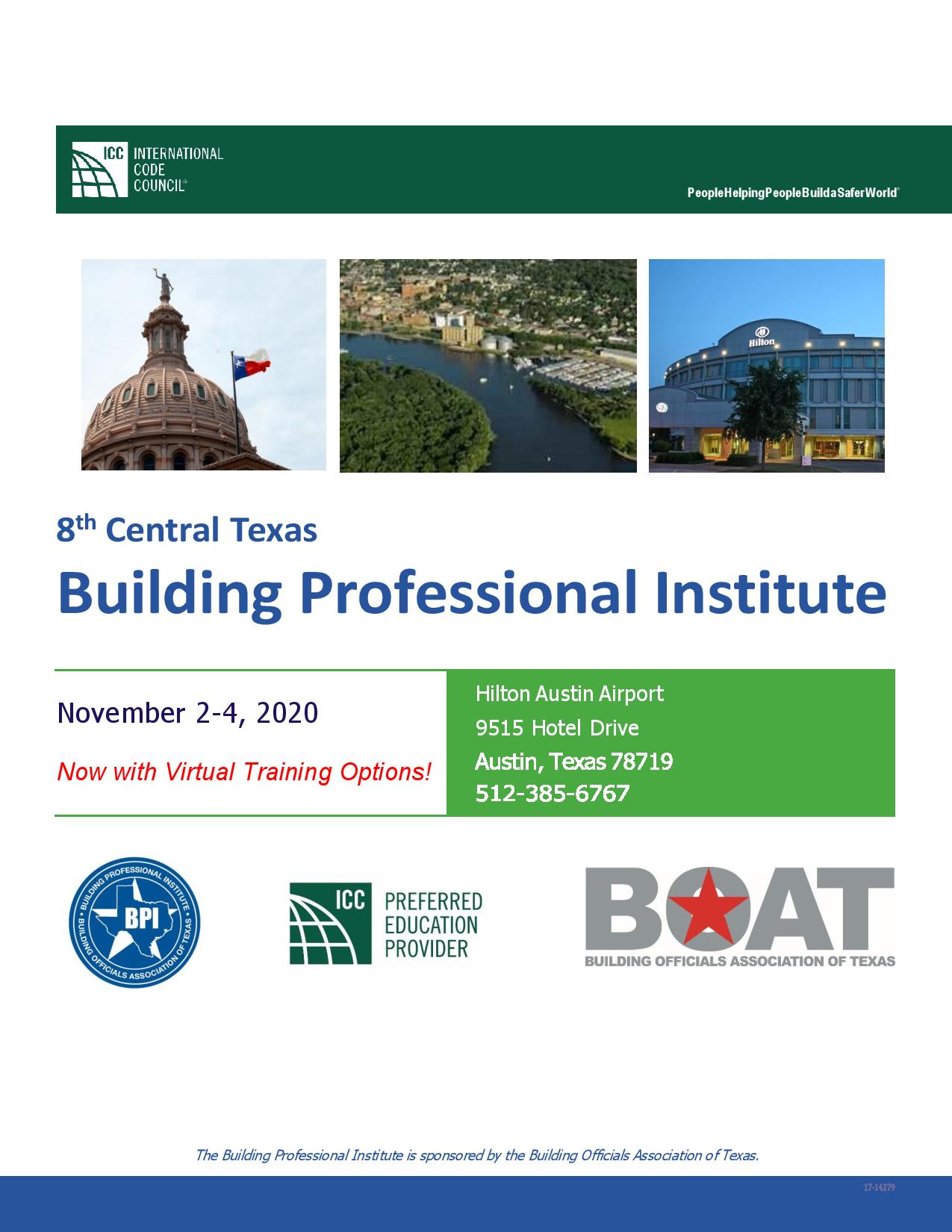
(Click image to download brochure)
1st Annual West Texas Building Professional Institute
1st Annual West Texas Building Professional Institute
1st Annual West Texas Building Professional Institute
Tuesday, October 1 – Thursday, October 3, 2019
Lubbock Memorial City Center, Lubbock, TX
Overview
The Building Officials Association of Texas (BOAT) established the North Texas Building Professional Institute, an annual four day program of quality education and training courses which offer continuing education in such areas as: the International Building Code, International Residential Code and National Electrical Code
A Must Attend!
- Accelerated learning
- Earn ICC CEUs, LUs, CEHs
- Exhibitor Showcase
- Food, fun and networking
All sessions are approved through the Preferred Provider Program.
Now Offering Certification Exams!
ICC Certification Exams will be proctored on Thursday, October 3, 2019.
You must bring your own device for the PRONTO Test Administration.
Click here for more information and exam application.
Hotel Information
Overton Hotel and Conference Center
2232 Mac Davis Ln
Lubbock, TX 79401
806-776-7000
Booking Link: Click here to book your room now!
Group Name: Building Professionals Institute
Book by September 16, 2019 to reserve your room.

(Click image to download brochure)
Houston Building Professional Institute
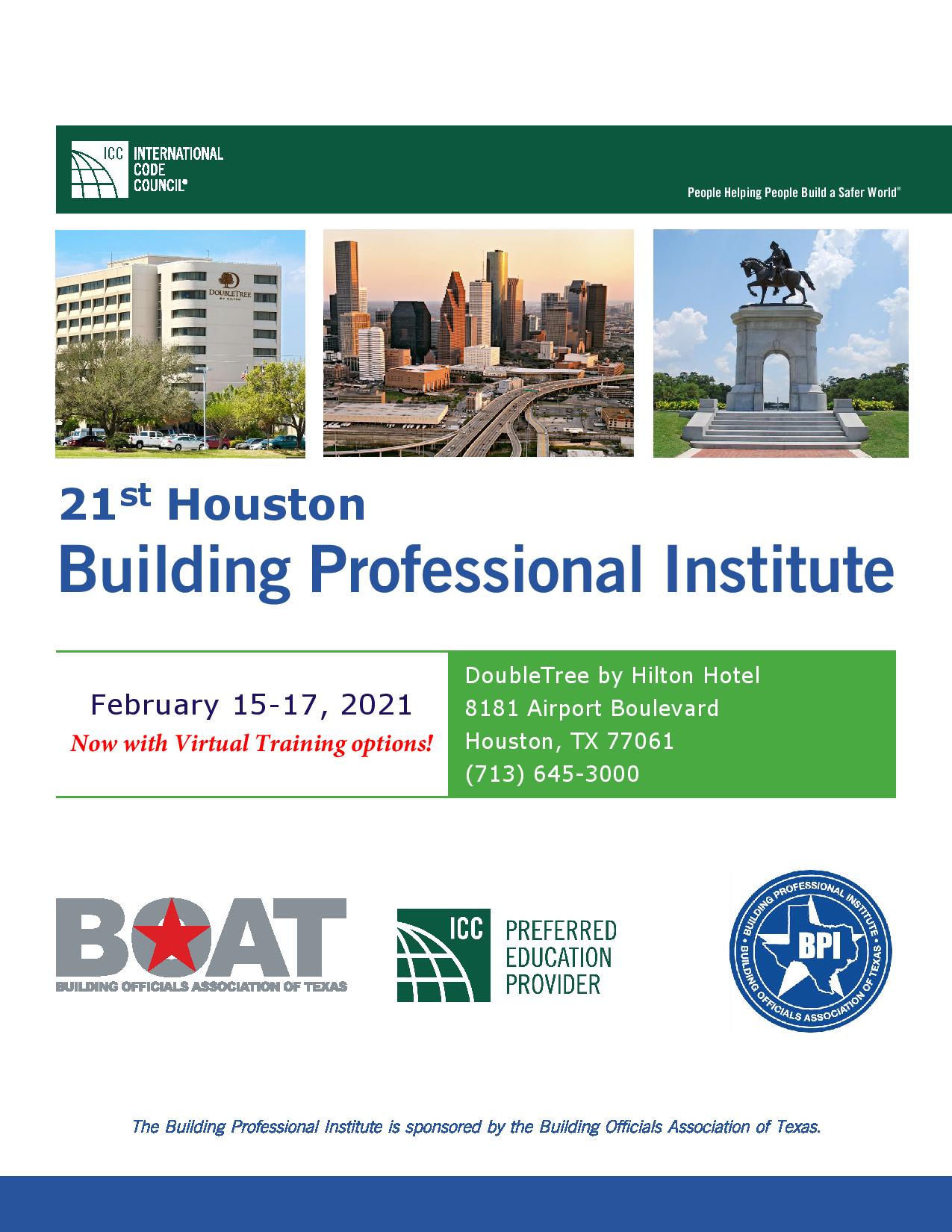
21th Houston Building Professional Institute
February 15-17, 2021
DoubleTree by Hilton Hotel Houston Hobby Airport • Houston, TX
The Building Professional Institute is sponsored by the Building Officials Association of Texas.
Overview
The Building Officials Associations of Texas (BOAT) are hosting their 21th annual educational opportunity at our Houston Building Professional Institute. It is four days of quality education which include courses on the International Building Code, International Residential Code, International Fire Code, National Electrical Code, Plumbing and Mechanical Codes and Code Enforcement.
A Must Attend!
- Accelerated learning
- Earn ICC CEUs, LUs, CEHs
- Exhibitor Showcase
- Food, fun and networking
All sessions are approved through the Preferred Provider Program.
Hotel Info
DoubleTree by Hilton Hotel Houston Hobby Airport
8181 Airport Boulevard
Houston, TX 77061
713-645-3000
Group Name: Building Professional Institute
Booking Link: Hilton Reservation Link
Book early to reserve your room. Guests must mention the group name to receive the discounted institute rate.
(Click image to download brochure)
2018 Annual Conference Education Programs

2018 ICC Annual Conference Education Seminars & Programs
The 2018 ICC Annual Conference offers supplemental handouts for each educational seminar.
All files are in PDF format. 
John Marshall House
9:00-10:00
Hippodrome Theatre
Speakeasy Building
10:30-11:30
Brunch at The Speakeasy Restaurant
11:30-12:30
Virginia Capital Building
1:00-2:30 pm
Capital Square
2:30-3:00 pm
Best Practices Collaboration Between Architects and Building Officials
M. Dwayne Garriss; Jared Zurn, AIA NCARB; Greg Erny
Residential Installations Conforming with Part 8 of the 2018 IRC
Presenter: Keith Lofland
Residential Building Inspection: A Step by Step Guide
Presenter: Mike Brinkman
Building High Performance Organizations, Private Sector Lessons for Public Sector Success
Presenter: Daran Wastchak
Building Heights and Areas: Using Software to Ease Building Code Analysis
Presenter: Ara Sargsyan
Swimming Pool Requirements Based on Chapter 42 of the IRC
Presenter: Keith Lofland
2018 IBC Essentials: Building Planning
Presenter: John Gibson
2018 IRC Essentials: Design criteria, foundations, framing and finishes
Presenter: Steve Van Note
2018 IFC Essentials: General Precautions Against Fire (Chapters 3,4,5,6)
Presenter: Terrell Stripling
2018 IEBC Essentials: History, Compliance & Essentials
Presenter: Bill Koffel
Disaster Planning in the International Code
Presenter: Kim Paarlberg
Significant Changes to the 2017 ICC/A117.1
Presenter: Kim Paarlberg
2018 IBC Essentials: Means of Egress & Fire Protection
Presenter: John Gibson
Legal Aspects of Code Enforcement and Administration
Presenter: Judith R. Dicine, JD
2018 IFC Essentials: Fire & Life Safety (Chapters 7,8,9,10)
Presenter: Terrell Stripling
What to Look for: Basic Site and Commercial Plan Review
Presenter: Scott Adams
Lessons Learned 2017 Hurricanes:
A Technical Evaluation of Building Performance & the Impact of Code Adoption and Enforcement
Presenter: Daniel Bass, Manny Perotin, Stuart Adams
Fire Alarm Installation Seminar
Presenter: Michael L. Savage, LLC
2018 IEBC Essentials: Key Concepts of the Work Area Method
Presenter: Bill Koffel
Best Practices: Lessons Learned from Building Departments
Presenter: Chuck Ramani, Samuel Palmer
The New Code Official: A Safety 2.0 Emerging Leader’s Perspective
Presenters: Jesse De Anda, John Hudgison
Presenter: Chuck Ramani, Samuel Palmer
2018 IECC Overview of (or Concepts of) Energy Plan Review and Inspections IECC Simplified Residential.
Michelle Britt - ENERGY
Presenter: Johnny Goetz, Ed Lisinski, Dan Dockery
The Importance of “Grit” in Leadership
Presenter: Ivan Joseph
How Technology with Enable the Jurisdiction of the Future
Presenter: Jeff Wight & Dan Janousck
The Importance of “Grit” in Leadership
Presenter: Ivan Joseph
Open
How Your Community Can Save Money While Saving the World
Presenter: Hope Medina
New High Performance Fire Resistance Coating Applications
Presenter: Chris Birchfield
Fire & Smoke Protection Features & the New 2018 International Fire Code 701 Requirements
Presenter: Bill McHugh
Presenters: Buddy Showalter
Foam Plastic Insulation – Exterior Wall Fire Safety
Justin Koscher, Lorraine Ross, Jesse Beite
UL Resources- Navigating Fire Resistant Designs
Presenter: Jon Roberts
Why, When, What and Where Lighting Protection Required Lightning
Presenter: Robert Torbin
Let’s Walk a Project and Review Firestop
Presenter: Sharron Halpert
Ever-Changing Structural Provisions of Our Building Codes
Presenter: SK Ghosh
Approving and Selecting Building Products with Confidence – What to Look for in Evaluation Reports
Presenters: William Gould, Michael Temesvary
So, You Think You Know Grease Duct Wrap?
Presenter: Sharron Halpert
Presenter: Sean Farrell, Matt Paxton
Layers of Protection: Based on the 2018 IPSC
Presenter: Carvin DiGiovanni
Presenter: Robert Braun
2018 IMC, IFGC® Significant Changes
Presenter: Jim Tinner
Residential HVAC Design Process
Presenter: John Sedine
TOUR: Dominion Energy Center
Guide: ICC Staff
TOUR: Agecroft Hall
Guide: Sandra Hyde
TOUR: Institute for Contemporary Art at Virginia Commonwealth University Architectural and LEED Building Tour
Guide: ICC Staff
TOUR: Institute for Contemporary Art at Virginia Commonwealth University Architectural and LEED Building Tour
Guide: ICC Staff
When Disaster Strikes
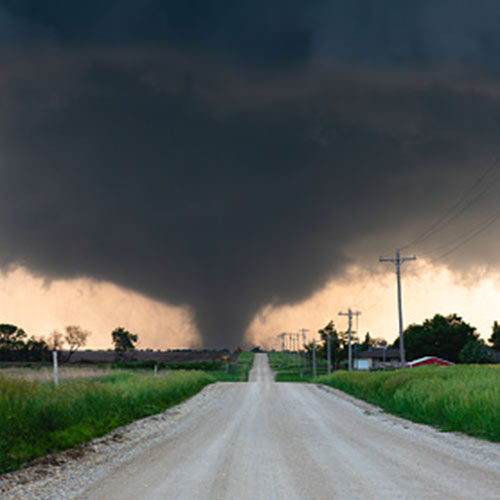
Natural disasters such as severe storms, earthquakes, tornadoes, fires, hurricanes, and floods can cause severe property damage and cripple affected communities.
If your community is struck, are you ready?
The When Disaster Strikes (WDS) Institute guides participants through disaster scenarios, reviews documentation requirements, and encourages discussion and experience sharing. Upon completion of the Institute, participants can be relied on to assist with performing post-disaster building safety evaluations.
Promotional Presentations
Presentations have been developed to help increase awareness of the public safety related roles and responsibilities code officials take on in the wake of a disaster. Roles and responsibilities that go beyond their normal day-to-day. These presentations also promote ICC’s When Disaster Strikes program’s opportunities for training and certification related to those roles and responsibilities.
0.5 HOUR 0.75 HOUR
Introduction to ICC's When Disaster Strikes Program
Communities rarely are fully prepared to respond to disaster events. This lack of preparedness results from: communities struggling to develop disaster preparedness plans on their own, including conducting initial damage assessments, conducting substantial damage estimates, determining whether structures can be re-inhabited, making substantial damage determinations, and requesting and obtaining the resources necessary to respond and recover from a disaster. The When Disaster Strikes (WDS) Institute provides fire marshals, building officials and floodplain managers (code officials) with training, guidance and access to resources to enable and empower them in the wake of disasters. Read more.
Beginning with a review of the post-disaster roles and responsibilities typically assigned to code officials in the wake of a disaster, these sessions go on to provide an overview of the various WDS training opportunities and accompanying certifications.
Goals and Objectives
The goals of this training are to increase awareness of ICC’s When Disaster Strikes (WDS) Program, its various training courses, and accompanying certification opportunities. The objectives of this training include:
- Review the roles and responsibilities typically assigned to code officials in the wake of a disaster
- Provide an overview of the various WDS Institute training courses and a discussion of what each course covers
- Discuss the various training and delivery options that exist as well as accompanying certification opportunities
- Discuss available field materials, reference materials and supporting information
Interested in setting up one of these classes? Contact us.
1.0 HOUR 1.5 HOURS
ICC's When Disaster Strikes Program
Communities rarely are fully prepared to respond to disaster events. This lack or preparedness results from: communities struggling to develop disaster preparedness plans on their own, including conducting initial damage assessments, conducting substantial damage estimates, determining whether structures can be re-inhabited, making substantial damage determinations, and requesting and obtaining the resources necessary to respond and recover from a disaster. The When Disaster Strikes (WDS) Institute provides fire marshals, building officials and floodplain managers (code officials) with training, guidance and access to resources to enable and empower them in the wake of disasters. Read more.
Beginning with a review of the post-disaster roles and responsibilities typically assigned to code officials in the wake of a disaster, these sessions then go on to provide an overview of the various WDS training opportunities with a discussion on what each covers, the various delivery options, available resources, and accompanying certification opportunities.
Goals and Objectives
The goals of this training are to increase awareness of the post-disaster roles and responsibilities typically assigned to code officials in the wake of a disaster along with ICC’s When Disaster Strikes (WDS) Program, its various training courses, accompanying certification opportunities, and reference materials.
- Review the roles and responsibilities typically assigned to code officials in the wake of a disaster
- Provide an overview of the various WDS Institute training courses and a discussion of what each course covers
- Discuss the various training and delivery options that exist as well as accompanying certification opportunities
- Discuss available field materials, reference materials and supporting information
Interested in setting up one of these classes? Contact us.
Operational-Level Training
These training courses focus on both increasing awareness and providing an operational understanding of select public safety related roles and responsibilities code officials take on in the wake of a disaster that go beyond their normal day-to-day.
1.5 HOURS
Introduction to Disaster Planning for the Code Official
Communities rarely are fully prepared to respond to disaster events. This lack of preparedness results from communities struggling to develop disaster preparedness plans on their own. In the case of code officials, an inadequate or outdated disaster response plan will significantly impact a community’s ability to recover. Namely, when Preliminary Damage Assessments (PDAs) are not conducted quickly and emergency managers are not able to obtain reliable PDA data, a community’s ability to request and obtain local, state and/or federal assistance is greatly impacted. Further, when post-disaster Building Safety Evaluations are not conducted, the community’s residents will reoccupy potentially unsafe structures. Read more.
This operational-level training session begins by reviewing the various phases in the wake of a disaster, emergency management basics, and the post-disaster roles and responsibilities typically assigned to code officials. This training then discusses disaster planning basics and items code officials should consider when developing disaster preparedness plans.
Goals and Objectives
The goals of this training are to review the roles and responsibilities of the code officials after a disaster and to provide guidance on developing a disaster plan. The objectives of this training include:
- Review the four phases of a disaster
- Discuss the role of emergency management and the responsibilities of the code official during the response and recovery phases
- Review the identification and type of resources required following a disaster
- Provide an outline of disaster planning basics
Interested in setting up one of these classes? Contact us.
1.5 HOURS
Introduction to Mutual Aid and Disaster Recovery Reform Act (DRRA) 1206
All too often after a disaster, an affected community is left on its own to struggle with response and recovery. When the building department is not engaged, emergency managers’ requests for local, state and/or federal assistance are not relayed and, therefore, often go unfulfilled. This lack of assistance can negatively impact a community’s ability to respond and recover from disasters. Read more.
This operational-level training session begins by reviewing the various phases in the wake of disasters, emergency management basics, and the post-disaster roles and responsibilities typically assigned to building departments. This training session then addresses the various forms of mutual aid and how to access it along with the formality of the EMAC process. This training then introduces and discusses the Disaster Recovery Reform Act (DRRA), Section 1206, what it covers, how to access it, along with its requirements.
Goals and Objectives
The goals of this training class are to review the various types of mutual aid and to introduce the Disaster Recovery Reform Act (DRRA), Section 1206. The objectives of this training include:
- Review the post-disaster roles and responsibilities of the building department and emergency management basics
- Introduce and discuss the various forms of mutual aid and how to access it
- Introduce and discuss the formality and importance of the EMAC system
- Introduce and discuss DRRA 1206, what it covers, how to access it, and its requirements
Interested in setting up one of these classes? Contact us.
1.5 HOURS
Introduction to Initial and Preliminary Damage Assessments
All too often after a disaster, an affected community is left on its own to struggle with coordinating, conducting and completing its Initial and Preliminary Damage Assessments, IDAs and PDAs, respectively. When IDAs and PDAs are not conducted quickly and emergency managers are not able to obtain reliable damage assessment data, a community’s ability to request and obtain local, state and/or federal assistance is greatly impacted. Failing to perform damage assessments timely and consistently will significantly impact a community’s ability to recover. Read more.
This operational-level training session begins by reviewing the various phases of a disaster, emergency management basics, and the post-disaster roles and responsibilities typically assigned to code officials. This training then discusses the importance of performing IDAs and PDAsin a timely and consistent manner, when and how to perform IDAs and PDAs, along with training and credentialing requirements.
Goals and Objectives
The goals of this training are to introduce and outline the roles of the Preliminary Damage Assessor and to introduce training and credentialing requirements. The objectives of this training include:
- Review the various phases of a disaster, including emergency management basics
- Review the post-disaster roles and responsibilities typically assigned to building departments in the wake of disasters
- Review the importance of performing PDAs in a timely and consistent manner
- Provide training on when and how to perform PDAs along with a review of PDA training and credentialing requirements
Interested in setting up one of these classes? Contact us.
1.5 HOURS
Introduction to Substantial Damage Estimates and Determinations
Substantial damage estimates, or SDEs, are based on field observations entered into an SDE tool that computes a value to compare against the structure’s appraised value. SDEs are to be performed immediately in the wake of a disaster to capture the full impact on buildings located within the special flood hazard area (SFHA). Whereas substantial damage determinations, or SDDs, are based on construction repair costs compared against the structure's market value, SDDs are generally made at the time of permit submittal and while beginning the process of making repairs. Read more.
Given that communities participating in the National Flood Insurance Program (NFIP) are required to determine whether damage, of any origin, to structures within SFHAs meets the criteria for substantial damage, repairs completed prior to the jurisdiction compiling SDEs and making SDDs could potentially violate the NFIP and count against the recovering community, resulting in significant financial impacts.
This operational-level training session begins by reviewing the various phases of a disaster, emergency management basics, along with an overview of theNational Flood Insurance Program (NFIP) and the Community Rating System (CRS). This training then reviews the process and importance of performing SEDs and SDDs in a timely and consistent mannerand concludes by providing a global review of the entire substantial damage process.
Goals and Objectives
The goals of this training are to introduce and outline the process and importance of performing SEDs and SDDs in a timely and consistent manner. The objectives of this training include:
- Review the various phases of disasters along with emergency management basics
- Review the National Flood Insurance Program (NFIP) and the Community Rating System (CRS)
- Provide training on the process and importance of performing SEDs in a timely and consistent manner
- Provide training on the process and importance of performing SDDs in a timely and consistent manner
Interested in setting up one of these classes? Contact us.
3.0 HOURS
WDS – Evaluator Refresher
This technical-level training session reviews the role of the Post-Disaster Building Safety Evaluator and performing Post-disaster Building Safety Evaluations. This training then provides refresher training on awareness of operational environments and hazards. This training concludes by providing review and practice examples on performing Post-disaster Building Safety Evaluations. This level of training and the information covered will enable the renewal of a Disaster CLA. Read more.
Goals and Objectives
The goals of this training are to review the roles of the Post-Disaster Building Safety Evaluator, to be aware of operational environments and hazards, and to perform Post-Disaster Building Safety Evaluations.
The objectives of this training include:
- Review the role of the Post-Disaster Building Safety Evaluator
- Review how to perform building safety evaluations
- Review awareness of operational environments and hazards
- Provide practice examples performing Post-disaster Building Safety Evaluations
View available classes here.
3.0 HOURS
Initial and Preliminary Damage Assessments
This technical-level training session begins by reviewing the various phases in the wake of a disaster, emergency management basics, and the post-disaster roles and responsibilities typically assigned to code officials. This training then discusses the importance of performing Initial and Preliminary Damage Assessments, IDAs and PDAs respectively, in a timely and consistent manner. This training session discusses when and how to perform damage assessments along with training and credentialing requirements, concluding with information related to operational environments and disaster-related hazards.
The level of training and the information covered will enable code officials to direct and participate in performing IDAs and PDAs. Credential of Learning Achievement (CLA) coming soon. Read more.
Goals and Objectives
The goals of this training are to introduce and outline the roles of the Preliminary Damage Assessor and to introduce training and credentialing requirements.
The objectives of this training include:
- Review the various phases in the wake of a disaster, emergency management basics, and the post-disaster roles and responsibilities typically assigned to building departments
- Review the importance of performing Preliminary Damage Assessments (PDAs) in a timely and consistent manner
- Provide training on when and how to perform PDAs along with a review of PDA training and credentialing requirements
- Increase awareness of operational environments and disaster-related hazards
It is recommended that all participants download the following:
View available classes here.
3.0 HOURS
Post-Disaster Substantial Damage Estimates and Determinations
Communities participating in the National Flood Insurance Program (NFIP) are required to determine whether damage, of any origin, to structures in Special Flood Hazard Areas meets the criteria for substantial damage. Repairs completed prior to the jurisdiction compiling SDEs and making SDDs could violate the NFIP and count against the recovering community, resulting in significant financial impacts.
This technical-level training session begins by reviewing the various phases of a disaster, emergency management basics, along with an overview of the NFIP and the Community Rating System (CRS). This training then reviews the process and importance of performing SEDs and SDDs in a timely and consistent manner, concluding by providing a global review of the entire substantial damage process.
The level of training and the information covered will enable code officials to participate in creating substantial damage estimates, making substantial damage determinations. Credential of Learning Achievement (CLA) coming soon. Read more.
Goals and Objectives
The goals of this training are to introduce and outline the process and importance of performing SEDs and SDDs in a timely and consistent manner.
The objectives of this training include:
- Review the various phases of disasters along with emergency management basics
- Review the National Flood Insurance Program (NFIP) and the Community Rating System (CRS)
- Provide training on the process and importance of performing SEDs in a timely and consistent manner
- Provide training on the process and importance of performing SDDs in a timely and consistent manner
- Provide a global review of the entire Substantial Damage process
View available classes here.
3.0 HOURS
Mutual Aid and Disaster Recovery Reform Act (DRRA) 1206
This technical-level training session begins by reviewing the various phases of a disaster, emergency management basics, and the post-disaster roles and responsibilities typically assigned to building departments. This training session then introduces and discusses the various forms of mutual aid and how to access it along with the formality of the EMAC process. This training then introduces and discusses DRRA 1206, what it covers, how to access it, along with its requirements.
The level of training and the information covered will enable code officials to successfully navigate mutual aid, to secure needed resources. Credential of Learning Achievement (CLA) coming soon. Read more.
Goals and Objectives
The goals of this training class are to review the various types of mutual aid and to introduce the Disaster Recovery Reform Act (DRRA), Section 1206.
The objectives of this training include:
- Review the post-disaster roles and responsibilities of the building department and emergency management basics
- Introduce and discuss the various forms of mutual aid and how to access it
- Introduce and discuss the formality and importance of the EMAC System
- Introduce and discuss DRRA 1206, what it covers, how to access it, and its requirements
It is recommended that all participants download the following:
View available classes here.
In-Person
Virtual
3.0 HOURS
Disaster Planning for Code Officials
This technical-level training session begins by reviewing the various phases of a disaster, emergency management basics, and the post-disaster roles and responsibilities typically assigned to code officials. This training then discusses disaster planning in detail and items code officials should consider when developing disaster preparedness plans.
The level of training and the information covered will enable code officials to participate in the development of disaster plans. Credential of Learning Achievement (CLA) coming soon. Read more.
Goals and Objectives
The goals of this training are to review the roles and responsibilities of the code officials after a disaster and to provide guidance on developing a disaster plan.
The objectives of this training include:
- Review the four phases of a disaster
- Discuss the role of emergency management and the responsibilities of the code official during the response and recovery phases
- Review the identification and typing of resources required following a disaster
- Provide an outline of disaster planning basic
Individuals who register for the Disaster Planning for the Building Department training will receive this publication:
- WDS Field Manual 1419S
Additionally, it is recommended that all participants download the following:
View available classes here.
In-Person
Virtual
Institutes
The WDS Institutes represent a compilation of WDS technical level training courses assembled to enable participants to seek multiple nationally recognized certifications.
2-Day When Disaster Strikes
Institute
- When Disaster Strikes – Evaluator Training (6.0 hour)
- When Disaster Strikes – Coordinator Training (3.0 hour)
- Initial and Preliminary Damage Assessments (3.0 hour)
Upcoming Institutes
May 19–20
August 18–19
November 17–18
Training Delivery Options
To Schedule Training
All WDS Institute training is available to ICC Chapters and members as well as non-member organizations and individuals for in-person or virtual delivery. To schedule and/or sponsor training, please contact
Lizette Chagolla at lchagolla@iccsafe.org or
1-888-ICC-SAFE (422-7233) x4525
Chapter Licensing Agreements
ICC has a program whereby it can grant a non-exclusive, non-transferable license to ICC Chapters so that they can deliver ICC’s “When Disaster Strikes - Evaluator” training during live training events as often as they choose. For more information on ICC’s Chapter License Agreement, please contact
Karla Higgs at khiggs@iccsafe.org or
1-888-ICC-SAFE (422-7233) x5268
Preferred Providers
Please note that preferred providers are not authorized to deliver any WDS training.
Credential Program
Disaster Response Credential of Learning Achievement
Individuals who have completed the WDS Evaluator training are eligible to take the Disaster Response Credential of Learning Achievement (CLA). The Code Council's CLAs validate participants' willingness to go the extra mile in training and career advancement. The Disaster Response CLA represents proof of completing a FEMA-recognized Post-Disaster Building Safety Evaluator training program and passing an assessment.
In addition to completing the Post-Disaster Building Safety Evaluator training, to be considered NIMS compliant, all required licenses and/or certifications must be in active status at the time of deployment. Additional prerequisites include the following certifications: IC100, IC200, IC700 and IC800.
The Disaster Response CLA requires use of the WDS Field Guide, ATC 20, and ATC 45. Additionally, it is recommended that all participants download a copy of FEMA's P-2055, available at no cost here.