Communities Without Limits
Week 4: May 25– 31
Foundation Sponsor 
Creating a truly safe community means ensuring every person, regardless of age, ability or circumstance, can move through and use the spaces around them. Communities without limits embrace built environments that are welcoming, intuitive and enjoyable by all. This begins with eliminating physical, sensory and cognitive barriers that prevent people from fully navigating homes, buildings and public spaces to their fullest extent.
What are some features in your community that improve accessibility in the built environment? It's not too late to join the Building Safety Month conversation – tag the International Code Council on social media, and use #BuildingSafetyMonth2026 and #BuildingSafety365 to help spread the word!
Accessibility is Inclusivity

When spaces are easy to understand and easy to navigate, they work better for everyone, from children and seniors to people recovering from injury or living with disabilities. Accessible environments are intentionally designed to support the widest range of users. That includes:
- Removing obstacles such as narrow pathways, abrupt level changes or confusing layouts
- Considering sensory needs by incorporating clear signage, visual contrast and auditory cues
- Supporting cognitive accessibility through straightforward wayfinding, simple instructions and predictable design
Accessibility Basics at Home and in the Community
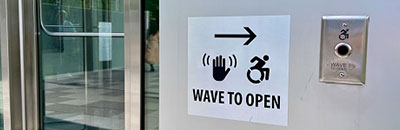
Meeting accessibility standards is an essential part of building safety. These standards aren’t just legal expectations, they are the building blocks that allow everyone to participate fully in daily life. Foundational features found in the 2010 ADA Standards for Accessible Design, the Fair Housing Accessibility Guidelines and the I-Codes working with ICC A117.1 support usability and safety in homes, workplaces and public spaces. These may include:
- Step-free accessible entrances and exterior routes
- Clearance at elements and fixtures for people using wheelchairs and other mobility devices
- Grab bars or reinforcement in bathroom walls
- Accessible operable parts, such as switches, outlets and appliance and plumbing controls, HVAC controls
- Properly designed ramps with edge protection, guards and handrails
- Maneuvering clearances or automatic openers at doors
- Tactile and high-contrast visual signage for wayfinding
- Accessible parking spaces and passenger loading zones
- Planning for accessible means of egress to include everyone who may need assistance
Accessibility Enhances Safety for All
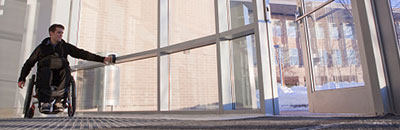
Accessible design is fundamentally safe design. A more accessible built environment is easier to evacuate, easier to navigate and easier to use, which benefits every member of the community. Involving a diverse range of stakeholders, especially people with disabilities, in planning, design and decision‑making ensures spaces reflect real experiences and real needs. Features that support people with disabilities also improve safety during:
- Emergencies, visual alarms, two-way communication systems, clear informational signage and intuitive layouts can save lives
- Transitions, incorporating access into the main circulations paths for entering or exiting buildings or moving between different levels and floors
- Everyday activities, navigating and using shared community spaces, equal access to services and inclusion in dining and work areas
Resources