New DRIPS Software Predicts Water Consumption Patterns and Optimizes Plumbing System Design
The platform seeks to reduce construction costs, improve energy efficiency and enhance public health by ensuring plumbing systems are sized accurately for modern buildings.
The International Code Council (ICC) is advancing the next generation of plumbing design standards through the development of innovative tools and research partnerships aimed at modernizing plumbing systems while prioritizing occupant health and safety.
Working in collaboration with the University of Miami, the ICC has developed the “Design-Toolkit for Robust International Plumbing Systems” or “DRIPS”, a software platform that uses advanced simulations to predict water consumption patterns and optimize plumbing system design. The platform, along with ICC’s 815 Standard for right sizing water supply and sanitary drainage pipe systems, seek to reduce construction costs, improve energy efficiency and enhance public health by ensuring plumbing systems are sized accurately for modern buildings.
The initiative is part of the ICC’s broader mission to modernize plumbing, mechanical and gas (PMG) codes and standards to better reflect the needs of contemporary buildings. Through collaboration with universities and research institutions across multiple countries, ICC’s standards development team is working to build a comprehensive global dataset that captures water consumption patterns in real buildings.
This dataset will allow engineers and designers that are using DRIPS to make more informed decisions when designing plumbing systems, improving efficiency and reliability while reducing unnecessary costs.
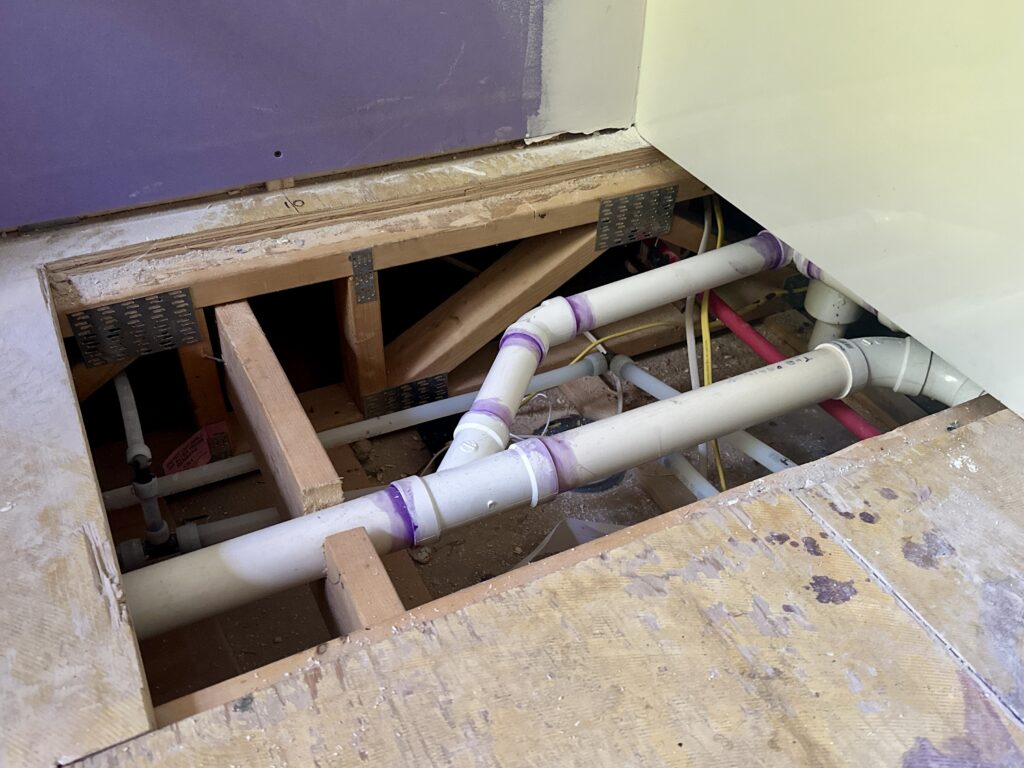
History of Plumbing Pipe Sizing
Modern plumbing design practices trace their origins to groundbreaking work conducted in the early 1940s by engineer Roy B. Hunter. Hunter introduced statistical methods that allowed engineers to predict the probability that plumbing fixtures in a building would operate simultaneously. From this work, he developed what are now known as Water Supply Fixture Units (WSFU) and Drainage Fixture Units (DFU). These standardized units enabled engineers to calculate expected flow rates and size plumbing pipes in a consistent and reliable manner. Prior to Hunter’s research, plumbing systems were typically designed based on the experience and judgment of master plumbers rather than standardized engineering methods.
Hunter’s approach quickly transformed the industry. The methodology provided a practical framework for sizing plumbing systems and was rapidly adopted across the United States and eventually throughout much of the world. For decades, WSFU and DFU calculations have remained the foundation of plumbing system design in building codes and engineering practice. While the approach represented a major advancement at the time, it was developed during an era when plumbing fixtures and fixture fittings used significantly more water than they do today.
Since the 1940s, technology and building science have evolved dramatically. Modern buildings incorporate more complex plumbing networks, high-rise structures, advanced pumping systems and sophisticated water heating technologies. At the same time, the widespread adoption of computers and digital modeling tools has enabled engineers to perform calculations and simulations that were previously impossible.
Perhaps the most significant change affecting plumbing system performance occurred in the early 1990s, when governments began implementing regulations aimed at improving resource efficiency. One of the most influential policies in the United States was the Energy Policy Act of 1992 (EPAct), which mandated the use of low-flow plumbing fixtures to reduce water and energy consumption. These regulations significantly decreased water usage in the built environment by limiting the maximum flow rates of fixtures such as toilets and fixture fittings such as faucets and showerheads.
While toilets, faucets and showerheads became more efficient, the plumbing infrastructure behind the walls of buildings largely remained unchanged. Engineers continued to size piping systems using methodologies developed for higher flow rates. As a result, many modern plumbing systems are significantly oversized relative to the actual demand placed on them.
Oversized piping systems can create unintended consequences. Larger pipes can increase the amount of time it takes for hot water to reach a faucet or showerhead. This condition can contribute to the growth of waterborne pathogens and reduce the effectiveness of disinfectant residuals. In addition, oversized pipes often require larger pumps, water heaters and storage tanks, increasing both construction costs and energy consumption. Low flow velocities can also contribute to operational problems in drainage systems, where insufficient flow may increase the likelihood of blockages.
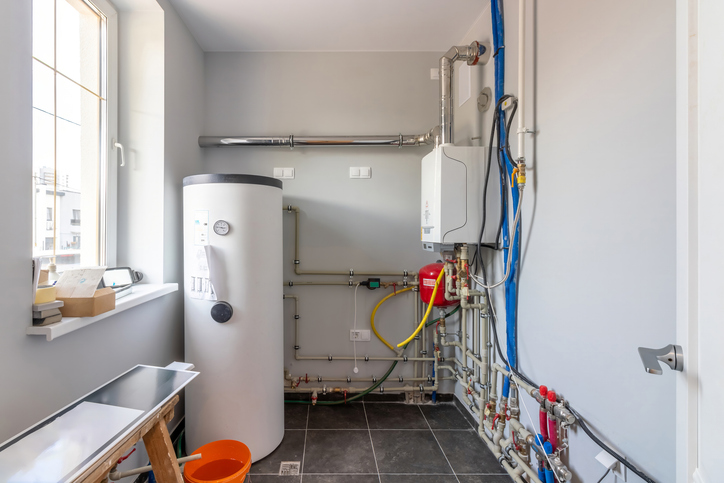
Future-Proofing the Software
Recognizing these challenges, as mentioned previously, the ICC partnered with researchers at the University of Miami to develop the DRIPS software platform, which unlike traditional fixture-unit methods, uses advanced computer simulations to model water usage throughout a building over extended periods of time. By simulating thousands of days of system operation, the software can more accurately estimate peak demand while also evaluating how water moves through the system under a wide range of conditions. The software automatically sizes piping networks, calculates pressure losses and evaluates system performance based on real-world usage patterns.
Another key feature of DRIPS is its ability to incorporate regional data. Water usage patterns vary significantly depending on geography, climate, cultural habits and regulatory environments. By incorporating data collected from buildings around the world, the software can adapt plumbing system designs to better reflect the conditions in which they will operate. This capability allows engineers to design plumbing networks that are optimized for specific regions rather than relying on generalized assumptions developed decades ago.
Beyond improving pipe sizing, the software also calculates volumetric water consumption across the entire plumbing network. This information allows engineers to accurately size associated equipment such as pumps, storage tanks and water heaters. By aligning equipment sizing with actual demand, DRIPS has the potential to reduce construction costs while improving system performance and energy efficiency.
To ensure that DRIPS remains accurate as technologies and regulations evolve, the ICC and the University of Miami are also developing a standardized process for collecting and analyzing water consumption data in buildings known as the “System Performance and Data Extraction” or “SPADE” Guideline. This process will enable researchers and engineers worldwide to contribute data that can be integrated into the DRIPS platform.
By continuously incorporating new data, DRIPS is designed to remain responsive to changing conditions in the built environment. As new plumbing technologies, efficiency standards and building designs emerge, the software can be updated to reflect these changes, ensuring that plumbing system design remains grounded in current, real-world performance.
Plumbing Entering the Digital Age
Through initiatives such as DRIPS and the SPADE Guideline, the ICC is working to bring plumbing system design into the digital age. By combining decades of engineering knowledge with modern computational tools and global data collaboration, the organization aims to create safer, more efficient plumbing systems that support the health of building occupants while reducing resource consumption.
As buildings continue to evolve, these innovations may play a critical role in shaping the future of plumbing design worldwide.
To learn more about water-related issues and how codes and standards can help, view the ICC’s PMG Webpage
To stay updated on the latest PMG industry news, subscribe to ICC’s PMG newsletter here.
About the Author

Tom Roberts is the Director of PMG Global operations with the International Code Council. Prior to this role, Tom was the Director responsible for the Plumbing Code of Australia with the Australian Building Codes Board. Tom is also the chair of Standards Australia’s WS-014 committee responsible for the AS/NZS 3500 series of Australian and New Zealand Standards.

Drew Rich is a Ph.D. graduate of the University of Miami, where he studied plumbing engineering in the Department of Civil and Architectural Engineering. His research focused on simultaneous demand estimation for international residential plumbing systems, including the development of a network-based digital design twin that uses stochastic simulation to model water consumption events — drawn from parametric and non-parametric distributions — across a full day of operation to estimate maximum flow rates through each pipe. This work was recently submitted for a patent with Drew as one of the two primary inventors. Drew currently serves as an Adjunct Professor and Senior Research Associate at the University of Miami and advises International Code Council committees on standards governing wastewater drainage, water reuse, water distribution, and sensor installation.