Grease Waste Lines and Sizing of Interceptors: Aligning with Plumbing Codes for Optimal Sewer Management
In the food service industry and other sectors that generate grease-laden waste, managing fats, oils and greases (FOGs) is critical to maintaining a healthy, functional sanitary sewer system.
FOG management can cause severe infrastructure problems, including blockages, overflows and costly repairs. To reduce these issues, the International Plumbing Code® (IPC), along with regulations established by the International Code Council (ICC), emphasizes installing grease interceptors.
This article explores the need for these interceptors, discusses types and sizing and highlights relevant code provisions designed to protect our sewage infrastructure.
Understanding the Impact of FOGs on Sanitary Sewer Systems
When discharged into the sewer system, FOGs can solidify and accumulate, forming clogs that disrupt wastewater flow. This can create unhygienic conditions and lead to significant backups and costly maintenance for both public and private sewer systems.
Moreover, untreated sewage overflow can contaminate local waterways which poses serious public health risks and incurs hefty fines for non-compliance with environmental regulations.
The Essential Role of Grease Interceptors
Grease interceptors act as crucial barriers, separating FOGs from wastewater before it enters the drainage system. By allowing wastewater to sit longer in the interceptor, FOGs rise to the top, where they can be skimmed off and prevented from solidifying downstream.
This separation is essential to keep the building’s sewer line and connected public systems clear and functioning without disruption.
Types of Interceptors:
- Gravity Grease Interceptors: These interceptors rely on gravity for separation. They must be adequately sized based on anticipated flow rates and retention times, providing ample opportunity for FOGs to rise.
- Hydromechanical Grease Interceptors: These devices use mechanical means, often integrating features that control flow and improve grease-removal efficiency. They accommodate varying flow conditions while maintaining effective FOGs separation.
Code Requirements: Section 1003 Interceptors and Separators
The IPC and ICC standards set guidelines for using grease interceptors.
Key provisions include:
- 1003.1 Where Required: Interceptors must be installed to prevent the discharge of oil, grease and other harmful substances into public sewer systems or private sewage treatment facilities. This step is vital to safeguarding infrastructure and protecting public health.
- 1003.2 Approval: The proper sizing, type and location of interceptors must conform to the manufacturer’s specifications and anticipated site conditions. This ensures optimal wastewater management performance.
- 1003.3 Grease Interceptors: Specific criteria dictate that grease interceptors need to be installed wherever grease-laden waste is generated, such as in kitchens of restaurants and hospitals. For example, only fixtures generating FOGs may discharge into these interceptors, preventing unnecessary contamination.
- 1003.3.1 Automatic Grease Removal Devices: Automatic devices must be installed downstream of every applicable fixture and sized to manage the expected flow, ensuring they effectively treat the wastewater entering the system.
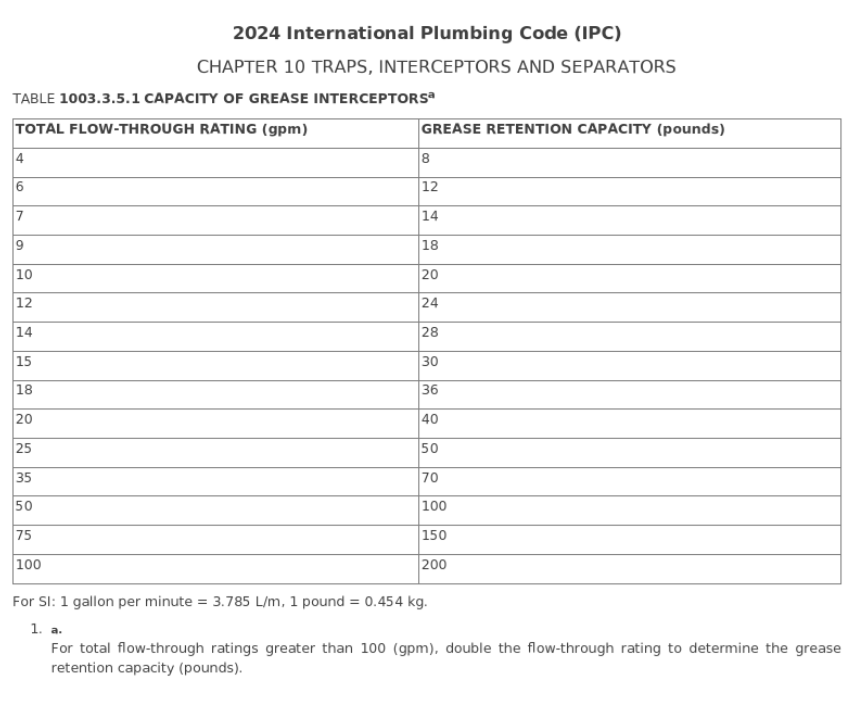
- 1003.3.5 Sizing Standards: Interceptors must adhere to sizing standards provided by recognized authorities such as ASME and ICC guidelines. This helps ensure they have the necessary grease-retention capacity based on their flow-through rate, as shown in the IPC’s detailed tables.
Maintenance
Proper maintenance of grease interceptors, including regular pumping and cleaning, is essential to ensure they effectively manage FOGs within the plumbing system. Without routine upkeep, interceptors can become overwhelmed, leading to clogs and backups that compromise sewer functionality and public health.
Additionally, using a line-washer or hydro-jet to clean grease lines from fixture locations to the interceptor helps remove accumulated FOGs and prevent future blockages.
These methods help maintain optimal flow and efficiency, thereby prolonging the life of the interceptor and minimizing the risk of costly repairs or environmental violations. By integrating thorough maintenance practices, establishments can improve their waste management systems while promoting a cleaner, safer environment.
The IPC prohibits the use of enzymes in grease management due to their tendency to allow FOGs to solidify within public or private sewage systems.
While enzymes may initially break down FOGs, they can lead to the formation of solid residues that accumulate and obstruct pipes, resulting in clogs and backups. This not only compromises the efficiency of the sewage system but also poses significant risks to public health and the environment.
Therefore, adherence to IPC guidelines emphasizes the importance of using proven methods, such as properly sized grease interceptors, to effectively manage FOGs.
Proactive Measures
The challenges posed by FOGs in sanitation systems require proactive measures, and installing properly sized grease interceptors is pivotal for effective management.
IPC and ICC regulations not only highlight the importance of selecting the right interceptor but also require adherence to strict guidelines that protect public health and infrastructure.
By understanding and implementing these provisions, establishments generating grease-laden waste can contribute to a cleaner, more efficient sewage system, significantly reducing the risk of costly repairs and environmental hazards. As part of best practices, operators should prioritize compliance with these codes to ensure a responsible and sustainable approach to waste management.
To learn more about sewer management and how codes and standards can help, view the ICC’s PMG Webpage
To stay updated on the latest PMG industry news, subscribe to ICC’s PMG newsletter here.
About the Author

Director, PMG Technical Resources for the International Code Council (ICC), where he serves as a subject matter expert to the plumbing, mechanical, fuel gas codes, swimming pool & spa, and the private sewage disposal Codes (PMG). Having more than 23 years of experience working within the plumbing, mechanical and construction industry. Holding, a Master, Journeymen and Inspector with Medical Gas & Piping endorsement plumbing licenses, an “A” Refrigeration License with a Combination for HVAC and Refrigeration contracting, and several ICC plan review and inspection certifications in various disciplines, the highest of which is that of a Certified Building Official (CBO). Most recently prior to working with ICC, he served as Chief Building Official for the City of Fort Collins Colorado.