2026’s Fire Season Is a Warning Light: Building Wildfire Resilience Beyond “Fire Season”
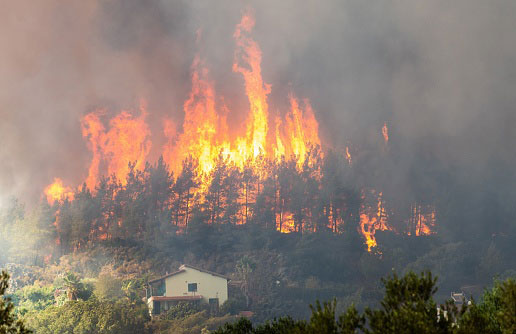
The United States is entering 2026 with an increasingly familiar pattern: wildfire conditions are ramping up early, expanding across regions and challenging the idea of a neat start and end to “fire season.”
National fire intelligence reported that fire activity increased across the U.S. in March, with national readiness also rising—an early signal that conditions are aligning for significant incidents. At the same time, seasonal climate outlooks are pointing toward warming and drought persistence or development across key parts of the country, reinforcing the reality that wildfire risk is increasingly shaped by long-duration climate and fuels trends, not calendar months.
The 2026 forecast is a reminder that the wildfire problem is now as much a built environment problem as it is a wildland one. When wind-driven fires reach communities, the outcomes depend heavily on whether buildings and neighborhoods are prepared to resist ember exposure, radiant heat and direct flame contact.
This is especially the case in the wildland-urban interface (WUI), where development and vegetation meet. The takeaway for building safety and fire service professionals is clear: resilience can’t be seasonal. Communities need durable, enforceable approaches that reduce vulnerability year after year, regardless of whether a given year’s “fire season” is mild, severe, early or late.
A National Snapshot: What the 2026 Outlook Is Already Telling Us
The National Interagency Fire Center (NIFC) National Significant Wildland Fire Potential Outlook (issued April 1, 2026) documented a sharp rise in activity in March and reported that National Preparedness Level increased to 2 on March 20, 2026, with the Southern Area reaching a geographic area Preparedness Level of 3. That same outlook reported that as of March 31, 2026, 1,615,683 acres had burned nationally—231 percent of the previous ten-year average—with 16,746 wildfires reported (also above average).
The drivers described in the outlook are equally notable: widespread below-normal precipitation in March across much of the country, expanding drought and periods of exceptional warmth that rapidly dry fuels and extend the window for large fire growth.
The National Oceanic and Atmospheric Administration’s (NOAA) Spring Outlook (April–June) similarly warned that drought was expected to worsen or develop across large areas of the West and parts of the Plains, alongside a temperature outlook that favors above-normal temperatures over wide portions of the country.
These are the kinds of early-season signals that matter for communities: wildfire disasters are rarely the result of a single factor. They emerge when drought, heat, low humidity, wind events and receptive fuels overlap. Sometimes this occurs for short periods, sometimes across entire seasons and increasingly across multiple regions at the same time.
Why “Fire Season” Is Becoming the Wrong Frame
Wildfire risk has always been seasonal in the sense that fuels dry and ignition patterns change through the year. But the idea of a predictable, bounded “season” is less useful when national outlooks describe meaningful fire potential outside traditional windows. In 2026, NIFC described an “unprecedented early season heat wave” in March that accelerated drying and supported increased activity, including large wind-driven events.
NOAA’s seasonal drought and precipitation signals point in the same direction: when drought persists or expands and temperatures run above normal, the period when fuels are receptive widens, and fire behavior becomes more difficult to control. That doesn’t mean every region will burn every year, but it does mean communities should plan for wildfire as a chronic risk rather than a short, episodic event.
This matters for policy. If “fire season” is treated as a temporary disruption, the default posture becomes reactive—extra staffing, restrictions, public messaging—then a return to baseline. Resilience, by contrast, is built into the community’s DNA through land use decisions, construction requirements and defensible space practices that persist beyond any one summer.
2026’s National Risk Pattern: Not Just a Western Story
One of the most important signals in the April 2026 national outlook is the geographic breadth of above-normal significant fire potential, not only in the West, but also across parts of the Plains, South and Southeast during spring and into summer. For April, the outlook identified above-normal potential across much of the central and southern High Plains into portions of the Southwest, as well as South Texas and much of the Southeast.
As the outlook progressed into May, June and July, it projected shifting and expanding areas of above-normal potential across portions of the Southwest and West, and later into parts of East Texas and the Lower Mississippi Valley by July. This is an important reminder that significant fire potential can track drought and heat patterns far beyond the traditional mental map of “wildfire states.”
For building safety professionals, this national spread is not an abstract map exercise. It’s a governance and preparedness challenge. Many communities facing increasing wildfire exposure do not see themselves as “WUI communities” until a wind-driven event proves otherwise. The U.S. Fire Administration’s (USFA) WUI resources emphasize that WUI fires are not limited to the West and note that more than 60,000 U.S. communities are at risk.
Wildfire Disasters Are Built-Environment Disasters
Wildfire becomes catastrophic for communities when it transitions from a vegetation fire to a structure ignition and neighborhood-to-neighborhood spread problem. That transition happens under extreme weather and fuel conditions, but it is mediated by the vulnerabilities of buildings, parcels and neighborhood layouts.
At the structure level, embers are a dominant pathway. CAL FIRE’s public guidance explains that structures ignite because of embers, direct flames or radiant heat, and estimates that 60 to 90 percent of home ignitions occur because of embers. NIFC’s mitigation guidance similarly highlights that during wildfires, embers cause most home ignitions and emphasizes “home hardening” and defensible space as key actions that improve survivability and reduce risks to firefighters when resources are stretched.
This is where the building safety lens matters. Embers exploit openings and weak points: vents, eaves, under-deck areas, roof edges and combustible materials within the immediate perimeter of structures. Neighborhood-scale factors, such as housing density, attached fences and continuity of combustible landscaping, can turn isolated ignitions into rapid structure-to-structure spread.
When communities recognize wildfire as a built environment problem, they naturally begin asking different questions:
- Are we building and retrofitting to resist ember intrusion?
- Are our site and defensible space expectations aligned with wildfire exposures?
- Do our subdivision and access standards support safe evacuation and effective fire response?
These are code questions, not just operational ones.
The Long-Term Answer: Codified Resilience That Compounds Over Time
Because communities rebuild and expand continuously, resilience is most effective when it is institutionalized—through adoption, implementation and enforcement of modern codes and standards that reduce vulnerability for each new project and major renovation.
The International Code Council (ICC) has emphasized that building codes are a foundational tool for community resilience across hazards like wildfire and that communities must push for adoption and enforcement of current codes to capture those benefits.
The evidence base for modern codes continues to grow. FEMA and USFA’s Building Codes Save pilot highlights the measurable life-safety and economic value that codes can deliver over the life of structures—supporting the broader argument that code adoption is not just policy, but a long-term investment in risk reduction.
Wildfire resilience is a particularly clear case for this compounding effect. Each year a community permits new construction in wildfire-prone areas, it is either building tomorrow’s losses or tomorrow’s survivability depending on whether requirements address known ignition pathways and exposures.
Where IWUIC Fits: A National Model for WUI Resilience
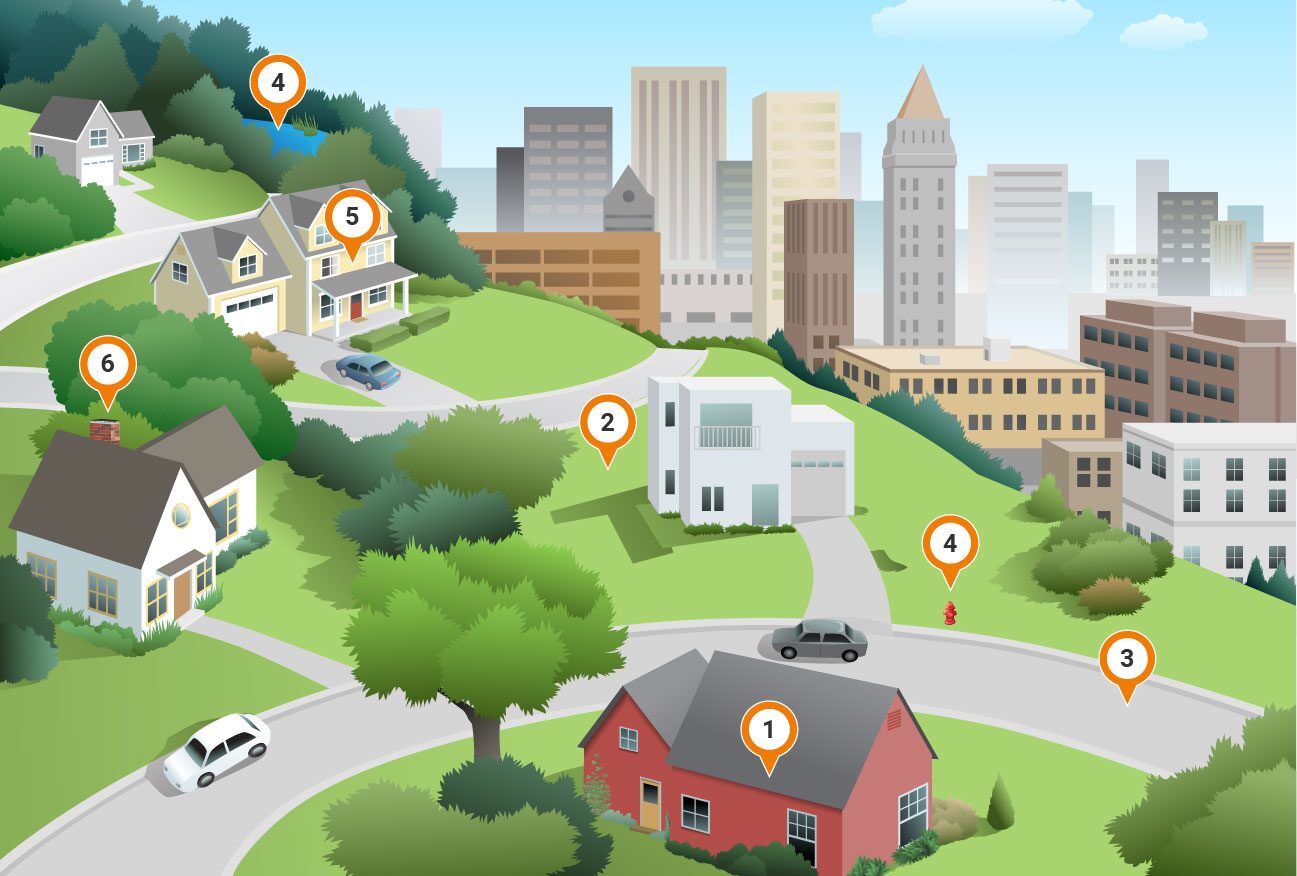
The International Wildland-Urban Interface Code® (IWUIC) is designed specifically to address the vulnerabilities that drive large-loss WUI disasters. ICC describes the IWUIC as establishing requirements for land use and the built environment in designated WUI areas, including ignition-resistant construction, defensible space, emergency vehicle access and water supply provisions. The code is intended to safeguard life and property from wildfire intrusion and help prevent structure fires from spreading into wildland fuels.
This matters because resilience must be systematic. Ignition-resistant construction without defensible space leaves homes exposed to high-intensity fire at the parcel edge; defensible space without construction provisions leaves openings and attachments vulnerable; access and water supply gaps can undermine suppression and evacuation operations. IWUIC is built to operate as a coordinated package rather than isolated checklists.
Importantly, the IWUIC conversation is not only about “Western” wildfire. It is about protecting communities in any region where vegetation, weather, and development patterns create WUI exposures, an issue USFA explicitly elevates as national in scope.
From “Forecast” to “Foundation”: What Communities Can Do Now
The 2026 outlook provides urgency, but communities should treat it as a prompt to build durable systems rather than one-time seasonal preparations. Based on IWUIC’s core structure and complementary federal wildfire guidance, a practical national approach includes:
1) Define and map the WUI—then align policy to it
It is difficult to manage what isn’t defined. IWUIC is intended to apply within designated WUI areas, which requires jurisdictions to establish where WUI conditions exist and what hazard classifications apply. Washington’s approach—pairing adoption authority with mapping support—is one example of how states can enable locals to do this consistently.
2) Reduce the dominant ignition pathways
Embers are a primary ignition driver for structures, so mitigation strategies should focus on the building features and site conditions embers exploit. CAL FIRE emphasizes ember-driven ignition and the role of hardening to reduce vulnerabilities. NIFC likewise points to home hardening and defensible space as critical, especially when firefighters cannot be everywhere at once during large events.
3) Treat defensible space as a life-safety buffer, not landscaping advice
USFA provides an accessible defensible space framework, including the importance of the immediate zone adjacent to structures (0–5 feet) and expanded zones outward. The key is that defensible space is not a one-time project, rather an ongoing condition that supports both structure survivability and safer firefighting operations.
4) Build resilience that compounds
Every permitted project is an opportunity to reduce future risk. Codes create consistency across builders, designers and owners and help avoid a patchwork of best intentions and uneven practices. ICC has long emphasized that modern codes are foundational to disaster resilience and must be adopted and enforced to deliver benefits.
2026 Is a Signal, but Not the Story
Whether 2026 produces record losses nationwide or concentrated impacts in select regions, the underlying lesson is already visible in national data and forecasts: wildfire is a year-to-year certainty somewhere, and a growing risk in more places than many communities assume. The choice communities face is not whether to “win” a single season—it’s whether to reduce vulnerability over time so that fires are less likely to become neighborhood-scale catastrophes.
That is why IWUIC adoption and implementation matters even in years when fire activity is quieter locally. Resilience is not an annual campaign; it is an accumulated outcome of planning, code adoption, consistent enforcement and a built environment designed to withstand the exposures we already understand. In a world where “fire season” is increasingly fluid, the most responsible strategy is to build for wildfire every year, because the built environment lasts far longer than the forecast.
ICC’s Fire and Disaster Mitigation (FDM) Team brings together a powerhouse of experts in building and fire codes, emergency management, disaster mitigation, wildfire preparedness and mitigation, and public safety awareness and professional leadership. Click here for the latest news and resources for fire and disaster mitigation professionals.
About the Author

Justice Jones realigns human culture with fire environments as Fire and Disaster Program Manager at the International Code Council. Previously, as Austin’s Wildfire Mitigation Officer, he led the largest municipal adoption of the ICC Wildland‑Urban Interface Code and made Austin a nationally recognized fire‑adapted community. A U.S. Air Force veteran and Certified Arborist, he served as Texas A&M’s State WUI & Prevention Coordinator. Justice sits on the IAFC Wildland Fire Policy Committee, NFPA 1140, and works as a Technical Specialist with U.S. Fish and Wildlife Service. He is a recipient of the Fire Adapted Communities Leadership Award (2016) and holds dual B.A.s from UT Austin.