From Loss to Legacy: Parents Drive Approval of Life-Saving Gate Code Changes
The approval of these gate safety proposals will help protect communities worldwide and represent a major shift in how gates are regulated.
On May 22, 2026, gate safety proposals G183‑25 (Parts I & III), RB282‑25, and PM29‑25 were approved through the International Code Council’s (ICC) code development process. Following Validation Committee certification and ICC Board approval, these proposals will be included in the 2027 International Codes® (I-Codes), helping protect the lives of over two billion people globally and represent a major shift in how gates are regulated.
Eric and Dayna Quanbeck, with support from the American Fence Association and others, advocated for the code changes after their son, seven-year-old Alex Quanbeck, was killed by a ~400 lbs. manual cantilever gate when it fell on him at school. He was playing football during recess and tried to close the gate to prevent the ball from rolling out, but the gate stop was broken and there were no other barriers to keep the gate from falling down.
Changes to the I-Codes are often proactive in nature based on building science and industry expertise, and some, such as the gate safety proposals (G183‑25, RB282-25 and PM29-25), are created in response to tragedies that are entirely preventable.
“Dayna and I felt an immediate sense of gratitude after hearing that our proposals were approved,” said Eric Quanbeck. “As you can imagine, this is a very personal process for us as we look to prevent future fatalities from occurring. The reach of the ICC, on both a national and global basis, gives us confidence that we are making a difference with the work we are doing in honor of Alex.”
The family successfully participated in ICC’s transparent, consensus-based code development process, to propose changes to the I-Codes – the suite of coordinated, modern set of building codes used in all 50 U.S. states and approximately 100 countries internationally.

The First Step: Reaching Out for Answers
The family initially started their advocacy work where Alex attended school in Marin County, California, which is just north of San Francisco. They went city by city to advocate for amendments to the local building codes until a local government official shared that a faster way to make a broader impact would be to work with ICC, to advocate for a change to the model codes used worldwide.
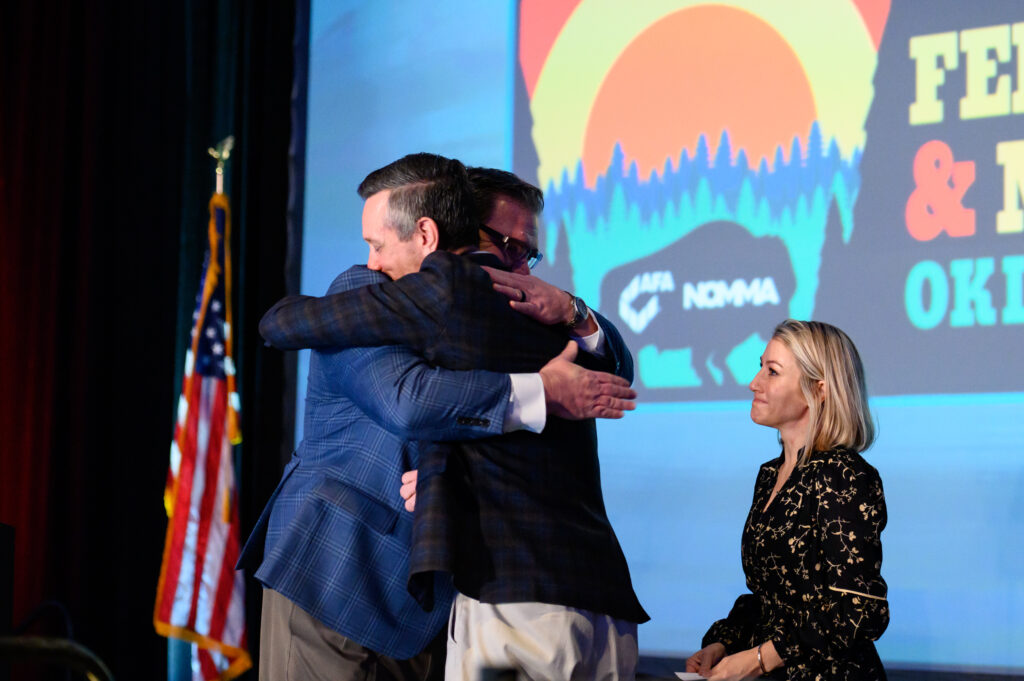
Through these efforts Quanbeck met Eric Bledsoe, President of Electronic Innovations and American Fence Association (AFA) member, who introduced him to AFA’s Executive Director, Michael Reed. This introduction led Quanbeck to be the keynote speaker at FENCETECH 2023, an annual AFA convention and trade show, and gain the support of the organization and its more than 2,000 member companies.
Catherine Mills-Reynolds, Director of Government Relations and Industry Standards for the American Fence Association, was an AFA board member at the time and saw Quanbeck speak.
“As you can imagine, there was not a dry eye in the house,” Mills-Reynolds recalled. “Everybody was really stunned and also extremely motivated into action to prevent this from happening again.”
When Mills-Reynolds joined the AFA full-time in a government relations role, Reed connected her with Quanbeck to address gate safety, raise awareness and figure out the best way to propose code changes.
Later that year in December 2023, Quanbeck contacted ICC, seeking information on codes and legislation. His call was routed to Lesley Garland, Deputy Senior Vice President, ICC Government Relations. She was immediately impressed by how familiar Quanbeck was with the legislative and regulatory process.
“Eric was hyper-focused,” said Garland. “He already built the foundation for a strong advocacy effort. From a code development perspective, everything Eric did paved the way for a successful code proposal. He had proof of concept in local jurisdictions, interest on the state and federal level to duplicate what local jurisdictions had done, and a supportive industry group willing to stand shoulder-to-shoulder with him through the process.”
The Code Development Timeline: Building the Path to National Code Change
The ICC code development process is designed to ensure all views are heard and considered, and ensure critical improvements to the ICC model codes are effective and enforceable by jurisdictions who adopt the ICC model codes. Garland’s advice helped the Quanbecks get started on the right foot.
“Lesley was very gracious with her time and explained how individuals can affect change through the code development process,” Quanbeck said about their first call. “She encouraged me to be patient with the process, as I had just missed the last ‘window’ for code adoption. We would be working with a variety of industry professionals who would understand the need to change the existing building code given the number of fatalities we had uncovered across the country.”
After their call, Garland connected Quanbeck with Kevin McOsker, Vice President of Technical Resources, ICC. Quanbeck prepared his submission to the Committee Action Hearings (CAH #1) in Orlando, Florida, in April 2025, and McOsker helped guide him through the process.
Their preparations included the formation of a working group (with Quanbeck, Mills-Reynolds, members of the AFA, the Door & Access Systems Manufacturers Association (DASMA), and code officials from Northern California). The group met monthly over Microsoft Teams and submitted an early proposal to the Building Code Action Committee (BCAC) for support and co-proponent status in October 2024. They submitted a formal proposal (with BCAC as co-proponent) in January 2025.
All five proposals were initially rejected at the Spring 2025 hearings, but Quanbeck didn’t see this as a setback because the need was acknowledged and he was given important feedback on how to reach his goal.
“While everyone was supportive of the safety recommendations, we quickly discovered that we had to ‘scope’ our code proposal correctly,” said Quanbeck. “[That way], our proposal would not inadvertently include gates that don’t pose the same risk as the ~400 lbs. gate that caused Alex’s fatality.”
The Quanbecks worked within the consensus process — a functional process that allows collaborative deliberations to ensure the leading model codes for the built environment globally. They and other proponents met with proposal opponents in the Spring and Summer of 2025 to address concerns and build consensus. Later that summer, four of the five proposals advanced after being submitted for consideration at CAH #2 hearings. And in the fall, all four proposals were recommended for approval by the committees for the next steps in the process.
In January 2026, a public comment was submitted by an International Property Maintenance Code® (IPMC) Committee Member. The CAH #2 approvals were upheld at the Public Comment Hearings in April 2026, finalizing the code changes.
This positive result was all possible because of the hard work by the gate safety proposal proponents. Garland was especially impressed by Quanbeck’s dedication to the cause and his drive to understand and work within existing processes to affect change, including those he made before coming to ICC.
“What Eric was able to accomplish before asking for help was usually what you would see after someone spent tens of thousands or even hundreds of thousands of dollars on professional lobbying and communications efforts,” said Garland.
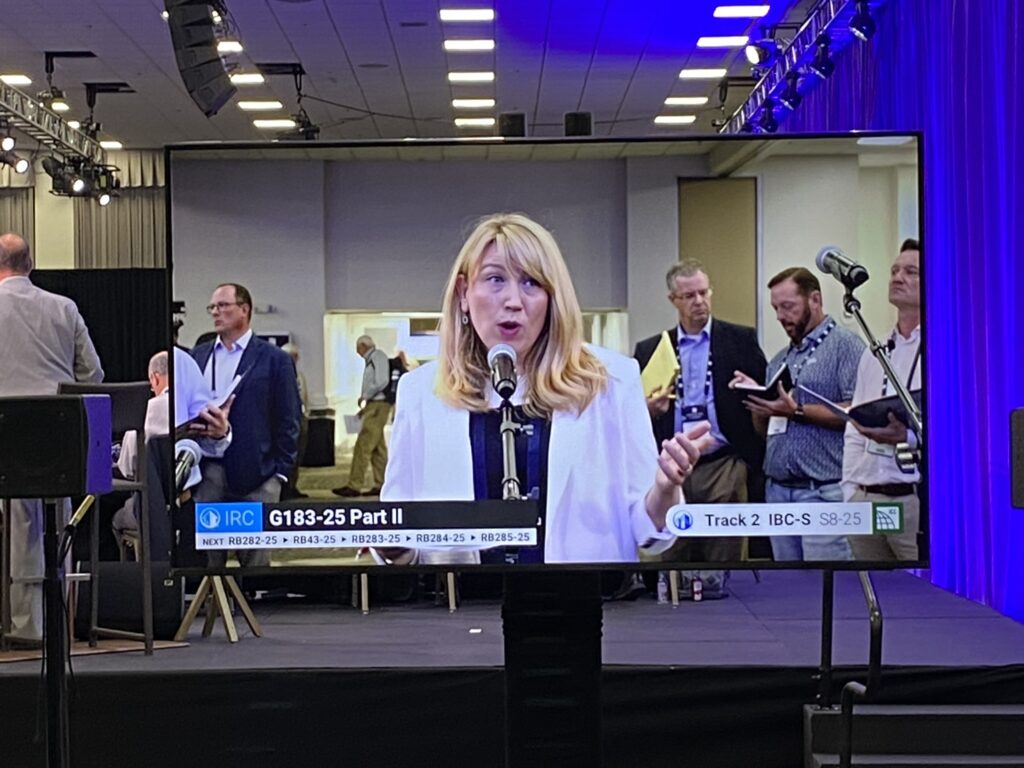
What the New Gate Safety Code Changes Do
There are three different ASTM standards that are reflected in the gate safety code proposals: F900 (industrial and commercial swing gates), F1184 (industrial and commercial horizontal slide gates), and F2200 (vehicular gates). F2200 was updated in 2002 to include fall-over protection and helped inform the code proposals. The code will now address when this protection is required, while the standard addresses the requirements.
Horizontal slide gates can be secured beyond a gate stop by installing a fall over post (a standard post cemented in the ground) or by using an upside-down J bracket that has been welded on top. Seegers Fence in Greensboro, North Carolina, an AFA member, was quick to work up a design for the latter solution after learning about Alex.
“They said, ‘What can we do?’ and went back to their shop to design something for fall over protection,” said Mills-Reynolds. “There’s a lot of passion for safety, and we’re also an industry that loves families and kids. When something like this happens, we don’t want a night to go by where we’re not trying to fix it and make it better. I think that was part of the reason why there was so much support behind it – it was really a no-brainer just to do the right thing.”
Swing gates can be secured with a chain (to keep it from falling) and a gate keeper (to secure the free end of the gate when in the fully open position).
“The whole point [is that] if the gate falls, it will not drop more than 45 degrees from the vertical plane,” Mills-Reynolds said of these various safety measures.
The gate safety proposals will be included in the following I-Codes:
- G183-25, Part I – The proposal to the 2027 International Building Code® (IBC).
- RB282-25 – The proposal to the 2027 International Residential Code® (IRC), (companion proposal to G183-25, Part II) include the safety measure with the existing provision for automated vehicular gates.
- G183-25, Part III – The proposal to the 2027 International Existing Building Code® (IEBC) would require compliance where gates are being modified.
- PM29-25 – The provision for the 2027 IPMC requires gates to be maintained to the same safety measures included in the reference standards.
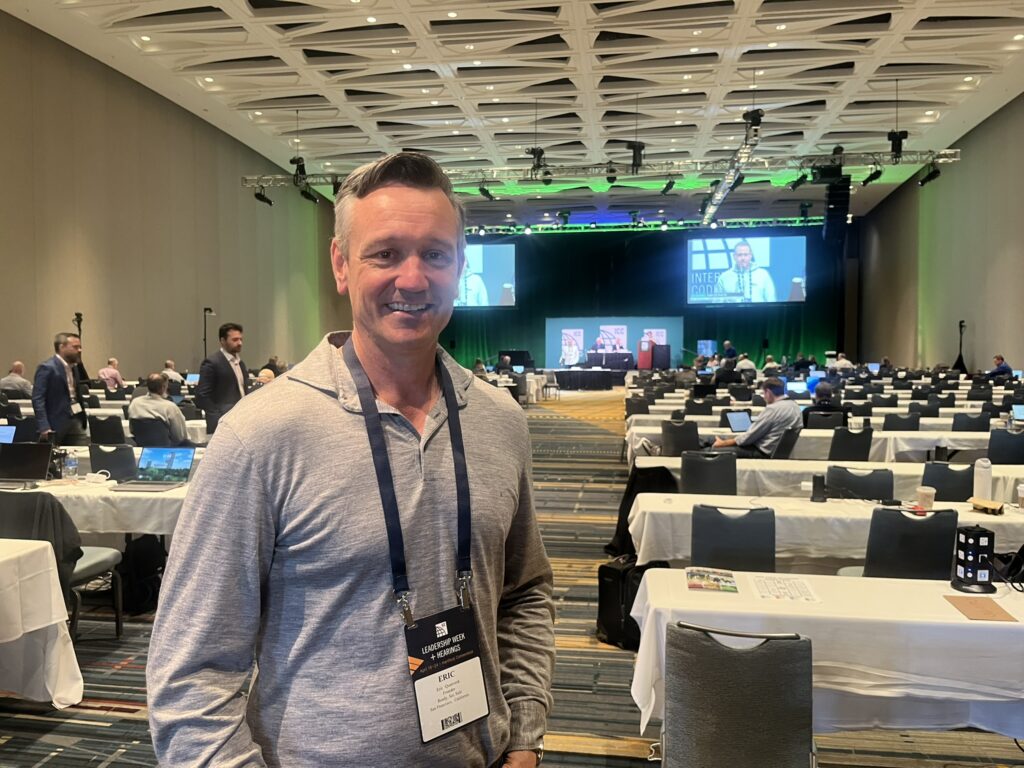
Collaboration Made Change Possible
Code development is built on collaboration and consensus, and the process is open to involvement from everyone – not just building safety professionals. In this case, ICC staff, AFA, BCAC and others engaged with Alex’s parents as they worked to make a lasting difference.
“Everyone was very collaborative and contributed their expertise in the process of referencing ASTM standards as part of building code language,” said Quanbeck. “Lesley, Kevin and Catherine have dedicated countless hours and energy to helping Dayna and me advocate for gate safety standards. It is a real testament to the human spirit to see such sincere kindness and support in the face of such an unimaginable loss, and Dayna and I will be forever grateful.”
As the changes were being considered, Quanbeck said that the most important lesson he learned was to “trust the process,” as everyone assured him that their goal is to always be improving safety standards.
“But it had to go through an established process to ensure it is done in the most effective manner, which is a collaborative effort,” he said.
That process also involved how to best address concerns from all impacted participants. McOsker said this part is important to “make sure that the proposal didn’t have consequences that might have unintended enforcement challenges or potentially overregulate these elements.”
“Clarifying the language between the first and second hearings allowed for additional support by the entire building safety community,” McOsker explained.
For Mills-Reynolds, it was a genuine learning experience. She praised the help she received from McOsker, who patiently walked her and others through the code development process.
“Just learning how to work the cdpACCESS, how proposals work, Kevin was extremely helpful because I knew zero about any of that,” said Mills-Reynolds. “I needed a lot of hand-holding, and his support was very appreciated.”
Throughout each code cycle, hundreds of individuals are involved in code development committees and participate in the process, all with the overarching goal to ensure the best model safety codes are developed for the built environment. It is a testament to the dedication of those involved in the process, including the Quanbecks, and a true consensus process that enables important code changes, like these gate safety provisions, to be incorporated in a timely fashion.
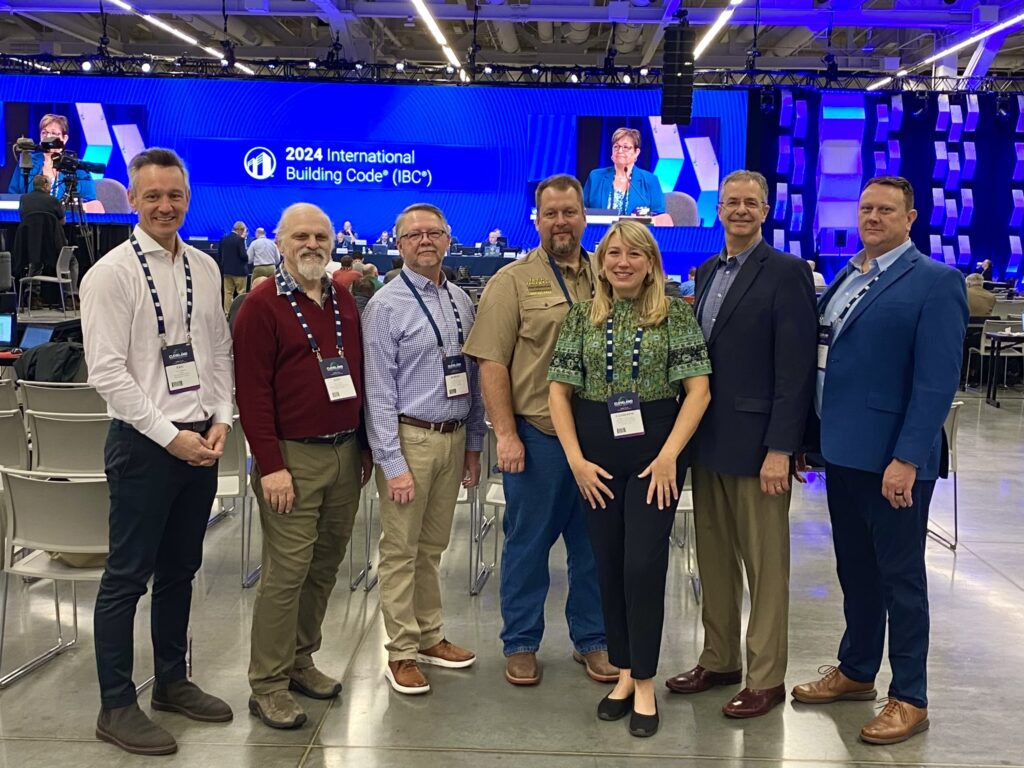
Alex’s Legacy and A Safer Future for Children Everywhere
With the gate safety proposals to be included in the 2027 I-Codes, Quanbeck said that he extends his “personal gratitude to all of the various individuals who participated in this process and were so willing to engage with us.”
“We truly believe that our work will make a difference and prevent future tragedies from occurring,” he said.
“I don’t believe anyone, including those who initially opposed the legislation or the code proposals, weren’t impacted by this father’s deep love for his son as well as Eric’s passion to ensure no other family suffered like his,” said Garland. “People like Eric and Dayna are the reason we do what we do every day.”
These important updates to the 2027 suite of I-Codes will be available for jurisdictions to adopt later this year. The improvements made during each cycle to the model codes are another example of why it is critical for jurisdictions to update to the most current set of model I-Codes.
The Quanbecks founded Ready, Set, Safe! (formerly the Hummingbird Alliance) as part of their mission to equip families, schools and communities with the knowledge and resources they need to create safe educational and recreational spaces for all children. They want to make sure that no other family experiences such a loss.
“Dayna and I both view Ready, Set, Safe! as an opportunity to improve safety in the spaces where children live and play. While we’ve initially focused on gates, we certainly see a path to broaden our efforts and view this work as an ongoing journey in honor of Alex and all of the joy he brought our family.”
In addition to the code changes being implemented in the 2027 I-Codes, the Quanbecks will continue to focus on ensuring that kids can learn and play in safe spaces.
“We are advocating for the Alex Gate Safety Act on Capitol Hill, which references the ASTM standards that are now in the I-Codes,” said Samantha Lasky, Executive Director for Ready, Set, Safe! “The bill also requires the Consumer Product Safety Commission (CPSC) to do a gate safety awareness campaign, which will be critical to helping prevent these tragic incidents from happening in the future.”
You can learn more by visiting readysetsafe.org or about the I-Codes development process here. For media inquiries, please contact communications@iccsafe.org.
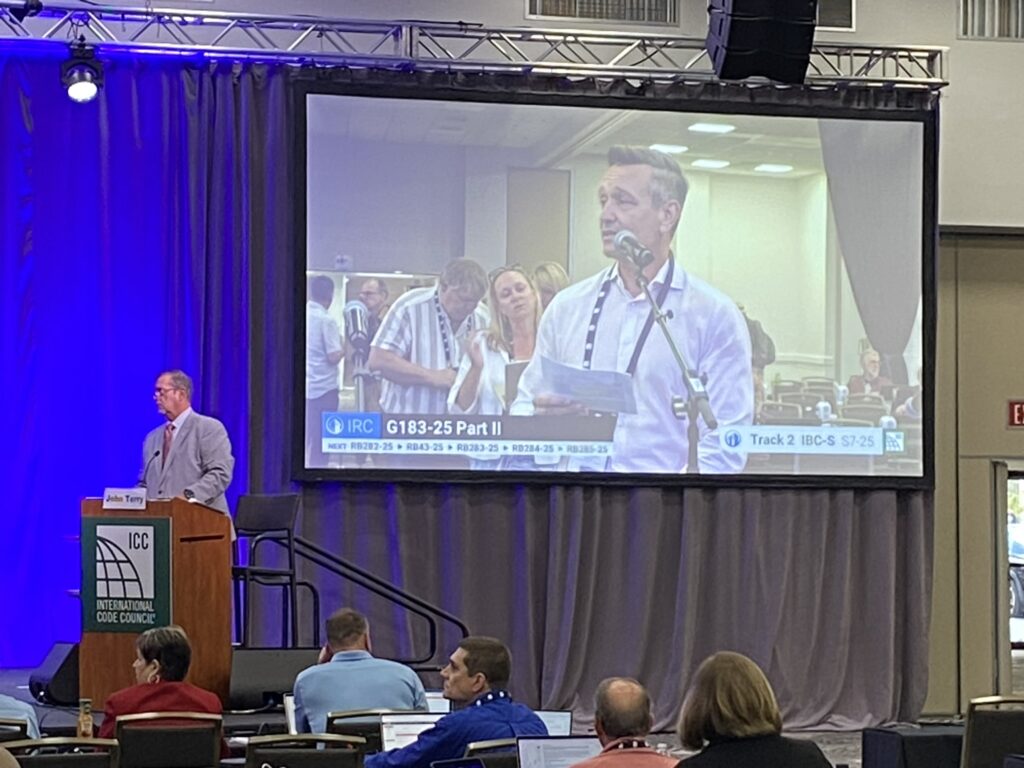
About the Author

Louis Bedigian is a writer, editor and content strategist with experience producing short- and long-form content for a variety of industries. By day, he's Senior Copywriter for PR agency Brands2Life, where he transforms complex and often technical jargon into content that’s compelling and easy to digest. By night, he's Freelance Copywriter at Fundable, where he develops powerful narratives that drive brand awareness within the investment community.