International Code Council Leaders Meet with CAL FIRE To Discuss Wildfire Mitigation and Preparedness
California fire officials share best practices for how they are applying wildland-urban interface codes and mitigation practices in the field.
On June 11–12, 2026, leaders of the International Code Council (ICC), including ICC Board President, Mike Boso, ICC Board Vice President, Steve McDaniel, ICC Board Director, Randy Metz, and ICC CEO, John Belcik, met with California State Fire Marshal, Daniel Berlant, and members of the California Department of Forestry and Fire Protection (CAL FIRE) Office of the State Fire Marshal. The group discussed how the International Codes® (I-Codes®) and California-specific wildfire mitigation and preparedness programs are helping reduce risk in California communities.
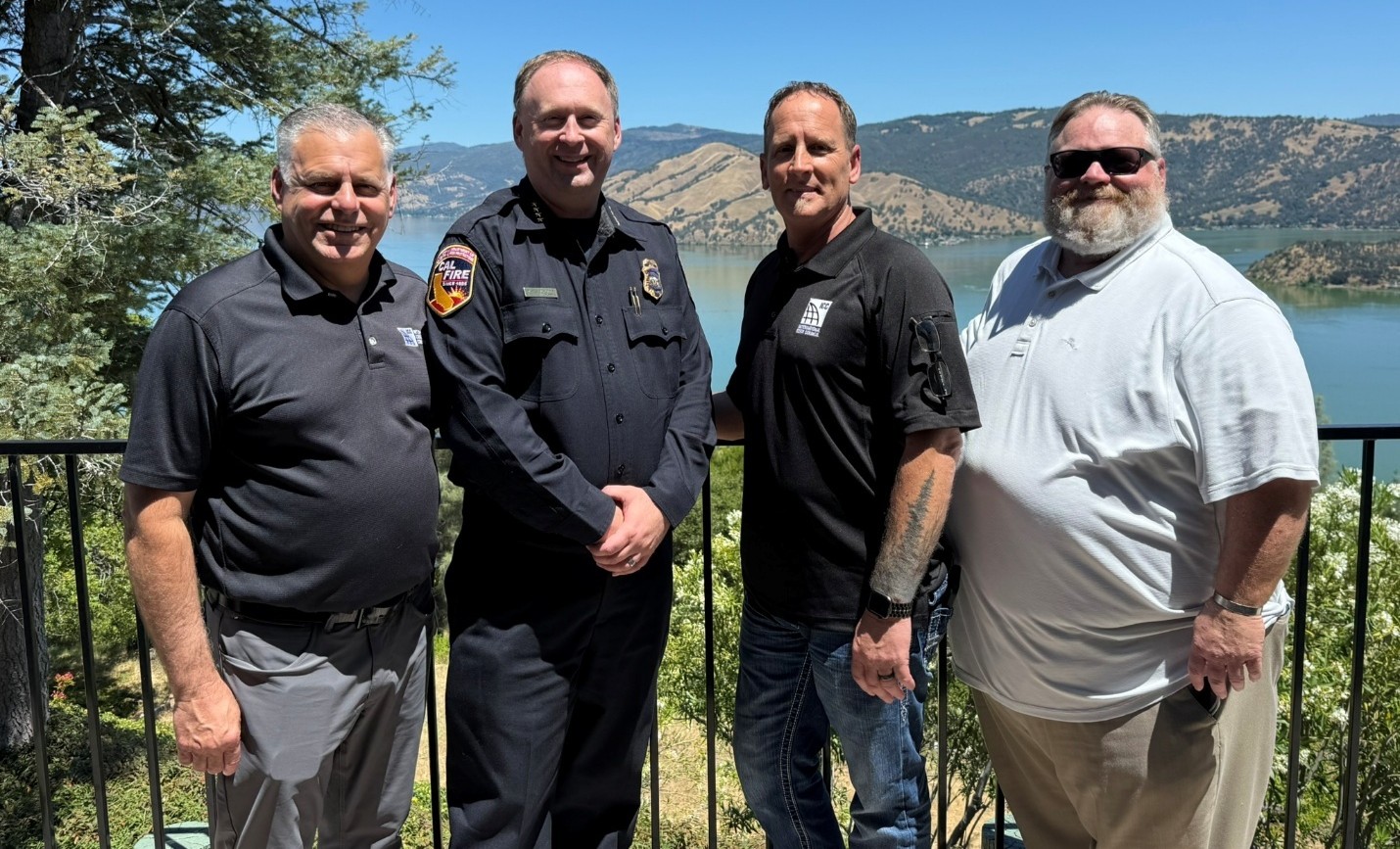
Photo Credit: Karl Fippinger
An Invitation from CAL FIRE
The idea for the meeting came about during last year’s ICC Annual Conference in Cleveland where Mike Boso was installed as ICC’s Board President. During his Incoming President’s speech, Boso discussed his passion for disaster mitigation and preparedness. In the audience was California State Fire Marshal, Chief Daniel Berlant, who then contacted ICC Vice President of Fire and Disaster Mitigation, Karl Fippinger with the idea of bringing Boso and other ICC senior leaders to California to demonstrate how Boso’s message is being applied through state-led programs and public-private partnerships in the field.
“The idea was to go out and meet with California fire officials on the topic of wildfire prevention and mitigation to see how the I-Codes are being used in the state,” said Fippinger. “Over the last three years California has worked with local stakeholders, the construction industry, and the ICC to incorporate the International Wildland Urban Interface Code® (IWUIC®) into the California Wildland-Urban Interface Code (CWUIC).”
Strengthening Households with Home Hardening
CAL FIRE took ICC leaders on a tour of several home hardening projects in Lake County that were in various phases of retrofit processes that align with the CWUIC and ICC’s model codes. Between 2015 and 2020, nearly 60 percent of Lake County experienced major wildfires impacting the community.
“We looked at several homes that were being retrofitted with wildfire mitigation in mind,” said Fippinger. “The landscape was cleared of overgrown vegetation. The trees were trimmed, fire-resistant building materials were installed on the exterior of the homes, standard windows were replaced with dual-pane windows with a layer of tempered glass, and eaves and soffits were enclosed to prevent embers from entering the homes if a wildfire ever threatened the community.”
Fippinger says home hardening has become more readily accessible with the establishment of the California Wildfire Mitigation Program, a joint powers collaboration between CAL FIRE, the California Governor’s Office of Emergency Services (CAL OES), private industry, and local communities all focused on a shared mission to retrofit, harden and create defensible space for homes at high-risk to wildfires.
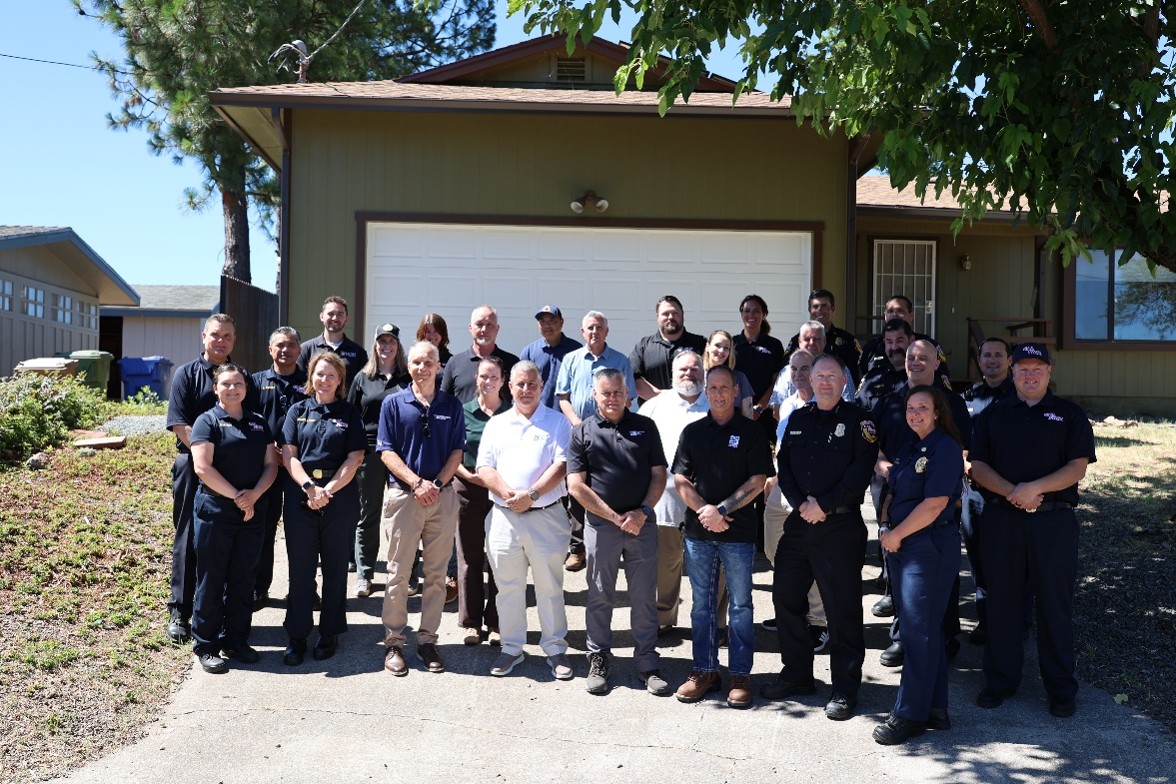
Photo Credit: CAL FIRE
Information Sharing with Other States and Communities Impacted by Wildfire
The ICC’s visit with CAL FIRE also served as an opportunity to introduce other ICC members and senior government leaders to California’s wildfire mitigation and prevention programs.
ICC has been working closely with government leaders in Hawaii to shape public policy on wildfire following the devastating 2023 wildfires in Maui County that claimed the lives of more than 100 people and destroyed more than 2,000 buildings and homes in Lahaina. As invited guests of the ICC group, CAL FIRE welcomed Hawaii State Fire Marshal, Dori Booth, Assistant Chief Ryan Otsubo from the Maui County Fire Department, and Kate Blystone representing the office of Maui County Mayor, Richard Bissen. The information exchanged during the site visits and discussions will be used to inform Maui’s long-term wildfire recovery efforts and influence future wildfire and prevention efforts both in Maui County and throughout the State of Hawaii.
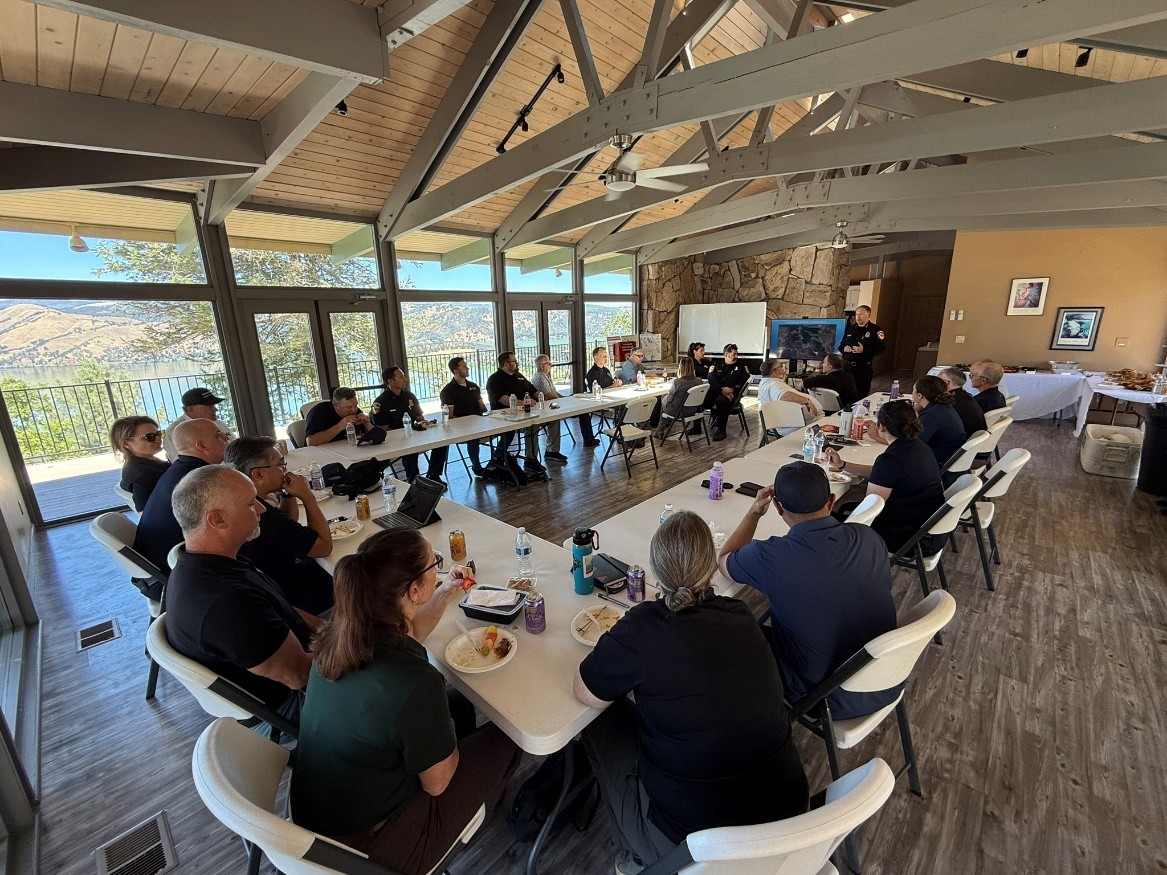
Photo Credit: Karl Fippinger
Touring the World’s Largest Aerial Firefighting Fleet
On the last day of the visit, ICC members were invited to tour of CAL FIRE’s aviation program, which boasts the largest aerial firefighting fleet in the world.
ICC leaders got a glimpse of some of CAL FIRE’s 23 helicopters, 26 air tankers and 19 tactical aircraft used to fight the state’s wildfires. The majority of these aircraft are designed to carry between 360 and 4,000 gallons of water and fire retardant.
After the tour, ICC leaders were given the opportunity to see what it takes to fly these aircraft in a state-of-the-art flight simulator that trains pilots to fly in hazardous conditions.
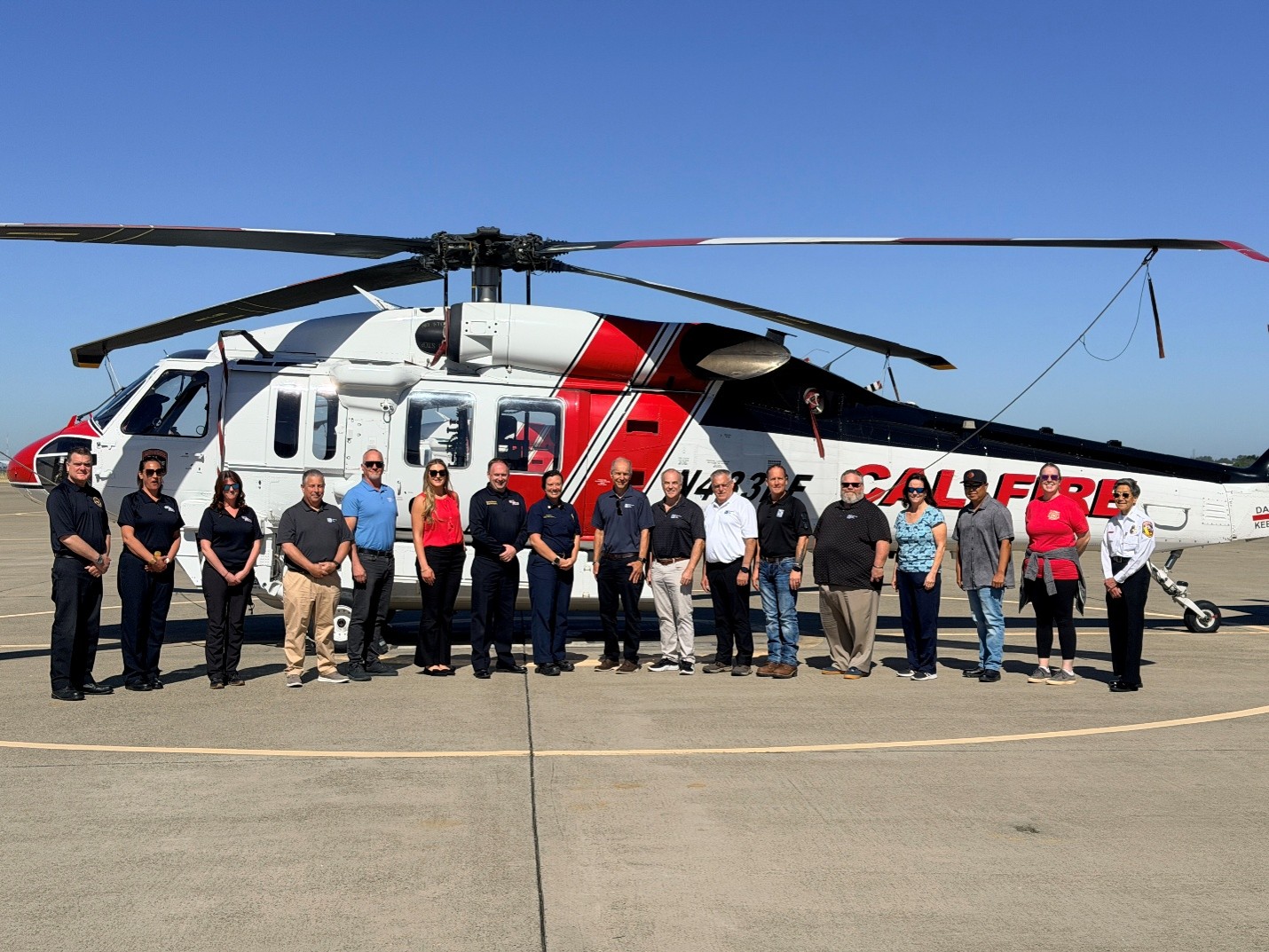
Photo Credit: CAL FIRE
What’s Next for Wildfire Codes?
“We went out to California with the intent to learn more about California’s wildfire mitigation and prevention programs with the thought of how we might be able to leverage these successful concepts, best practices, and lessons learned to raise awareness nationally and internationally in communities that are susceptible to wildfire,” said Fippinger. “We want to encourage people to get involved in our wildfire code development process and strengthen the model codes. Wildfire mitigation is still a relatively new idea when compared to the lengthy history of the model codes, but we are working on building and evolving the IWUIC along with other ICC model codes to meet the needs of today’s dynamic hazard and risk landscape.”
To ensure that the IWUIC keeps pace with the rapidly changing ways communities deal with wildfire, Fippinger said the upcoming 2030 IFC development cycle will now include a dedicated IWUIC code development committee specifically for wildfire-related code change proposals.
ICC’s Fire and Disaster Mitigation (FDM) Team brings together a powerhouse of experts in building and fire codes, emergency management, disaster mitigation, wildfire preparedness and mitigation, and public safety awareness and professional leadership. Click here for the latest news and resources for fire and disaster mitigation professionals.
Click here to learn more and participate in ICC’s code development process.
About the Author
The International Code Council is a nonprofit association that provides a wide range of building safety solutions, including product evaluation, accreditation, certification, codification and training. It develops model codes and standards used worldwide to construct safe, sustainable, affordable and resilient structures.