The Future of Plumbing: Research Breakthroughs You Need to Know in 2026
This year’s symposium focused on how recent findings will impact future plumbing system installations to better safeguard public health and safety.
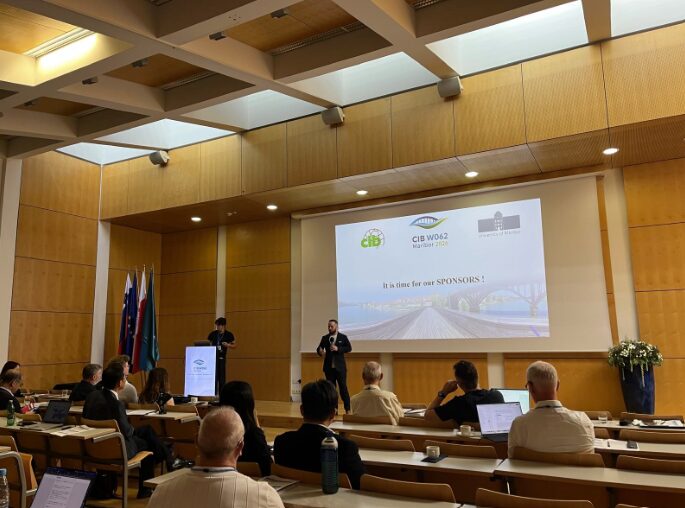
Global experts recently convened in Maribor, Slovenia, for the 51st CIB W062 Symposium on Water Supply and Drainage for Buildings. The event was hosted by the University of Maribor and sponsored by industry leaders like the International Code Council (ICC), and leading manufacturers Aliaxis and Geberit.
This year’s symposium provided researchers, engineers and academics from around the world a hard look at the technologies and codes that will drive the next generation of plumbing, and how recent findings will impact future plumbing system installations to better safeguard public health and safety.
Instead of just looking at theories, here are key technical papers from the event that tackle real-world plumbing challenges and highlight where the industry is heading, with insights from the experts helping to shape these solutions.
1. Making Low-Flow Fixtures Actually Work
Compensating for Reduced Flush Volumes: Restoring Solid Transport in Sanitary Drainage Systems Through Increased Pipe Gradient by Steve Wright et al.
What it means for you: We all know the downside of low-flow toilets. Pushing less water through a standard drainage system often means solids get left behind, leading to blockages and frustrating callbacks. Steve Wright’s research looks at a practical mechanical fix: adjusting the pipe gradient supported by detailed research and analysis. The paper breaks down exactly how increasing the slope of sanitary drainage pipes can restore solid transport, ensuring that as water conservation codes get stricter, the systems we install will keep flowing without constant maintenance.
2. Getting Real About Residential Water Pressure
Assessment of Water Demand and Pressure Performance in an Australian Residential Building by Dr. James Gong, M. Bilal, and B. M. Josey.
What it means for you: How much water pressure does a residential building need during the morning rush? For decades, the industry has relied on old formulas that often lead to oversized pipes, which wastes material and increases the risk of stagnant water (and Legionella). James Gong and his team have monitored real Australian residential systems to track actual demand and pressure drops. By looking at real-world performance rather than outdated guesswork, this data helps modern pipe-sizing standards so that systems will deliver the appropriate amount of pressure safely and efficiently.
3. Smarter Pipe Sizing Before the Walls Close Up
Integrating Head Loss Calculations into Network-Based Simulation of Water Supply Systems by Dr. Drew Rich and Tom Roberts.
What it means for you: Sizing a complex commercial water supply network involves a lot of math and getting it wrong means battling pressure issues after the drywall is up. Drew Rich presents a way to feed head loss calculations directly into advanced computer simulations. Essentially, engineers can now build a “digital twin” of a plumbing system to test flow, predict pressure drops and spot failures virtually. For the plumber on-site, better upstream engineering means installing systems that work right the first time, eliminating the guesswork on complex builds.
4. Why We Plumb the Way We Do
An examination of the influence of 19th century disease theory on the design of sanitary drainage systems – Sewer intercepting traps by John Lansing.
What it means for you: Ever wonder why the code demands certain trap setups? John Lansing takes a step back into history to look at how 19th-century disease theories, like the old belief that ‘bad air’ caused sickness, shaped the invention of the sewer intercepting traps we still see today. It’s a fascinating look at the roots of sanitary drainage. More importantly, it highlights why the ICC continuously collaborates with research and academic communities worldwide to update the International Codes® (I-Codes®), including the International Plumbing Code® (IPC), ensuring that the codes remain aligned with modern public health knowledge.
5. Taking the Guesswork Out of Dry Traps
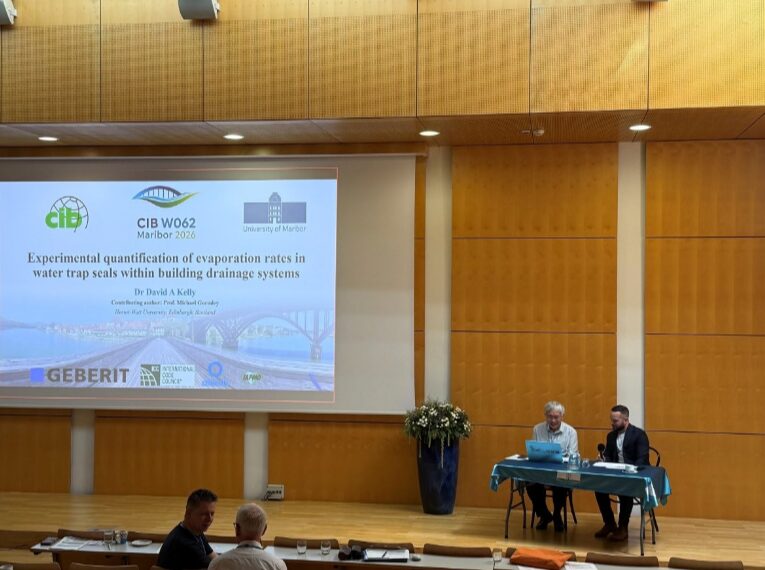
Experimental quantification of evaporation rates in water trap seals within building drainage systems by D. A. Kelly and M. Gormley.
What it means for you: Every plumber knows that a dry floor drain or trap is bad news that lets sewer gas and harmful pathogens straight into a building. But figuring out exactly how fast that water evaporates has mostly been a guessing game. David Kelly and his team put actual numbers to this problem, testing exactly how quickly water trap seals dry out under different building conditions. For contractors and maintenance plumbers, having this hard data means better decisions when installing trap primers, setting up automatic flush schedules and ensuring the systems you install never leave a building vulnerable to health hazards.
6. Keeping Sewer Gas Out of the Fresh Air
Drainage roof vent distance from fresh air ventilation inlet in the Netherlands by Nick Post.
What it means for you: When you run a drainage vent out through the roof, it does its job by releasing sewer gas and pressure to the outdoors. But if the HVAC crew installs a fresh air intake too close to the vent, sewer gases can be sucked right back into the building’s air supply. Nick Post’s research digs into the rules and real-world testing in the Netherlands regarding exactly how far apart these roof vents need to be to prevent cross-contamination. For the plumber roughing in a roof stack, it’s a great reminder of why coordinating with the mechanical crew and strictly following clearance codes on roof penetrations is critical to avoiding a massive (and smelly) callback.
The ICC Perspective: Bridging Research and Reality
For ICC, participating in global forums like the CIB W062 Symposium isn’t just about networking, it’s about gathering the hard data needed to develop better safety solutions.
When a researcher proves how to better size a rainwater drain or fix a low-flow blockage, that data helps inform future iterations of the I-Codes. By turning the world’s most advanced research into practical, innovative standards, we can ensure that systems continue to protect the safety, health and sustainability of communities worldwide.
To learn more about water-related issues and how codes and standards can help, view the ICC’s PMG Webpage
To stay updated on the latest PMG industry news, subscribe to ICC’s PMG newsletter here.
About the Author

Tom Roberts is the Director of PMG Global operations with the International Code Council. Prior to this role, Tom was the Director responsible for the Plumbing Code of Australia with the Australian Building Codes Board. Tom is also the chair of Standards Australia’s WS-014 committee responsible for the AS/NZS 3500 series of Australian and New Zealand Standards.