Reflections on My Visit to Greenwood Rising
Greenwood Rising offers many lessons, including a stark reminder of how racism can destroy not only lives, but the physical foundations of community and opportunity.
Building safety is often discussed in terms of compliance, inspections and enforcement. But its real purpose is far broader: to protect communities, preserve opportunities and safeguard the places where lives unfold.
Those themes came into sharp focus for me during a recent visit to Greenwood Rising in Tulsa, Oklahoma.
The Greenwood District’s Storied Past
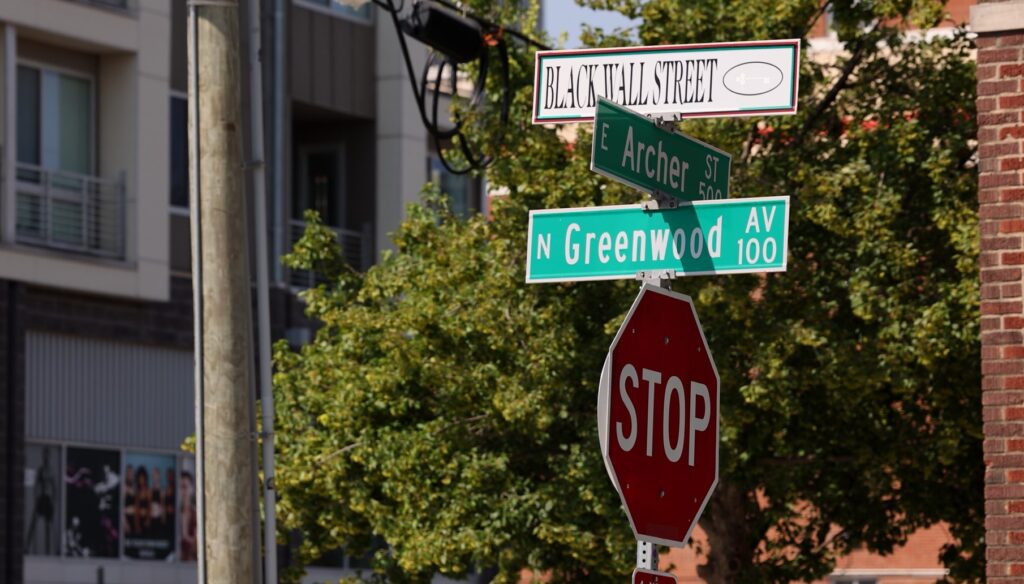
Greenwood Rising is an experiential museum that tells the story of Tulsa’s historic Greenwood District, once known as “Black Wall Street.” In the early 20th century, the Greenwood District was one of the most prosperous Black communities in the United States. Greenwood drew Black Americans from many backgrounds: formerly enslaved people and their descendants, Civil War veterans, families seeking to escape the violence and restrictions of the Jim Crow South and ambitious entrepreneurs who came to Oklahoma in search of opportunity.
In Tulsa, Black residents were confined by law to the Greenwood District, located north of the railroad tracks. Within those imposed boundaries, they built a self‑sustaining community of Black‑owned businesses, professionals, churches and schools that supported generations of families.
Because segregation restricted Black residents’ access to the broader economy, Black dollars largely circulated within Black‑owned businesses allowing Greenwood to flourish despite those constraints. The district’s first businesses were established as early as 1906, and over the next fifteen years Greenwood developed into a vibrant commercial and residential center marked by economic independence, professional success and strong community institutions. This concentration of talent, capital and community life gave credence to the “Black Wall Street” name.
Violent Attacks on Persons and Property
Greenwood Rising tells this story of growth and prosperity before confronting the events that led to the district’s destruction in 1921. The exhibits explain how racial tension, segregation and resentment toward Greenwood’s success had created a volatile environment in Tulsa. That tension was ignited when a young Black man, Dick Rowland, was accused of assaulting a white woman. Sensationalized news coverage and rumors spread rapidly drawing armed mobs to the courthouse where Rowland was being held.
Over the course of May 31 and June 1, 1921, white mobs looted and burned the Greenwood District. More than 30 blocks of homes and businesses were destroyed, leaving thousands of residents displaced and hundreds dead. Greenwood was reduced to ashes in a matter of hours, in what is widely regarded as the single worst incident of racial violence in American history. For Greenwood’s residents and their descendants, this was not simply the loss of buildings, but the violent erasure of safety, dignity and a future they had spent generations building.
The Foundation of Community
Walking through Greenwood Rising, what becomes unmistakably clear is that the destruction of buildings was not incidental — it was central to the harm inflicted. Building codes could not have prevented this riot, but the deliberate destruction of buildings shows how profoundly the loss of the built environment can devastate a community. Homes, businesses, churches and schools were deliberately targeted. When those buildings were lost, so too were livelihoods, savings, stability and generational opportunity. The damage extended far beyond property.
Greenwood Rising offers many lessons, including a stark reminder of how racism can destroy not only lives, but the physical foundations of community and opportunity. For those of us committed to building safety, it reinforces that protecting the built environment is inseparable from protecting people — their dignity, their livelihoods and their future — today and for generations to come.
About the Author

Melike Oncu is the Chief Strategy Officer for the International Code Council. In this role, she is responsible for shaping the Code Council’s long-term strategic direction and driving key initiatives that align with and support the organization’s mission.
Since joining the Code Council in October 2007, Oncu has demonstrated a keen understanding of both legal and organizational strategy. Prior to this, she began her legal career as a corporate attorney at White & Case, LLP and later served as Of Counsel for the law firm of Bingham McCutchen, LLP.
Oncu holds a juris doctorate from George Washington University and a bachelor’s degree from Lafayette College.