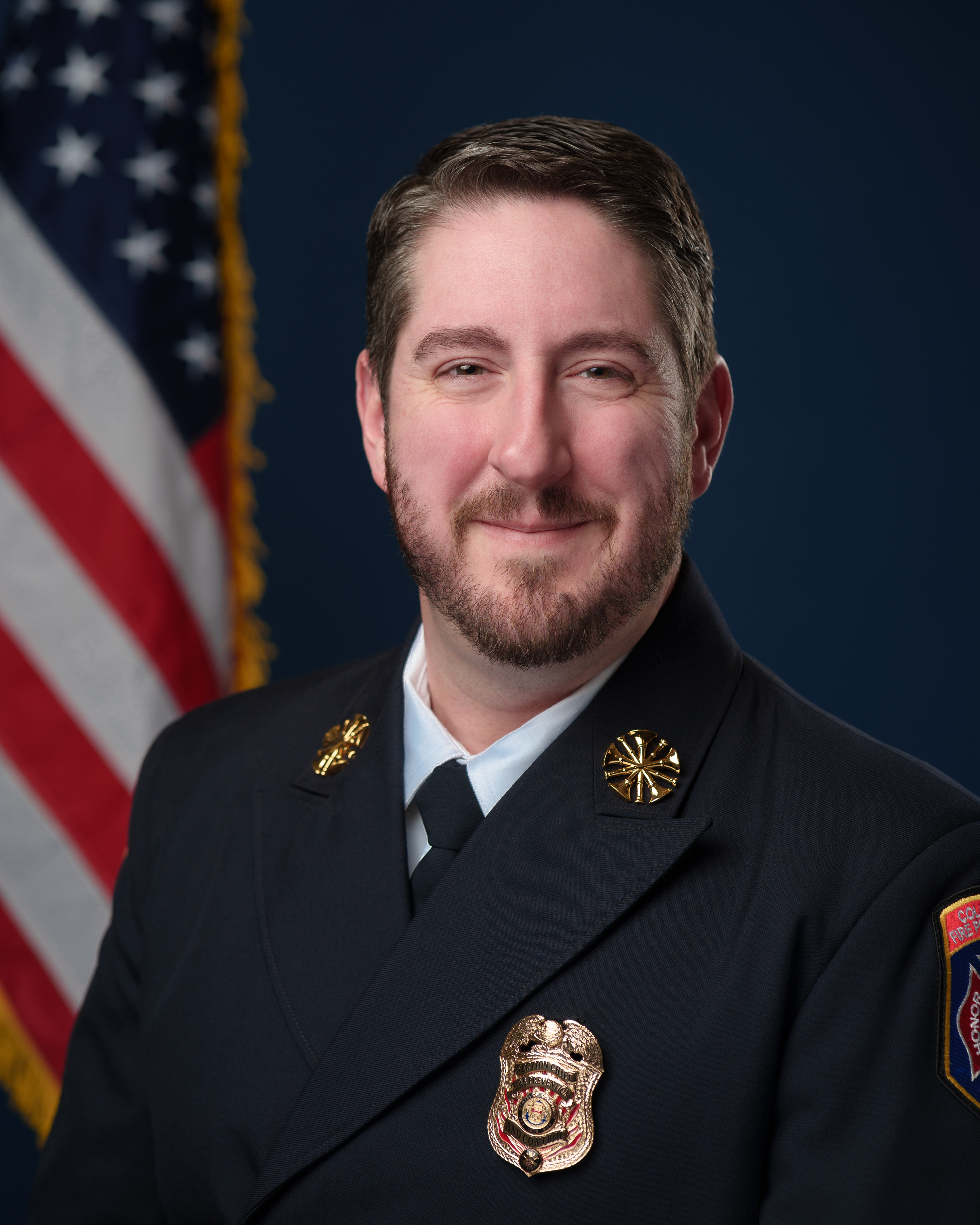
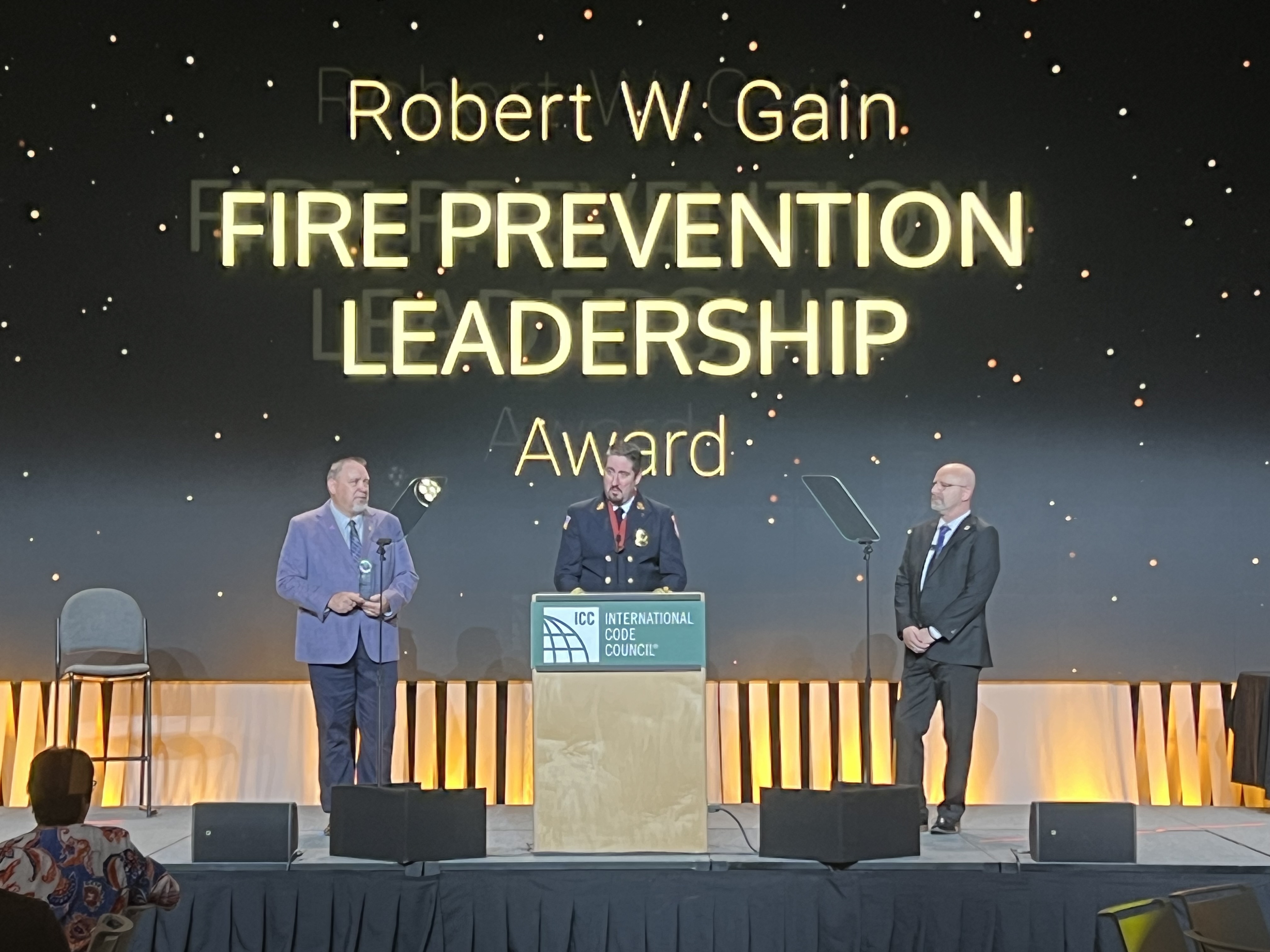
Chief Christopher Brunette Receives 2025 Robert W. Gain Fire Prevention Leadership Award
The Robert W. Gain Fire Prevention Leadership Award recognizes career achievement by an individual who has demonstrated exceptional leadership and longstanding dedication in support of fire codes and fire prevention.
The Robert W. Gain Fire Prevention Leadership Award honors the memory of Chief Robert W. Gain, known as the “father of the Uniform Fire Code”. Chief Gain recognized and advocated the importance of fire codes and fire prevention in reducing loss of life and property due to fire and he championed a decade-long effort that created the Uniform Fire Code, a predecessor to the International Fire Code®, first published in 1971.
With over 20 years of experience in fire service, Christopher Brunette, the 2025 recipient of the Robert W. Gain Fire Prevention Leadership Award, has served the building safety community with passion, dedication and a desire to make a genuine difference. In addition to his primary role as Section Chief for the Fire & Life Safety Section with the Colorado Division of Fire Prevention & Control, Brunette has served as a volunteer firefighter and fire marshal. He has also chaired and participated in a number of essential committees and work groups to improve the life safety of his community and others throughout the nation.
Timothy Diehl, Chair of the ICC Fire Service Membership Council, acknowledged that while professionals in fire and building safety often shy away from accolades, he was happy to see someone as dedicated as Brunette being recognized.
“He has done a lot for fire service, not only in his local jurisdiction in the state but nationally,” said Diehl. “Brunett’s involvement with the codes and now [the Colorado Wildfire Resiliency Code], for Colorado to be a leading voice just speaks volumes.”
Diehl is not alone in his praise for Brunette’s accomplishments. He said that Brunette received two nominations and multiple letters of support from other organizations that recognized Brunette’s many achievements.
“That speaks quality,” Diehl said of the tremendous amount of support that Brunette received. “That says that he’s done something to be recognized that not only benefits his local organization, but the fire service overall. That’s really what Chief Brunette has been able to do. He’s taking that position, he’s expanded the programs, and he’s been really able to promote the fire service through his works in fire prevention.”
Brunette said that he is honored and humbled by the award but highlighted that so much of his job is to help people and support them in doing great work in fire prevention.
“Nothing about this award completely represents my own success,” said Brunette. “It’s the success of a team of people. I wouldn’t be able to participate on the committees I do and try to advocate nationally for fire prevention and community risk reduction if it wasn’t for being backed up and supported by a phenomenal team. I really can’t look at it as an award I’ve received, it’s really an award my team and I have received. They’re an amazing group to work with and I just can’t say enough about them.”
A New Code to Protect Colorado Residents from Wildfires
In 2023, the Colorado legislature passed Senate Bill 23-166 to establish a Wildfire Resiliency Code Board with the goal of reducing wildfires through the adoption of statewide codes and standards. The Board’s purpose was to develop a code for Colorado that would be adopted and enforced by all jurisdictions within a Wildland-Urban Interface.
Brunette is a non-voting member of the Board representing the Department of Public Safety. He helped to develop the code and set the requirements for local adoption. The resulting Colorado Wildfire Resiliency Code (CWRC), which will be enforced in 2026, is based on the International Wildland-Urban Interface Code® (IWUIC).
“The Board started with that ICC code and modified it to meet the needs of Colorado,” explained Brunette. “I’m so grateful that ICC supported us throughout that process and were great partners to work with.”
The CWRC is complete and will be reviewed every three years for potential modifications. A tremendous amount of work went into the code’s development – Brunette estimates that each Board member put in more than 5,000 hours across board and work group meetings, as well as other tasks.
Two critical elements make up the CWRC: one focusing on construction within the Wildland-Urban Interface and one addressing site and area design. Brunette emphasized the importance of both elements.
“I think there used to be this perception that you can modify the landscape and that was enough,” said Brunette. “But we’re finding that not only do you need to modify the landscape and the vegetation, but you need to harden the structures. This code, as well as the IWUIC, take that into account and both have requirements to not only modify the site and area but to harden the structures.”
Unlike other states, which may have statewide codes, Colorado is a local control state. This means that the CWRC is its first statewide building code and will require local jurisdictions to adopt and enforce its rules.
In developing a code of this magnitude, the Board worked hard to meet the needs of Colorado residents while considering what will and won’t work in a state that’s used to home rule code adoption.
“We had to not only think about what’s the best code for the safety of our residents and our communities, but what is a code that’s going to be affordable and make a difference for insurance and insurability,” said Brunette. “We had to consider: what’s going to be palatable for Colorado for a first-time statewide building code?”
Many of the modifications were born out of trying to address those needs. Brunette said that the code does a very good job of moving the needle on protecting homes without being too stringent.
A Team Effort Through and Through
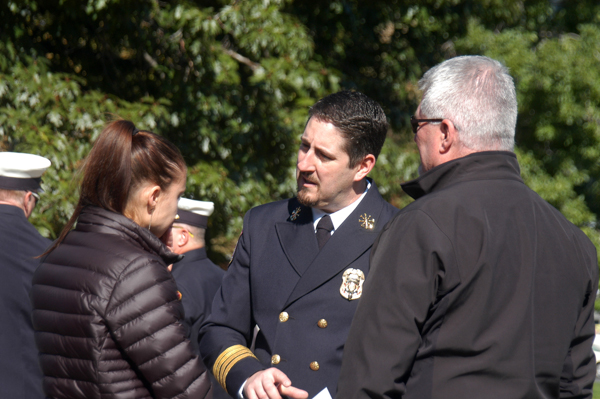
The Wildfire Resiliency Code Board is just one way that Brunette has improved fire and building safety. He also led the development of a statewide Community Risk Assessment in Colorado and is the leader and coordinator for Colorado’s statewide Fire Prevention Week and Community Risk Reduction Week.
“I’m just so proud of the difference our team makes in Colorado,” said Brunette. “I see it every day, every month, every year. The amount of work that goes into taking care of our Colorado communities, and this team is so dedicated to it, from ensuring fire safety in schools and healthcare facilities to making sure that our schools are built correctly. When a fire does occur, we’re going out and helping the local jurisdictions and making sure we find a cause and origin to aid in preventing them from occurring again through all our risk reduction efforts. And making sure all the inspectors and plan reviewers statewide are getting professional development opportunities.”
Brunette added that it’s “just amazing to see the amount of outreach and the mountain of work this group has been able to accomplish.”
“It’s nothing that I myself am doing, but I am witness to some tremendous work and I’m so proud of them,” he said.
View all 2025 ICC award recipients here.
The Building Safety Journal (BSJ) Weekly is a weekly newsletter from the International Code Council that covers the latest news on the building safety and construction sectors. It offers everything from in-depth technical articles about innovative technologies to quick tips, personal perspectives and more. Click here to subscribe.
About the Author

Louis Bedigian is a writer, editor and content strategist with experience producing short- and long-form content for a variety of industries. By day, he's Senior Copywriter for PR agency Brands2Life, where he transforms complex and often technical jargon into content that’s compelling and easy to digest. By night, he's Freelance Copywriter at Fundable, where he develops powerful narratives that drive brand awareness within the investment community.