Code Action Committees Start In-Person Meetings for the 2030 International Codes®
The CACs, appointed earlier this summer, used the meetings as an opportunity to build working relationships, meet fellow committee members and collaborate across committees to address current opportunities to further improve the codes and introduce new solutions and technology advances.
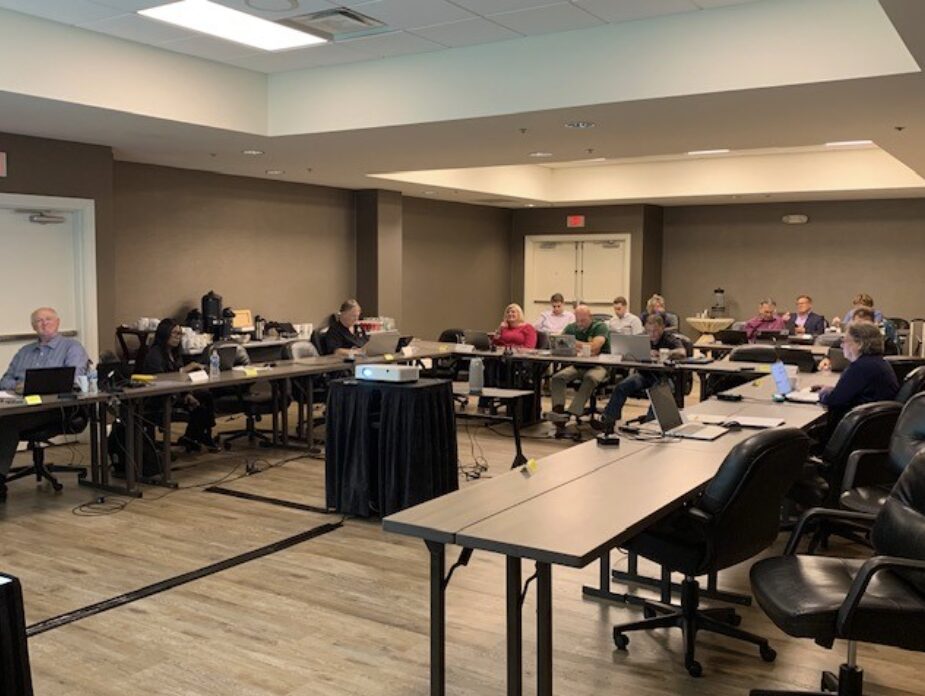
From Sept. 9–11, the Building Code Action Committee (BCAC), Fire Code Action Committee (FCAC), and Plumbing, Mechanical & Fuel Gas Code Action Committee (PMGCAC) met for hybrid meetings in Rosemont, IL.
The meetings brought together approximately 100 committee members and interested parties in person, and with more than 100 additional participants attending virtually, to start preparation for the development of code change proposals for the 2030 International Codes® (I-Codes®).
Meeting Highlights
The CACs, appointed earlier this summer, used the meetings as an opportunity to build working relationships, meet fellow committee members and collaborate across committees to address current opportunities to further improve the codes and introduce new solutions and technology advances.
The meetings opened with a welcome from International Code Council (ICC) Chief Executive Officer John Belcik, who thanked participants for their time and continued support of the code development process. Over the course of three days, the CACs focused on code change proposals for the upcoming Group A code changes for the 2030 I-Codes.
Other highlights from the meetings include:
- Joint FCAC and BCAC discussions continued work on data centers and middle housing provisions in the I-Codes.
- The PMGCAC reviewed potential code proposal language on Hydrogen, Geothermal and Sanitary Drainage Systems.
- Each CAC also discussed consistency of definitions across the I-Codes, led by members of the BCAC
While there is still significant work to be done over the course of the next three years for each committee, these in-person meetings provided a strong launching point for the 2030 Code Development Cycle.
These meetings were open to the public, with details of future meetings available on the committee pages.
ICC’s code development process remains the global standard in code development and is the most open and transparent process for developing model safety building codes. Codes save lives and money, and build stronger communities.
You can get on the committee Interested Party list(s) by signing up here. (Click on the “Interested Party Lists” button.)
Subscribe to the Building Safety Journal here.
About the Author
The International Code Council is a nonprofit association that provides a wide range of building safety solutions, including product evaluation, accreditation, certification, codification and training. It develops model codes and standards used worldwide to construct safe, sustainable, affordable and resilient structures.