Living With a Disability and Finding a Meaningful Career in Building Safety
Building safety has proved to be a stable and fulfilling career path for many individuals, including those who live with a disability.
Working in building safety is more than a job – it is an opportunity to build a career in an industry that strives to protect and improve the safety, integrity and accessibility of the built environment.
In addition to the benefits of being in a field that offers unique experiences every single day, the building safety industry allows hard-working individuals to make a difference in communities around the world.
“We are, by nature in this industry, very open-minded when it comes to opportunities for all people,” said Jack Applegate, Building Official for the City of Estacada and CEO of Northwest Code Professionals and MAE Engineering. “New video and drone technology has changed the game in many ways.”

As a disabled Veteran, Applegate understands the challenges of limitations better than most. He spent 13 years taking care of developmentally disabled adults in his own home and has been eager to help others achieve their career goals in building safety.
Helping Others Succeed Allows Everyone to Thrive
When Applegate saw a post on LinkedIn from aspiring building safety official Danny Dabler, he knew he had to reach out. Dabler was paralyzed from the chest down following a severe motorcycle accident. At that time, Dabler was attending the Building Inspection Technology (BIT) program at Chemeketa Community College in Salem, Oregon, and thought his career as a building inspector was no longer possible.
“When I first read the post, I felt like there was something more that I could do to make sure his goals and career aspirations were still obtainable,” said Applegate, who sits on the International Code Council’s (ICC) Board of Directors. “I have always been a huge supporter of the Chemeketa BIT education program. With all the advances in technology, electronic plan review and drones, there should be no limits to Danny achieving his goals.”
Dabler’s story and commitment to building safety proved to be incredibly inspiring to Applegate, who said that having Dabler on the team would give him the confidence and experience needed to be successful. Applegate also thought that Dabler could teach his team more about working with those who have physical limitations.
A New Career, a New Challenge
Dabler came to building safety without any prior experience working in the public sector. He was also new to being in a wheelchair and wanted prospective employers to be aware of this up front.
“My routine to get ready in the morning had drastically changed,” Dabler explained. “Small things in your day that you don’t typically set time aside for now took me at least 15 minutes (making breakfast, getting dressed/putting my shoes on, getting in and out of a car, etc.).”
Dabler’s story – in which he offered to work for free if someone would teach him plan review – really resonated with Applegate.
The experience that Dabler gained from this internship, along with his many certifications (he’s now both a Certified Building Official and a Master Code Professional), empowered him to take another step forward in his career. He applied for new jobs at four jurisdictions; two as a plans examiner and two as a building inspector. One of the building inspector positions was for the Clark County Building Department in Washington, where he was ultimately hired.
Under the leadership of former Building Official Jim Muir, Clark County had become an epicenter of inclusivity and innovation. Its building department was the first in the country to offer video inspections in 2012.
The idea came about after one of the department’s inspectors was diagnosed with a brain tumor. Muir came up with a novel idea: instead of going out in the field, which wasn’t possible, they could now complete re-inspections via video.
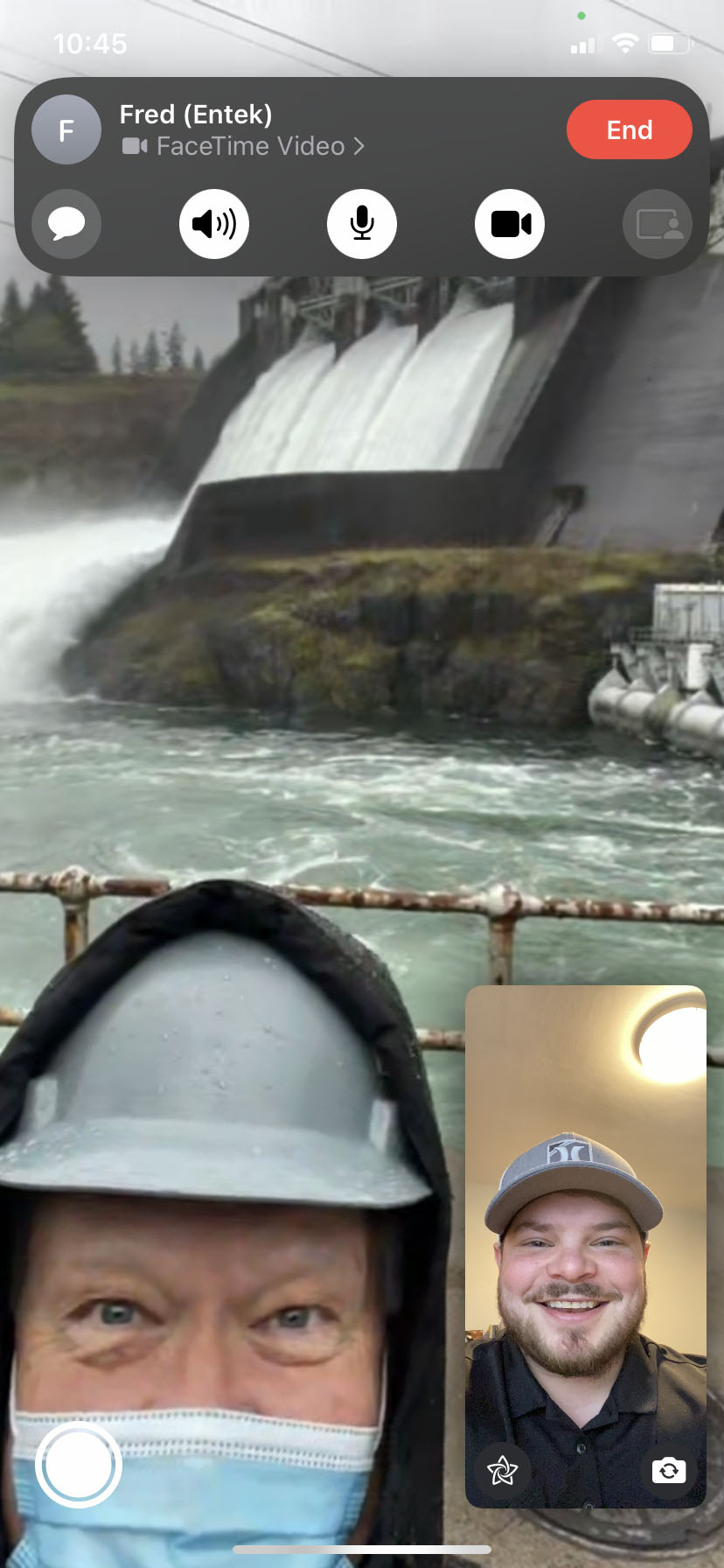
Muir’s quick and innovative idea paved the way for other inclusive employment opportunities, including Dabler’s position as Building Inspector III, as he conducts all video inspections in real-time. Clark County’s use of technology has allowed other employees to continue working as well, even at times when it wouldn’t have otherwise been possible.
“Anybody with almost any disability could probably do something in the building department,” said Muir. “Plans examiner [is one option] because you’d be in the office or in your home, looking over a set of plans and wouldn’t necessarily need to be mobile.”
Opening the Door to Fresh Talent
Building departments are eager to highlight the benefits of working in building safety. Likewise, the overall construction industry has a number of positions – from sales and project logistics to project management, architecture, design and beyond – that need great applicants.
To create a more inclusive work environment that greatly expands the pool of potential candidates, Applegate suggests that organizations start by being more open-minded and resourceful.
“And understand that the way we have always functioned in our code official duties is not the only way we can be successful in those same work duties,” said Applegate. “We learned a lot through COVID-19 about how flexibility and creativity can work in our industry, and [we were] still be able to provide equal services to the communities we serve.”
In some instances, a flexible approach could allow people with a temporary setback to continue working during their recovery. For example, Muir said that if someone has surgery or another health-related challenge, they may still be able to contribute even if their tasks cannot be completed as originally planned.
“It doesn’t necessarily have to be a long-term or serious health situation,” said Muir. “Anybody who is on light duty could also do things like plan review.”
More Opportunities Than One Might Think
Plan review is just one of the many opportunities available to people who live with a disability. According to Muir, they could also thrive as permit technicians.
“We could use a lot of great people in that realm,” said Muir. “It’s the first face of our whole industry when someone comes in to find out if they need a permit, so permit techs are super important. If you happen to be somebody with a great personality and great customer skills, the permit center is perfect.”
Applegate agreed, adding that people who live with a disability could also be teachers or code trainers in the classroom, traveling to provide building safety and code training. He also sees opportunities for employment in government relations, as well as administrative positions in local building and fire departments.
“Reach out, ask questions, propose solutions, challenge the status quo, network and be positive,” Applegate advised. “Be like Danny! These are all things that Danny did to ensure his own success.”
Learn more about updates to ICC’s A11.7 Standard for Accessible and Usable Buildings and Facilities here. Subscribe to the Building Safety Journal here.
About the Author
The International Code Council is a nonprofit association that provides a wide range of building safety solutions, including product evaluation, accreditation, certification, codification and training. It develops model codes and standards used worldwide to construct safe, sustainable, affordable and resilient structures.