Code Corner: 2024 IMC Chapter 4: Ventilation
The Code Corner explores sections of the International Codes® each month, focusing on key elements of these essential codes. This month, we’re spotlighting the scope of Chapter 4 of the 2024 International Mechanical Code®.
The International Codes® (I-Codes®), developed by the International Code Council (ICC), are a family of fifteen coordinated, modern building safety codes that help ensure the design and construction of safe, sustainable and affordable structures.
The I-Codes are the most widely adopted set of model codes globally, implemented in all 50 U.S. states and many countries around the world.
The Building Safety Journal’s series, Code Corner, explores sections of the I-Codes each month, focusing on key elements of these essential codes. This month, we’re spotlighting the scope of Chapter 4 of the 2024 International Mechanical Code® (IMC): Ventilation.
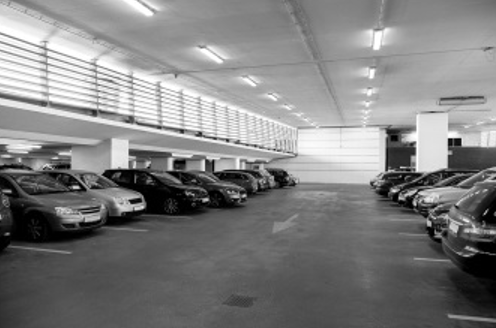
404.1 Enclosed Parking Garages.
Mechanical ventilation systems for enclosed parking garages shall operate continuously or shall be automatically operated by means of carbon monoxide detectors applied in conjunction with nitrogen dioxide detectors. Such detectors shall be listed in accordance with UL 2075 and installed in accordance with their listing and the manufacturer’s instructions. Automatic operation shall cycle the ventilation system between the following two modes of operation:
- Full-on at an airflow rate of not less than 0.75 cfm per square foot [0.0038 m3 /(s × m2)] of the floor area served.
- Standby at an airflow rate of not less than 0.05 cfm per square foot [0.00025 m3 /(s × m2)] of the floor area served.
This section applies to parking garages, not repair garages (see Commentary Figure 404.1). The intent is that the exhaust system operate continuously, but the exhaust rate can vary. Operation must be automatic, and Section 404.2 requires that the automatic operation maintain an exhaust rate of not less than 0.05 cfm per square foot. In other words, if the system is automated to cycle between different rates, the exhaust rate can never go to zero; the exhaust rate must be either the full rate of not less than 0.75 cfm per square foot or the standby rate of not less than 0.05 cfm per square foot, as determined by the CO and NO2 detectors. This section simply provides an alternative to continuous ventilation at the 0.75 cfm per square foot rate by allowing a reduced continuous rate when the detection system says that it is safe to do so.
As a means of conserving energy, ventilation systems for enclosed public parking garages are allowed to alternate or modulate between full capacity and the minimum capacity. The alternating or modulating operation must be accomplished using approved detection devices that are capable of detecting the presence of CO and NO2. This section is referenced by Note d of Table 403.3.1.1 and is intended to apply to parking garages for vehicles such as automobiles, buses and fleet vehicles.
Note that the detection system cannot rely solely on measuring carbon monoxide (CO) because other gaseous and particulate contaminants can reach harmful concentrations long before CO levels rise to the detection threshold of the CO detectors. The intent is to require both CO and NO2 detectors used together.
To stay updated on the latest PMG industry news, subscribe to ICC’s PMG newsletter here.
About the Author

The International Code Council is a nonprofit association that provides a wide range of building safety solutions, including product evaluation, accreditation, certification, codification and training. It develops model codes and standards used worldwide to construct safe, sustainable, affordable and resilient structures.