How Building Codes Are Being Updated and Driving Development After the Surfside Condo Collapse
As building codes continue to be updated to meet an even higher standard of safety, developers are starting to look at how they can best construct the condos of tomorrow.
June 2026 marks the five-year anniversary of the condo collapse in Surfside, Florida, where nearly 100 people were killed when Champlain Towers South (a 12-floor condominium complex) partially but suddenly collapsed in 2021.
The tragic event highlighted the importance of compliance with codes in initial construction, annual inspections and following the most up-to-date building codes.
Building codes provide the minimum safety requirements to address structural integrity and fire resistance to keep occupants safe. These codes provide an essential guide for ensuring that every building is as safe as possible. They inform everything from the architectural design to the structure’s safety and stability.
The anniversary of the condo collapse in Surfside is an important reminder of this.
Here is a clip from the International Code Council’s (ICC) 30th-anniversary documentary discussing this tragedy:
Updates Surrounding the Surfside Investigation
On June 23, 2026, NIST released a video update on the latest technical findings in the Champlain Towers South investigation. The team concluded that the “collapse began in early June 2021, when two connections between garage columns and the pool deck failed. These initial column failures caused cracks to grow and loads to redistribute in the pool deck over the next three weeks, resulting in the transfer of their loads to adjacent slab-column connections that were not strong enough to support them. This led to the larger catastrophic collapse on June 24.”
NIST will also present their findings later this year at ICC’s Annual Conference and Expo in Nashville.
Alongside NIST’s investigation, ICC is also working on the development of Standard ICC 1500 – Standard for Existing Building Safety Inspections. This standard will provide technical and uniform requirements for the regular inspection of structural elements, egress components, active and passive fire protection systems, the building envelope (including the roof), electrical, plumbing, mechanical and fuel gas equipment and systems in order to assess whether an unsafe condition exists.
A Quick Response for Improved Building Safety
Miami-Dade County responded to the Surfside tragedy by quickly updating its building recertification program. One critical update involves threshold buildings (those with four or more stories), which must now be inspected by a structural engineer who has experience working on that specific type of building.
Sergio Ascunce, Deputy Building Official at Miami-Dade County, said that means a 30-story building must be assessed by an engineer with experience designing similar buildings. The county also implemented a new standard for quality assurance inspections, which calls for random inspections to verify that a building is in line with reports from architects and engineers.

Miami-Dade County also added a façade requirement that considers the risks associated with components that could become dislodged, even though they aren’t part of the structure.
Going one step further, the county implemented a thermography requirement that means electrical panels must now be inspected via thermal imaging. Previously, an electrical engineer would merely inspect the panel with his eyes. However, they would not be able to see any excess heat coming from a connection at a circuit breaker, which could be indicative of a failed connection or a failed breaker and cause a fire. Understanding the risks, Miami-Dade County added this requirement for yet another layer of building safety.
“That was one of the additional parameters added after Surfside even though the Surfside tragedy was not attributed to any electrical issues,” said Ascunce. “We looked at it holistically: how can we enhance building safety?”
This is not the first time that Miami-Dade County and the entire state of Florida have been ahead of the crowd in building safety. Florida now requires milestone inspections for condominium and cooperative association buildings that are three stories or higher when they reach their 30th year. Additional inspections must be carried out every 10 years thereafter. This requirement was implemented in 2022 – less than one year after the Surfside collapse. Both the Governor and the Florida Legislature acted quickly to implement these changes, which include language from ICC’s guide, Ensuring the Safety of Existing Buildings in Florida.
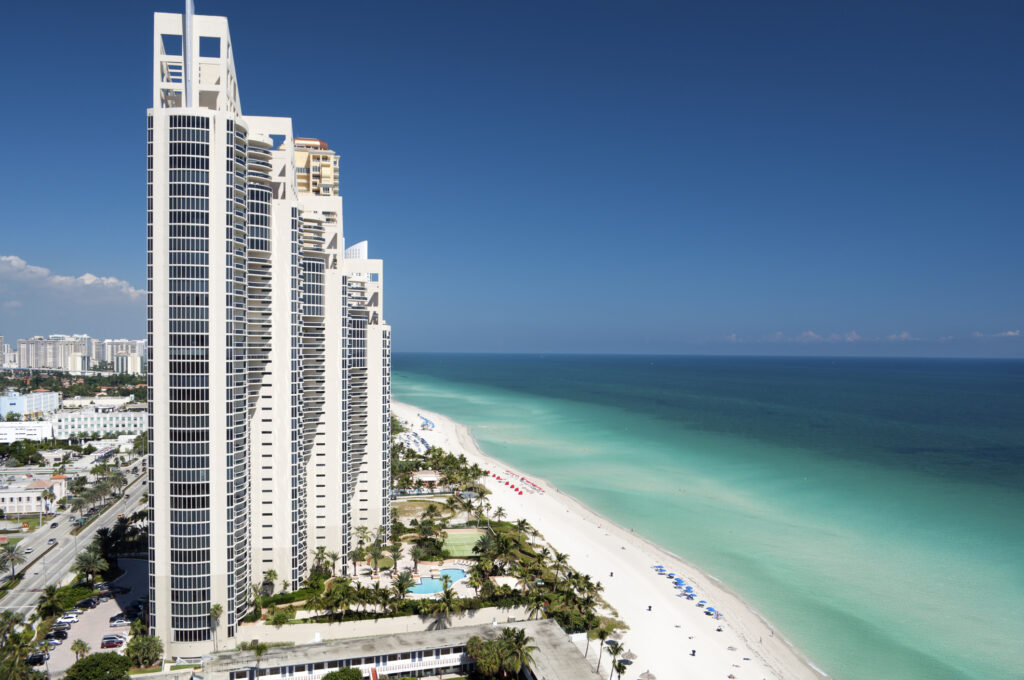
In 2023, the Legislature further amended the law to allow local building officials to require inspections after a building turns 25 years old, depending on local circumstances, such as environmental conditions or proximity to salt water. Before the Surfside incident, milestone inspections first occurred in Miami-Dade and Broward counties at the 40-year mark and applied to most buildings.
In Miami-Dade County specifically, milestone inspections apply to any building greater than 2,000 square feet, regardless of the number of floors. The county has had this requirement since 1975 after a building partially collapsed the previous year. Ascunce said this incident, which killed seven people and injured 216 others, involved a building that was leased by the DEA at the time.
Ascunce currently sits on the ICC 1500 Standard for Existing Building Safety Inspection Standard Committee that is working on converting the Existing Building Condition Assessment guideline. The guideline is similar to Florida’s milestone inspection requirements. This would allow similar procedures to be adopted in other jurisdictions throughout the U.S. and is another reason why Florida is a leader in building safety.
Dottie Mazzarella, Vice President of Government Relations at ICC, praised the state for keeping their codes current. She noted that the Florida Building Code is based on the International Codes® but said that Florida also has strict guidelines for people who want to get licensed in the code enforcement profession.
“If somebody comes from a different state and says, ‘I have an ICC certification and I’ve been working as a building official in Kentucky, it doesn’t give you the automatic ability to work in Florida,” said Mazzarella. “In Florida, you must be licensed, which is based on passing various ICC exams and combined work experience, only following review of the Department of Business & Professional Regulation’s Building Code Administrators and Inspections Board.”
Florida will transition to the Nineth Edition of the Florida Building Code on Dec. 31, 2026, which references the 2024 I-Codes. A draft of the 2026 Florida Building Code can be viewed here.
Advancements Driven by Improved Building Safety
As building codes continue to be updated based on the latest building science and lessons learned from tragedies like the Champlain Towers collapse, developers are starting to look at how they can best construct the condos of tomorrow. Many Florida condos are five or six decades old, which means they were not built with the latest building codes. This has spurred new development as older, less secure buildings are replaced.
“As we develop the code, we’re constructing structures that are more survivable,” said Tom Allen, Building Official for Orange County, Florida and former Regional Manager of Government Relations for ICC. “Every time we have a large storm, we look at why the buildings fail and what we need to do to build a better building. Not necessarily hurricane-proof or tornado-proof, but more resilient so that there will be less repair afterward.”
Allen added that in Florida and across the country, code developments ensure people have a safer place to live.
Allen has seen many improvements in building safety throughout his roughly five-decade career, which started in construction in the ‘70s. At the time, some hurricane risks were addressed by attaching a small clip to the rafters of a home. Today, the entire structure is tied down to the foundation, providing far greater stability.
“The building codes are constantly upgrading to embrace new technology, new methods of construction and new materials,” said Allen. “There is a plethora of different construction types that, at one time, weren’t covered by the code. But now they are, and with every revision of the code we add additional ways of doing things.”
Allen is particularly excited about the next update to the ICC’s Performance Code for Buildings and Facilities (ICCPC), which will “allow designers to be even more creative with how they design buildings,” he said.
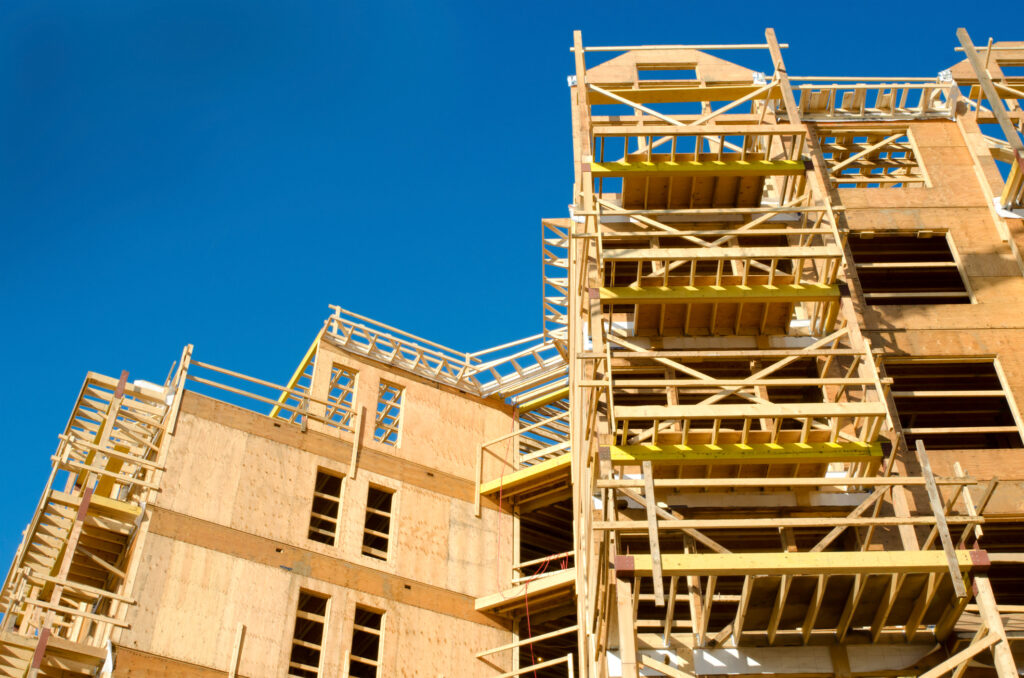
“One of the things that’s come in the last few years has been engineered lumber and heavy timber,” said Allen. “We’re building taller buildings out of structurally engineered lumber, where they’re designed with chips or layers of lamination. Years ago, you wouldn’t have thought that you’d be getting an eight-story timber building. But it’s a renewable source and people are embracing new technologies.”
While new building innovations are important, Allen also wanted to call out the International Existing Building Code® (IEBC). He feels it deserves much more attention for its ability to preserve existing structures.
“Its whole intention is to allow you to repurpose and reuse a building for other purposes without having to bring the entire building up to current code,” said Allen. “So I’m a big proponent of IEBC – it gives you a path to renovate without having to make a new building.”
For more information and updates on ICC’s guideline 7, visit the ICC’s dedicated webpage here.
For more information and updates on Standard ICC 1500, click here.
About the Author

Louis Bedigian is a writer, editor and content strategist with experience producing short- and long-form content for a variety of industries. By day, he's Senior Copywriter for PR agency Brands2Life, where he transforms complex and often technical jargon into content that’s compelling and easy to digest. By night, he's Freelance Copywriter at Fundable, where he develops powerful narratives that drive brand awareness within the investment community.