The International Code Council Led International Dialogue at COP 30
The International Code Council joined key stakeholders and government officials to discuss solutions to achieve resilience and build capacity in the built environment.
From Nov. 10-21, 2025, the International Code Council (ICC) once again joined global stakeholders participating in the UN Global Climate Change Conference (COP30) in Belém, Brazil, to elevate the importance of having strong, right-sized building codes supported by a robust ecosystem for compliance to ensure both resilience and sustainability in the built environment.
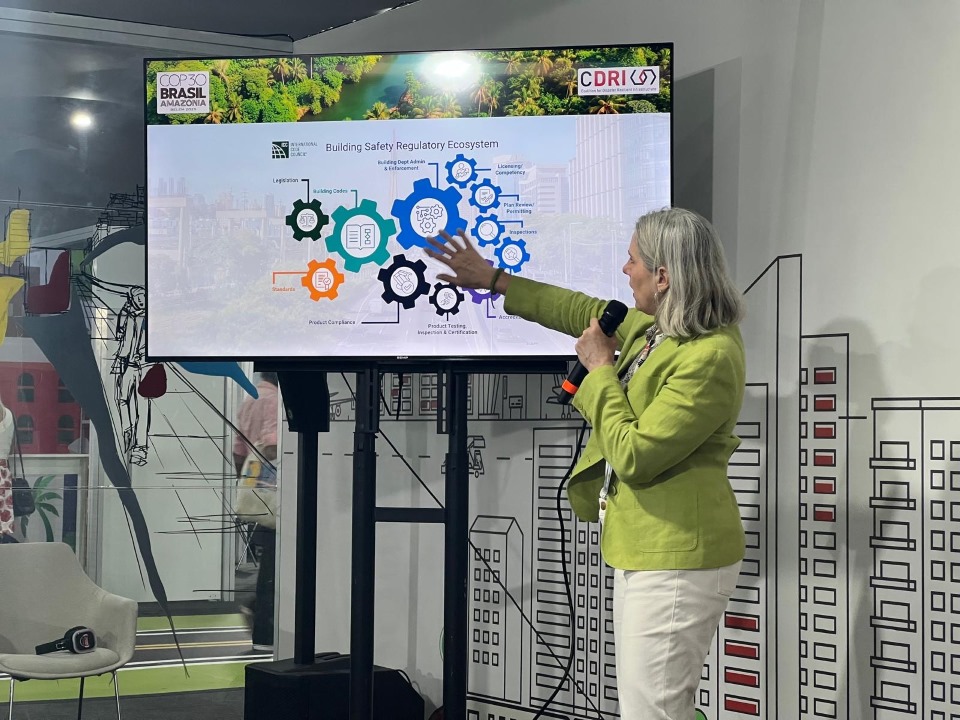
ICC Engagement
While national climate policy makers from around the world were negotiating carbon reduction and adaptation goals, the ICC team joined a large gathering of NGOs, industry, development banks and government leaders to discuss solutions and take action to support the overall aims of creating a more sustainable and resilient world.
The buildings and construction sector has had an increasingly important voice, and was comprised of stakeholders represented by the Global Alliance for Buildings and Construction (GlobalABC), the Coalition for Disaster Resilient Infrastructure (CDRI), Local Governments for Sustainability (ICLEI), UN Habitat and the Stockholm International Water Institute (SIWI).
The idea of a “neighborhood” of like-minded organizations addressing the “Cities, Infrastructure and Water” aspect of the COP30 agenda was a response to the COP30 Presidency’s call for a Mutirão Global, or a space for collective action involving multilevel governance and private sector solutions.
Within the pavilion space and the “Cities, Water and Infrastructure” neighborhood, there were throughlines to some of the major topics under discussion in the climate negotiations. Those that have the most relevance to ICC’s work include:
- Adaptation: whereby the creation of an adaptation fund could aid emerging economies to improve their building safety regulations and enforcement capacity.
- Just Transition: whereby the Global Implementation Accelerator and Belem Mechanism for Just Transition were launched to “enable ambition” and implementation of the Nationally Determined Contributions (NDCs) that address what countries need to do to address carbon reduction. Energy codes and resources to ensure that they are properly implemented are critical tools for achieving the NDCs, as nearly 40 percent of carbon emissions result from the construction and operation of buildings.

ICC-Led Initiatives
This year, ICC led two global initiatives during COP30.
First, the GlobalABC Adaptation Hub, co-chaired by ICC, released the Adaptation Pathways, called on each stakeholder group along the buildings and construction value chain to advance resilience and adaptation within their sphere of influence.
Second, through Priority Action 5 of the Buildings Breakthrough, led by ICC, a portal of tools was soft launched for institutional and personnel capacity building needed to achieve the Buildings Breakthrough goal of making Nearly Zero Energy and Resilient Buildings (NZERBs) the new normal by 2030.
Both of these initiatives will continue into 2026 and beyond.
Additionally, ICC used its growing global recognition and internationally-respected voice on matters related to the built environment to champion important issues including:
- Resilience and adaptation to the increasingly frequent and severe weather events that are occurring around the world, stressing the importance of having strong general building codes in addition to energy efficiency or green building codes. ICC also emphasized the need to have right-sized building codes that are contextually appropriate for each country or region.
- Capacity building to ensure that building regulations can be effectively enforced so that they result in safer, more resilient buildings. ICC encouraged holistic thinking about adopting a building code that can be enforced using the existing capabilities in a country or jurisdiction, and considering a plan for developing the necessary capabilities as the code is implemented.
- Leveraging new technologies to achieve resilience, affordability and sustainability in the built environment while remaining compliant with the building regulations enforced in a jurisdiction.
ICC staff were featured in about a dozen presentations, many of which were recorded and are available to view online here.

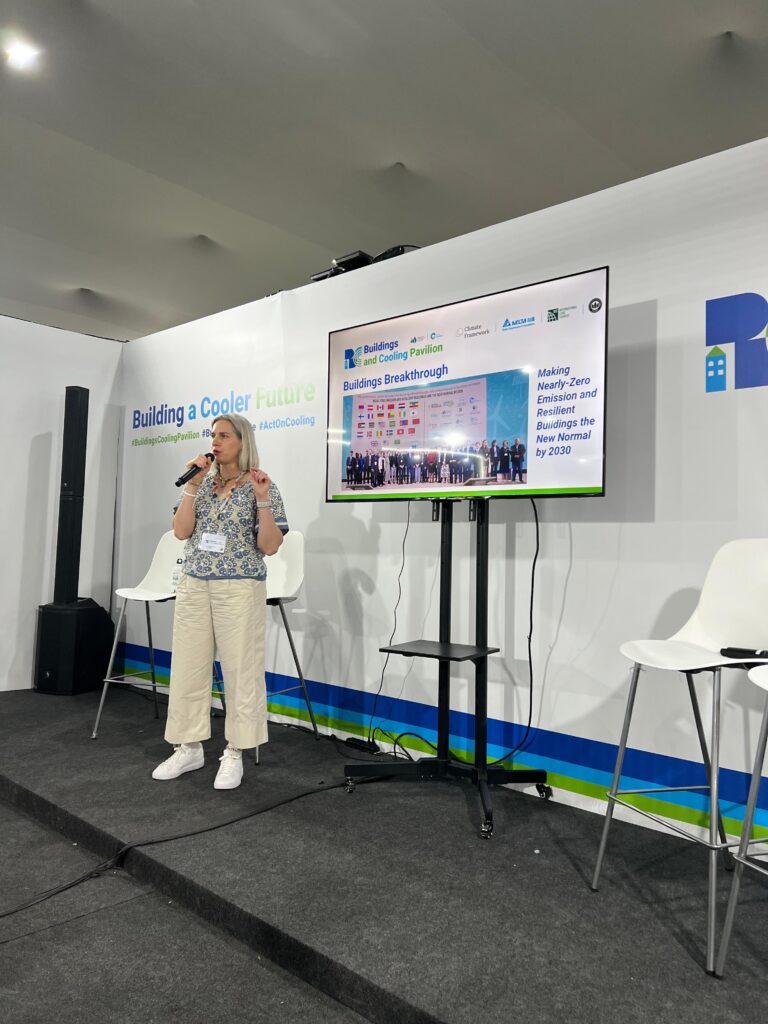
Global Collaboration
Finally, on Nov. 11, the Inter-Governmental Council for Buildings and Climate (ICBC) held its first ministerial meeting and ICC joined ministers from nearly two dozen countries. The ICBC is an important initiative spearheaded by the GlobalABC and the French Government to bring together construction and housing ministers from around the world to collaborate on a global platform to create a safer, sustainable and resilient built environment.
During the meeting, the ICBC launched the Belem Call for Action for Sustainable and Affordable Housing, reaffirming that regulatory action is required to achieve the goals of the ICBC, and calling on governments to prioritize support for housing that meets regionally and nationally defined standards related to resource and energy efficiency, emissions and resilience.
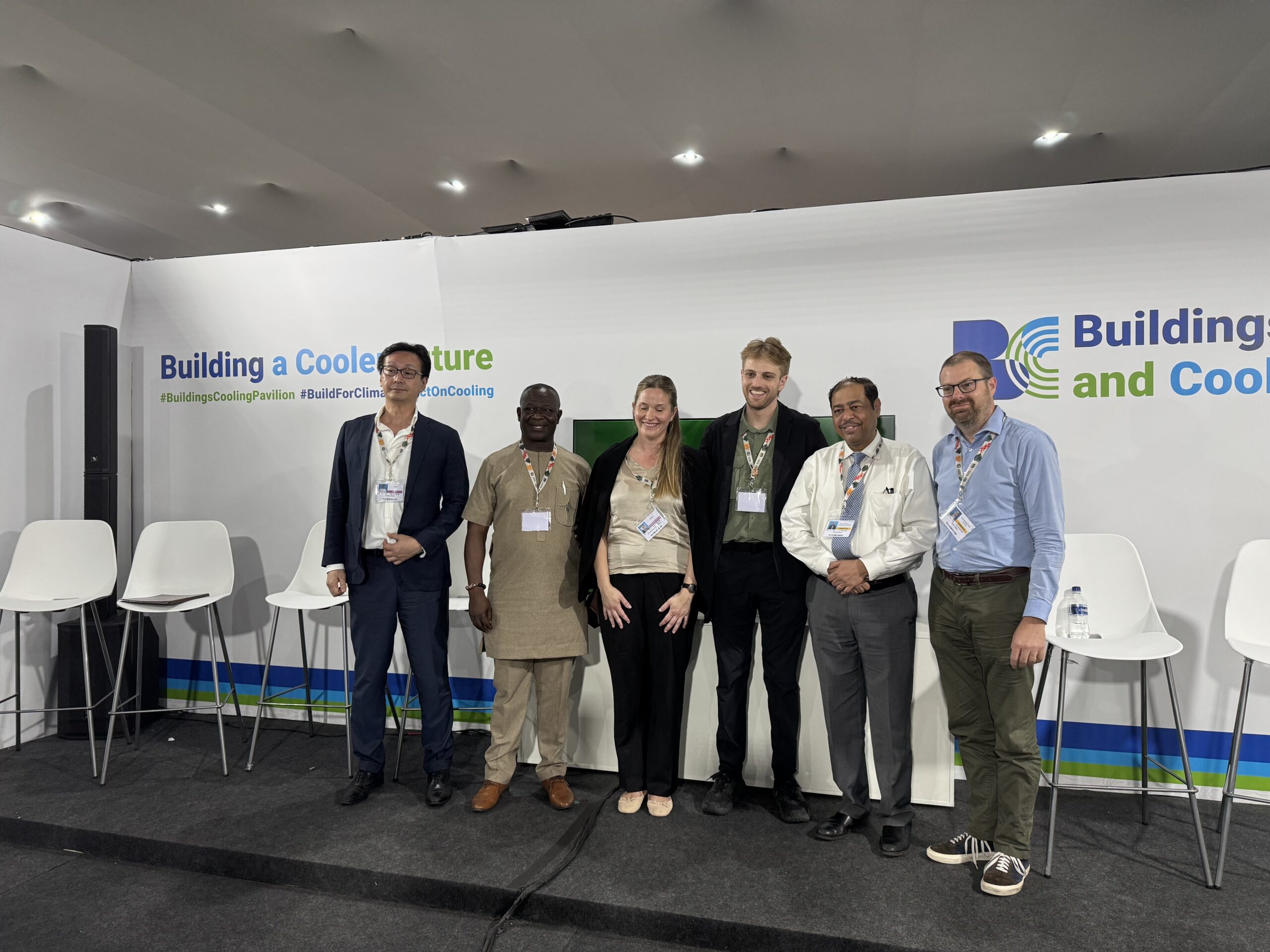
Promoting ICC’s Global Mission
Engaging in the dialogues surrounding the UN Climate Conferences every year provides a meaningful opportunity for ICC to share its solutions and continue global expansion of its building safety mission, while also learning about the needs in countries around the world.
Learn more about ICC Global Solutions here.

About the Author

Judy Zakreski, Senior Vice President, Global Operations and Solutions, is a Certified Global Business Professional responsible for developing and executing the International Code Council's global strategy, including oversight of the organization’s two regional offices in Dubai and Australia. She also serves as the Executive Director of the International Building Quality Centre (IBQC) and as the Vice Chair of the Virginia/DC District Export Council.