Code Corner: 2024 IFGC Chapter 6 Specific Appliances
The Code Corner explores sections of the International Codes® (I-Codes®) each month, focusing on key elements of these essential codes. This month, we’re spotlighting the scope of Chapter 6 of the 2024 International Fuel Gas Code®.
The International Codes® (I-Codes®), developed by the International Code Council (ICC), are a family of fifteen coordinated, modern building safety codes that help ensure the design and construction of safe, sustainable and affordable structures.
The I-Codes are the most widely adopted set of model codes globally, implemented in all 50 U.S. states and many countries around the world.
The Building Safety Journal’s series, Code Corner, explores sections of the I-Codes each month, focusing on key elements of these essential codes. This month, we’re spotlighting the scope of Chapter 6 of the 2024 International Fuel Gas Code® (IFGC®): Specific Appliances.
International Fuel Gas Code 602.1 General
Decorative appliances for installation in approved solid fuel-burning fireplaces shall be listed in accordance with ANSI Z21.60/CSA 2.26 and shall be installed in accordance with the manufacturer’s instructions. Manually lighted natural gas decorative appliances shall be listed in accordance with ANSI Z21.84.
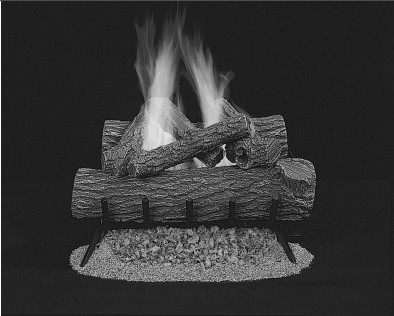
These appliances include gas log sets that are designed to simulate wood fires (see Commentary Figure 602.1). Sections 301 through 310 address the requirements for testing, labeling and installing mechanical equipment and appliances. The gas-burning appliance must be tested to the standard or standards appropriate for the equipment. The testing agency is responsible for determining the standard to be used to test the equipment. In the case of decorative gas log sets, ANSI Z21.60 or Z21.84 is the applicable test standard.
Labeling is the code official’s assurance that the subject product is a representative duplication of the product that the testing agency tested in the laboratory. The label indicates that an independent agency has conducted inspections at the plant to verify that all units conform to the specifications that the quality control manual sets forth for fabricating the gas appliances. Information that must be contained on the label is described in Section 301.5 and includes the manufacturer’s identification, the third-party inspection agency’s identification, the model number, the serial number, the input ratings and the type of fuel the appliance is designed to burn.
The code requires that the appliance be installed in accordance with the manufacturer’s instructions. This requirement is also linked to the laboratory testing of the appliance because the laboratory used the same instructions to install the prototype appliance being tested. When the appliance has been tested and evaluated for code compliance and judged to meet the performance and construction requirements of the applicable standard, the installation instructions become an integral part of the labeling requirements and must be strictly adhered to.
The intent of this section is to regulate gas-burning appliances that are accessory to, and designed for installation in, vented solid-fuel-burning fireplaces. Gas-fired decorative log sets and log lighters are examples of accessory appliances that are designed for installation in solid-fuel-burning fireplaces. Gas log sets provide some radiant heat; however, their primary function is to create an aesthetically pleasing simulation of a wood log fire. This section addresses vented appliances and does not address “unvented gas log sets” (room heaters).
Decorative gas-burning appliances, such as some gas log sets, are designed to simulate wood fires by intentionally causing incomplete combustion as necessary to yield yellow or yellow-tipped flames. This incomplete combustion results in an increase in the amount of carbon monoxide produced. The highly toxic carbon monoxide is odorless and colorless, and the accompanying products of combustion produced by a gas-burning appliance do not have a strong odor or an odor that is readily recognized by an untrained person.
If a decorative gas appliance were operated with the fireplace damper closed, the carbon monoxide levels could be dangerously high before the building occupants became aware of the hazard. To prevent harm and the possible asphyxiation of the occupants, it is imperative that the fireplace damper be open whenever the appliance is burning. The manufacturer’s installation instructions will specify the minimum free area of damper opening required to vent the appliance combustion products. The damper area is proportional to the appliance’s input rating. The fireplace damper plate must be removed or permanently fixed in a position that provides the opening area required by the appliance manufacturer’s installation instructions.
To learn more about ICC’s IFGC, click here. To stay updated on the latest PMG industry news, subscribe to ICC’s PMG newsletter here.
About the Author

Gary has over 40 years of experience working within the Construction and Plumbing Industry. He is a seasoned Construction Project Manager as well as a Licensed Master Plumber in Massachusetts, New Hampshire, Maine and Vermont.
In addition, Gary holds an Unrestricted Construction Supervisor’s License (CSL) within the state of Massachusetts and completely understands the significance of code correlation. Lastly, while working with the International Code Council, he is currently an Adult Educational Master Plumbing & Fuel Gas Instructor and Continuing Education Instructor in the Commonwealth of Massachusetts.
Member of the International Code Council PMG Team responsible for developing, coordinating, directing and implementing programs to ensure the successful completion of the Government Relations goals and objectives as they apply to the International Plumbing Code, International Mechanical Code, International Fuel Gas Code, International Swimming Pool and Spa Code, and the International Private Sewage Disposal Code (and related services and programs of the International Code Council).