Codes Are the Foundation for Resilient Cities: Highlights From a Resilient City Expo 2026 Keynote
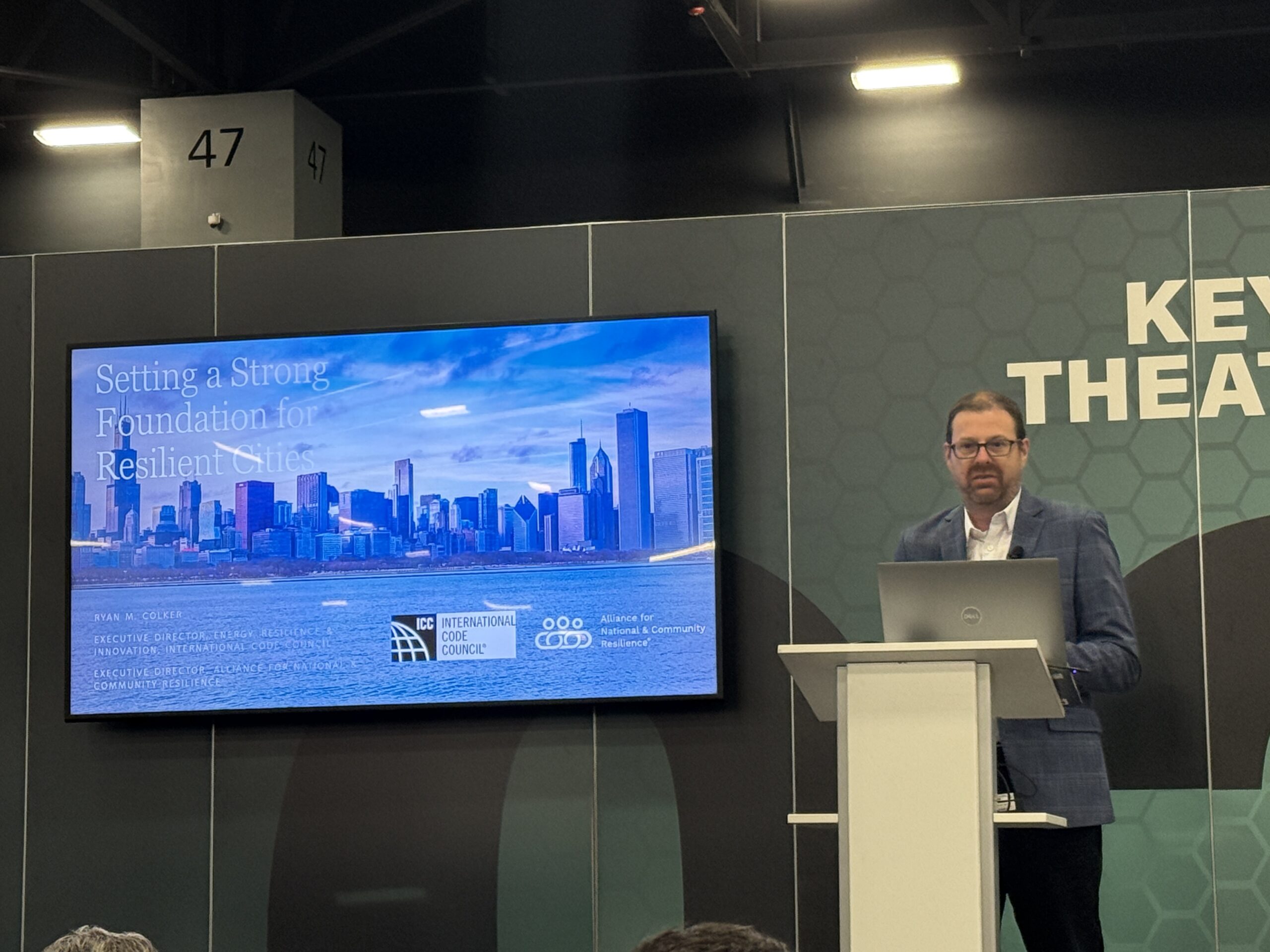
ICC Executive Director Ryan Colker delivered a keynote at the 2026 Resilient City Expo.
Construction leaders, material innovators, infrastructure experts, architects and engineers convened at the Resilient Cities Expo from March 5-6 in Miami, Fla., to discuss how urban development can better withstand natural hazards and extreme weather events while addressing the evolving needs of communities worldwide.
Ryan Colker, Executive Director, Energy, Resilience & Innovation for the International Code Council (ICC), was a keynote speaker at this year’s event and presented on the important role building codes play in setting a strong foundation for resilient cities.
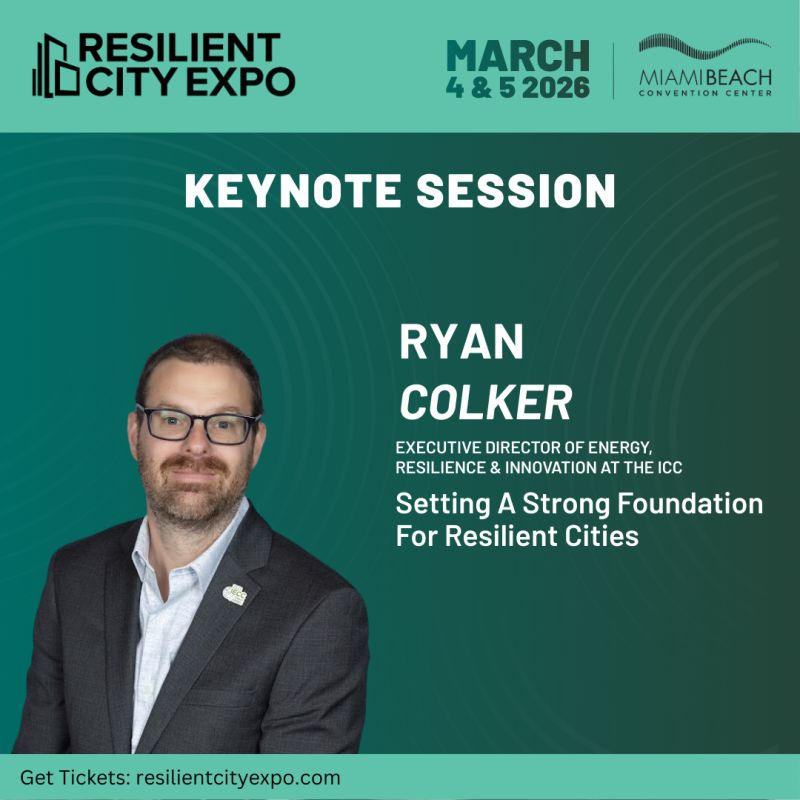
Setting a Strong Foundation for Resilient Cities
In his speech, Colker explored the many challenges communities face when it comes to resilience, including physical resilience to hazard events, social resilience in the face of rising energy costs—particularly for low and moderate income households—and the broader housing and rental affordability issues many communities face.
Building codes play a strong role in addressing these issues, even if not initially obvious. As found by the National Institute of Building Sciences’ Mitigation Saves Study, up-to-date building codes provide an $11 benefit for every $1 invested. Importantly, the codes sit within a coordinated ecosystem that supports effective implementation. Florida provides an excellent case study on how a tragedy like Hurricane Andrew can bring focus to the role of codes in both rebuilding and long-term resilience to future events.
While codes like the International Building Code®, International Residential Code® and International Wildland Urban Interface Code® have obvious linkages with community resilience to hazards, other codes like the International Energy Conservation Code® have impact on community resilience. In addition to the social resilience tied to the cost of energy, energy codes reduce pressure on the energy grid—particularly following a disaster event that causes the loss of power. Department of Energy National Labs found that following up–to–date energy codes can keep buildings habitable longer during extreme heat or cold events coinciding with power outages. This reduces pressure on shelters and health care providers.
The Importance of Updating Building Codes
Insurance is becoming increasingly difficult to obtain and more expensive as risks from natural hazards intensify, raising concerns for homeowners, businesses and communities. Up-to-date building codes can help mitigate rising insurance costs. For example, a review of potential premium discounts under the National Flood Insurance Program found that communities with outdated codes are costing residents hundreds of dollars annually in lost premium discounts.
In the face of changing performance demands for the built environment, we are also seeing increased investment in innovation. Assuring innovations can effectively enter the marketplace with assurances that they meet the requirements captured in codes and standards is essential. The product evaluation process from the ICC Evaluation Service provides a pathway for innovations to bridge the “commercialization valley of death,” bringing confidence to designers, contractors and building officials.
Off-site Construction
Off-site construction can also be a valuable component of community resilience, both before and after a disaster. In addition to opportunities to enhance affordability, off-site construction can deliver increased quality and structural stability. In recovery, off-site construction can speed rebuilding while limiting the need for increased construction capacity in a community that is already under pressure.
While often not top of mind, the built environment and the codes that underpin it are the foundation for community resilience.
For more information on the Resilient City Expo and Colker’s presentation, visit here.
For more information on ICC’s resources supporting resilience and other important community issues, visit here.
About the Author
The International Code Council is a nonprofit association that provides a wide range of building safety solutions, including product evaluation, accreditation, certification, codification and training. It develops model codes and standards used worldwide to construct safe, sustainable, affordable and resilient structures.