For Immediate Release: December 12, 2019
International Code Council engages Caribbean leaders in resilience initiatives
Workshop in Barbados brings together construction standards developers, implementers and financing agencies to promote resilience through the implementation of modern building codes
Washington, D.C. – The International Code Council and
the Caribbean Community (CARICOM) Regional Organization for Standards &
Quality (CROSQ) hosted a workshop in Christ Church, Barbados, for stakeholders
involved in the development, adoption and implementation of building codes and
standards throughout the Caribbean. The workshop, entitled “Building Resilient
Communities Through Implementing Modern Building Codes,” also included financial
institutions focused on improving the resilience of buildings and homes in the
region in preparation for natural disasters.
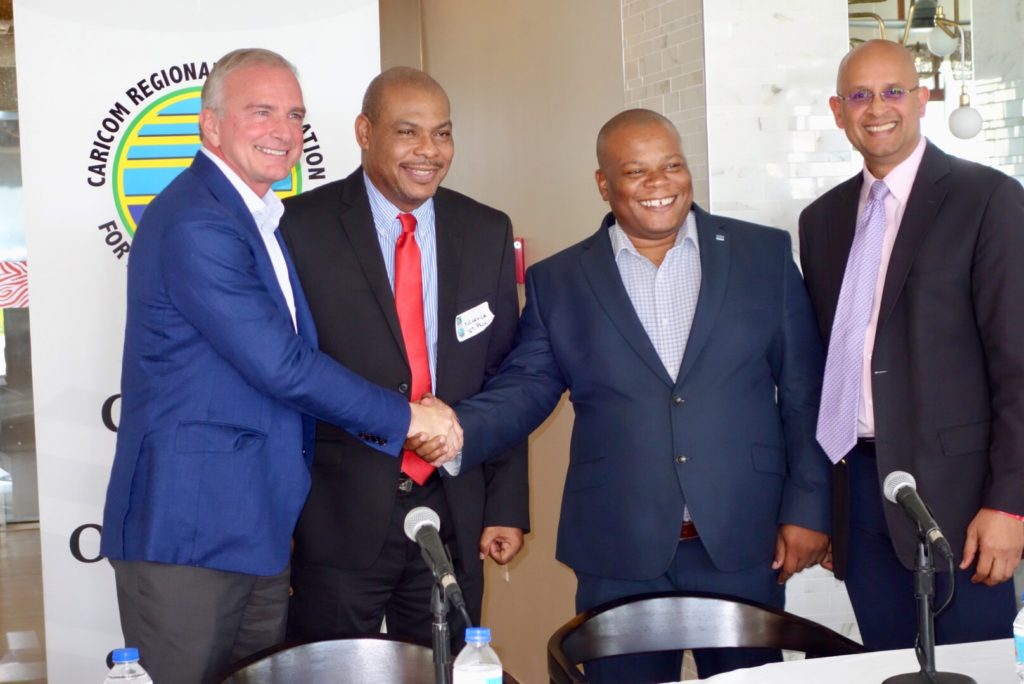
The workshop, held on December 6, celebrated the publication of
the CARICOM Regional Energy Efficiency Building Code, which was adapted from
the International Energy Conservation Code by CROSQ and published by the Code
Council. The CROSQ-led creation of the regional code involved the bureaus of
standards from all 15 CARICOM member states, many of which are now working to
adopt the code through their national administrative and legislative processes.
Stakeholders recognize that the creation of a regional code is a first step in
a long process that will continue to require significant commitment throughout
the implementation and enforcement process.
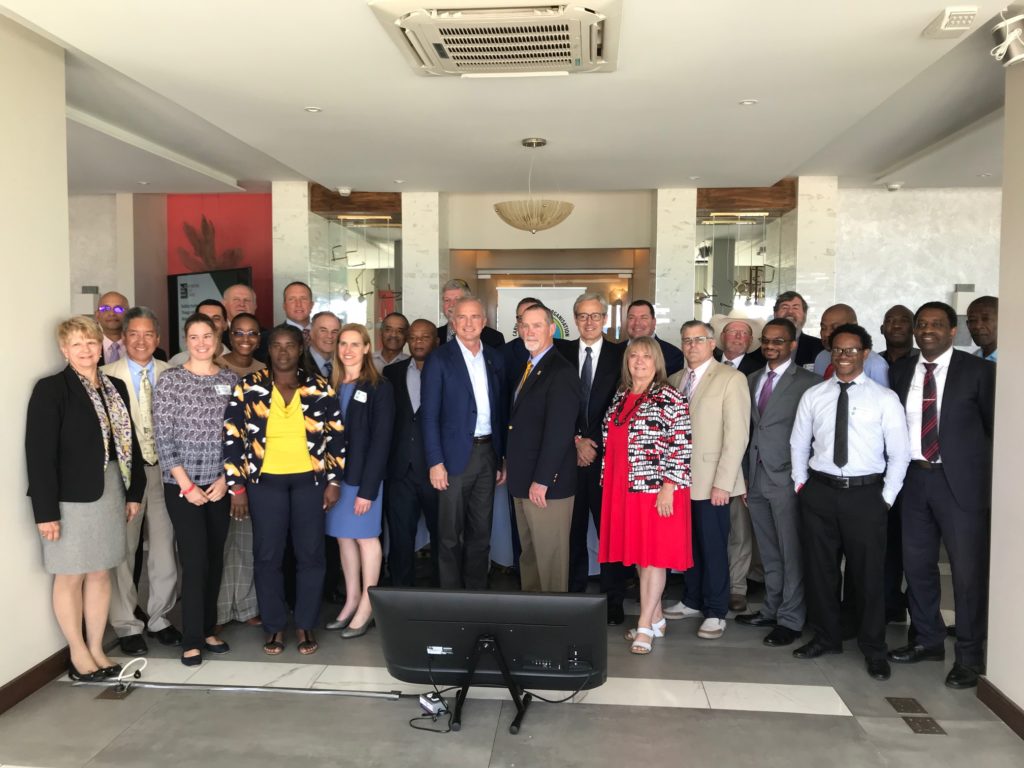
Organizations participating in the workshop included the Barbados
National Housing Corporation, Barbados National Standards Authority, St. Lucia
Bureau of Standards, Caribbean Development Bank, Inter-American Development
Bank, World Bank, the German development agency GIZ, ASTM International, ASHRAE
and members of professional engineering and architecture societies from several
Caribbean nations. The Code Council Board of Directors also attended the
workshop and shared best practices and insights gained in successfully
implementing advanced building codes, especially in the wake of severe natural
disasters impacting the United States.
“The Code Council is committed to working with CROSQ and our
partners in the region to achieve a safer and more resilient built environment,”
said Code Council Chief Executive Officer Dominic Sims, CBO. “We have
identified the Caribbean as a priority region for our global focus, because we
see both the need and the shared opportunity to work regionally to provide
cost-effective solutions that will aid with implementation and capacity
building in the Caribbean.”
Deryck Omar, CROSQ CEO, emphasized the need to build capacity in
the region. “We need to work with the owners and implementers of building codes
and standards in our CARICOM member countries to ensure that they have the tools,
institutional capabilities and certified practitioners to successfully
implement codes and standards that result in safe buildings. The International
Code Council, ASTM International and ASHRAE have provided us with great support
and resources, and we will continue to draw on their expertise into the next
phases of code implementation and enforcement.”
Some funding is already in place from the European Union as being
administered via the partnership of the GIZ, CARICOM Energy Programme and the
Caribbean Centre for Renewable Energy and Energy Efficiency (CCREEE), as well
as the Global Environmental Fund (GEF) sponsored Energy for Sustainable
Development Project being administered by the Caribbean Community Climate
Change Centre (5Cs). This funding is earmarked specifically to assist with
training and certification related to the implementation of the CARICOM
Regional Energy Efficiency Building Code, and work will begin in this area in
the coming months with CROSQ as the project coordinator and the Code Council
providing some attendant code implementation services to CROSQ, and by
extension, the region.
Several presenters at the workshop noted the challenges faced in the
enforcement of residential building codes and standards in the region.
Participants discussed many potential pathways to address these challenges. “Solving
the residential building challenge is critical to truly achieving a resilient
built environment,” said Code Council Executive Vice President and Head of
Business Development Mark Johnson. “We know that investing upfront in
compliant, resilient buildings can protect people and property during disasters
and save money in the end. Our partners in the region recognize that; however, we
still have a challenge communicating that message through the regulatory and
enforcement system so that it is embraced by homeowners and home builders.”
The World Bank’s Building Regulation for Resilience Program is
focused on reducing disaster risks by promoting a safer, more accessible and
sustainable built environment through implementation of standards for safe land
use and construction. Thomas Moullier, the global coordinator for the program,
presented at the workshop, praising CROSQ’s accomplishment in achieving a
regional energy code and recognizing the Code Council’s unique ability to
partner with stakeholders in the region to achieve success. “The International
Code Council is unlike any other code developing organization that I have
encountered in my work across 25 countries,” Moullier noted. “The scope and
scale of the organization, the involvement of the private sector in the code
development process, and the training and tools for compliance offered through
ICC’s family of solutions is truly unique in enabling
jurisdictions to achieve the last mile in applying the theory of the building
code to the practice of construction.”
For more information on the International Code Council’s global initiatives, visit
https://global.iccsafe.org/
###
About the International Code Council
The International
Code Council is a nonprofit
association that provides a wide range of building safety solutions including
product evaluation, accreditation, certification, codification and training. It
develops model codes and standards used worldwide to construct safe,
sustainable, affordable and resilient structures.