Information & Advocacy
The International Code Council's (ICC) Fire and Disaster Mitigation (FDM) team has compiled resources to assist code officials, fire service professionals and community stakeholders in informed decision‑making, professional collaboration and effective implementation of strategies that strengthen resilience across the built environment.
This page includes information on ICC's Fire Service Membership Council, broader community engagement opportunities, key informational documents on emerging issues and a selection of reputable stakeholder organizations.




Find our more about or Stakeholder Organizations.
Fire Service Membership Council
The Fire Service Membership Council (FSMC) is a forum for concerns and issues that are of particular interest to the fire service. The FSMC facilitates the engagement of ICC members and stakeholders in the discussion and activities of interest to the fire service within the built environment. Members are encouraged to participate in ICC’s code development process, and to advise ICC on programs and policies, legislative matters, code adoption issues and such other matters as the FSMC deems appropriate. The FSMC is led by a Governing Committee comprised of fire officials from across the country, who guide the direction and activities of the FSMC.
Membership Qualifications
Membership in the FSMC is open to any individual who wishes to affiliate with the Fire Service Membership Council and is a member of ICC, an ICC Governmental Member Voting Representative, or employed by a jurisdiction or corporate member of ICC or a member in good standing of a closely aligned organization as approved by the ICC Board of Directors.
Join the FSMC
To join the FSMC, ICC members may access their myICC account and visit the FSMC site on ICC’s Member Community to sign up. Interested stakeholders or any general questions about the FSMC may be directed to Fire and Disaster Mitigation Program Manager Christine Reed. FSMC meeting information and general updates can be found on the ICC Member Community.
FSMC Governing Committee Members
Timothy Diehl, Howard County, MD; (IAFC: E); FSMC Chair
Doug Nelson, Bismarck, ND; (NASFM); FSMC Vice Chair
Bryan Adams, Pleasant Valley, OH
Ted Black, State of UT (NASFM)
Justin Sherwood, Bemidji, MN; (IAFC: GL)
Darcy Davidson, Carlsbad, CA
Michael Desrochers, State of VT
William Hyde, Rogers, AR (IAFC:SW)
Edward Kaminski, Clark County, NV
Kevin Lefebrve, Nisku, AB Canada (IAFC:C)
Jonathan Lund, Des Moines, IA; (IAFC:MV)
Larry Medina, State of OR (IAFC:W)
Kelly Nicolello, Fort Worth, TX
Brandon Sullivan, Colorado Springs, CO
Brendan O'Sullivan, Durham, NH (IAFC:NE)
Jon Davine, Stow, MA (NASFM)
Craig Landolt, Atlanta, GA (NASFM)
Sean Toomey, Concord, NH; ICC BOD Liaison
Karl Fippinger, Washington, DC; FSMC Staff Liaison
Christine Reed, Brea, CA; FSMC Staff Liaison
FSMC Governing Committee Meeting Schedule
The FSMC Governing Committee meets monthly and is open to all FSMC members and interested parties.
Virtual meetings take place on the third Thursday of each month at 1:30 pm ET (excluding in-person meetings). Meeting information, including the virtual meeting link, is listed in the Events section of the ICC Member Community.
Two in-person meetings are held annually in conjunction with the ICC Leadership Week in April and the ICC Annual Conference in October. These meetings are also open to all, and the meeting dates are listed on each event schedule.
Member Community
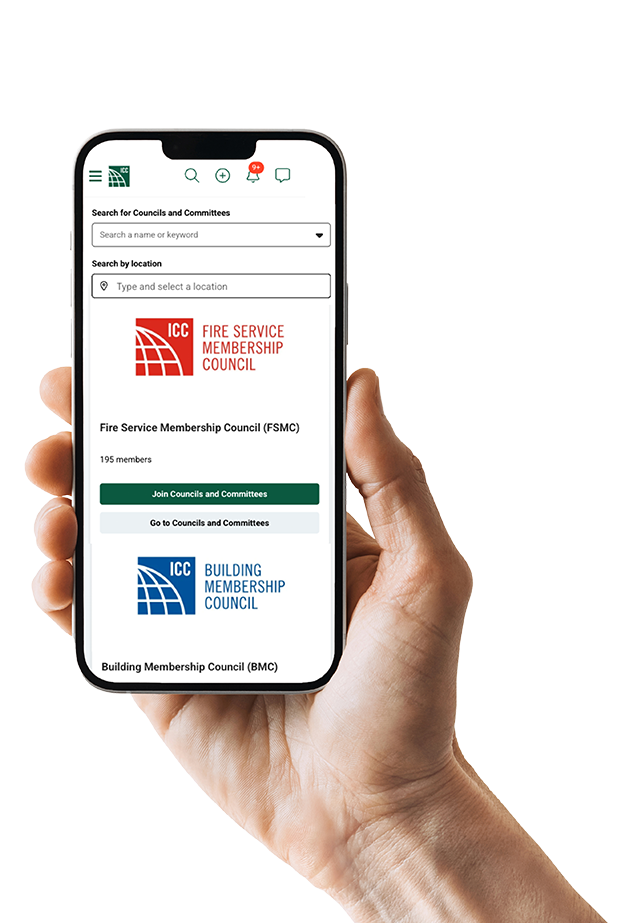
ICC's state-of-the-art Member Community is a free exclusive benefit offered only to ICC members. It's a self-service tool where building safety professionals can connect and network with other members, streamline communication and collaboration, create and share events and more.
The ICC Member Community App is now available on both Apple and Android devices. This powerful new tool puts a community of building safety professionals and a wealth of knowledge right at your fingertips. Learn more and download, here.
For any questions, please email membercommunity@iccsafe.org.
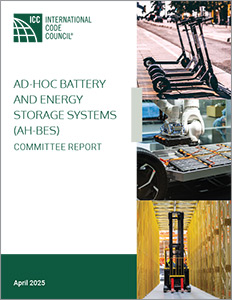
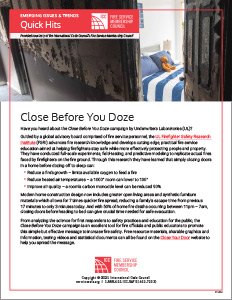
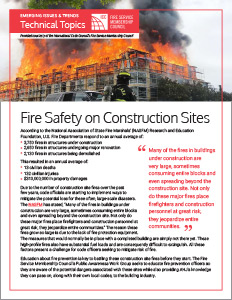
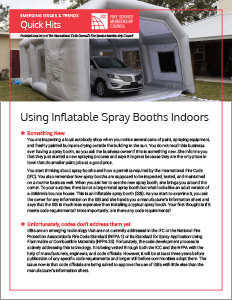
Stakeholder Organizations
International Association of Fire Chiefs (IAFC) represents the leadership of firefighters and emergency responders worldwide and provides leadership to current and future career, volunteer, fire-rescue and EMS chiefs, chief fire officers, company officers and managers of emergency service organizations throughout the international community.
The International Association of Firefighters (IAFF) is one of the largest and most influential labor unions in North America and is committed to advancing the rights, safety and future of fire fighters, emergency medical workers and rescue workers across the United States and Canada.
The National Volunteer Fire Council (NVFC) is the leading nonprofit membership association representing the interests of the volunteer fire, EMS, and rescue services. The NVFC serves as the voice of the volunteer in the national arena and provides critical resources, programs, education, and advocacy for first responders across the nation.
The U.S. Fire Administration supports and strengthens the fire and emergency medical services to prepare for, prevent, mitigate, and respond to all hazards.
Congressional Fire Services Institute (CFSI) educates members of Congress about the needs and challenges of the United States’ fire and emergency services to help them understand how the federal government can support the needs of local first responders.
National Association of State Fire Marshals NASFM’s mission is two-fold: To protect human life, property and the environment from fire, and to improve the efficiency and effectiveness of State Fire Marshals’ operations.

The Fire Safety Research Institute (FSRI) advances fire safety knowledge to address the world’s unresolved fire safety risks and emerging dangers. FSRI shares fire safety insights with everyone to advance UL’s public safety mission of providing safe living and working environments for people everywhere.
The National Institute of Standards & Technology (NIST) was founded in 1901 and is one of the nation's oldest physical science laboratories. Through its focus on buildings and construction, fire testing has been a cornerstone of NIST’s research. Its Disaster & Failure Studies Program assesses building performance in the wake of disasters and failure events.
Society of Fire Protection Engineers (SFPE) mission is to define, develop and advance the use of engineering best practices, expand the scientific and technical knowledge base, and educate the global fire safety community, to reduce fire risk
Insurance Institute for Business & Home Safety (IBHS) is an independent nonprofit scientific research and communications organization supported by property insurers, reinsurers, and affiliated companies. IBHS’s building safety research leads to real-world solutions for home and business owners, helping to create more resilient communities.
The Federal Emergency Management Administration (FEMA) mission is helping people before, during and after disasters. FEMA leverages a tremendous capacity to coordinate within the federal government to make sure America is equipped to prepare for and respond to and recover from disasters.

National Emergency Management Association (NEMA) provides national leadership and expertise in comprehensive emergency management, serves as a vital emergency management information and assistance resource, and advances continuous improvement in emergency management through strategic partnerships, innovative programs and collaborative policy positions.
The International Association of Emergency Managers (IAEM) is a non-profit educational organization dedicated to promoting the "Principles of Emergency Management" and representing those professionals whose goals are saving lives and protecting property and the environment during emergencies and disasters.
The Association of State Floodplain Managers is a 501(c)(3) scientific and educational nonprofit organization dedicated to reducing flood loss in the United States.
Building Safety Month
Building Safety Month is an international campaign held each May to raise awareness about the importance of safe building practices within the built environment. Everyone can play a role in enhancing building safety and reducing fire risks by supporting Building Safety Month initiatives.
The campaign features weekly themes, including one dedicated to practical safety tips for homes. Topics include fire prevention and awareness, smoke alarms and fire sprinklers, water and pool safety, disaster preparedness and electrical hazard awareness, with actionable strategies for each to help increase safer living spaces.
For more information on Building Safety Month and resources for fire safety at home, click here.
 .
.
Stay informed with essential industry updates and expert technical insights from the award-winning Building Safety Journal. Explore hundreds of free articles, including Batteries and ESS, Disaster Preparedness and Fire & Wildland Urban Interface-related content.
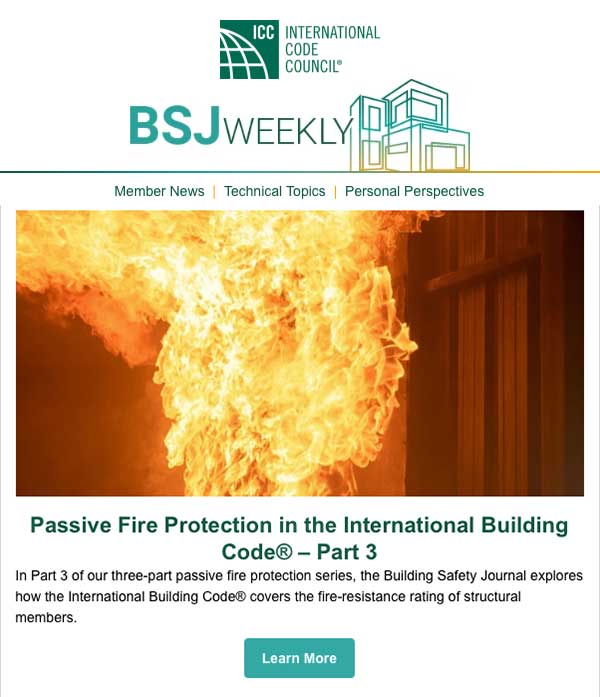
The Building Safety Journal (BSJ) Weekly is a free weekly newsletter from the International Code Council that compiles the latest news on the building safety and construction sectors, including fire-related news and updates, and is delivered to your inbox on Thursdays. Subscribe, here.