Preparing for Hurricane Helene

Preparing for Hurricane Helene

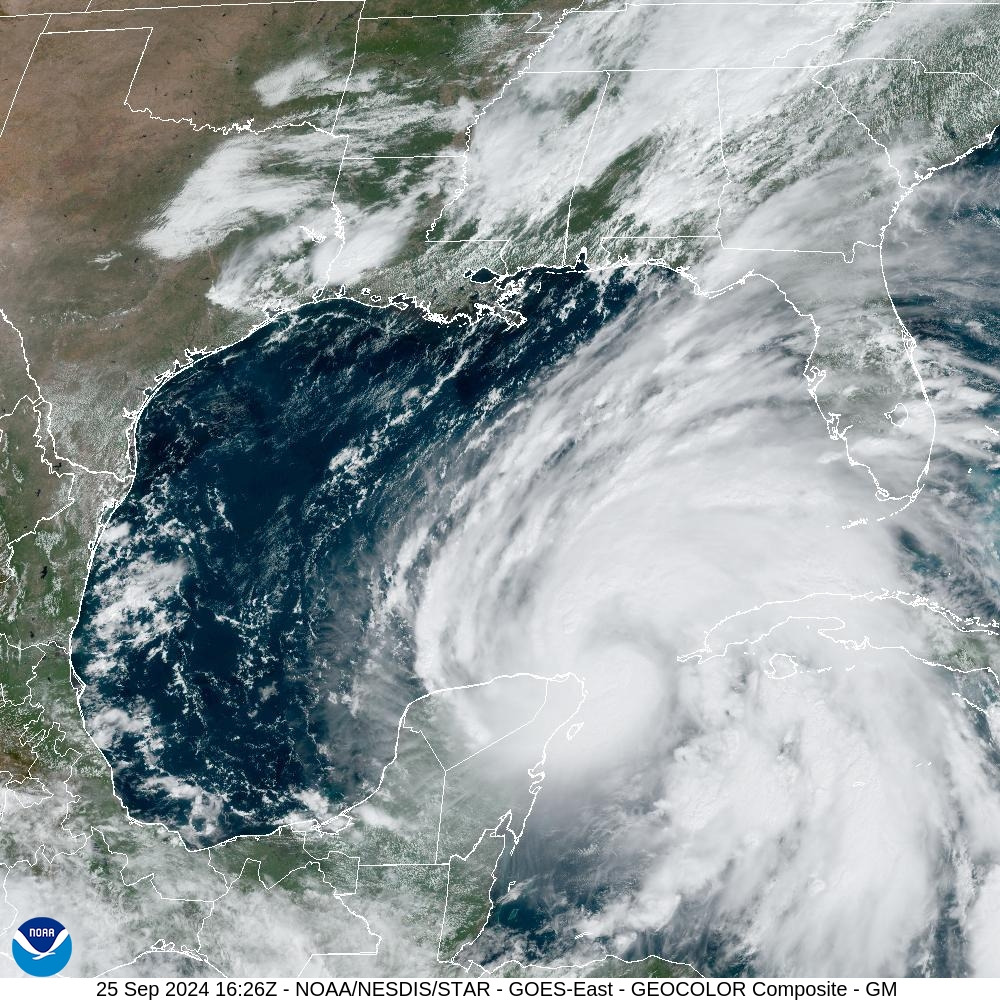
Hurricane Helene

Image source: NOAA.gov

The International Code Council is monitoring Hurricane Helene as it continues to track northward through the Gulf of Mexico this week. Hurricane Helene is expected to make landfall on the Florida Gulf Coast as a Category 3 hurricane during the evening of Thursday, September 26. After substantial weakening, Helene is forecast to pass through Alabama and Georgia on Friday, September 27, and then north to South Carolina, North Carolina, Tennessee and the Midwest by the weekend.

Preparing for the Storm

Tropical storm force winds from Hurricane Helene may extend upward to 111-129  miles out from the center of the storm. The risk of impact from life-threatening storm surge and damaging hurricane-force winds will continue to increase along the Florida Panhandle and the Florida West Coast. Well-built framed homes may incur major damage or removal of roof decking and gable ends. Expect flash flooding and urban flooding across portions of Florida.

Many trees could be snapped or uprooted, potentially blocking numerous roads. Electricity and water may be unavailable for several days to weeks after the storm passes. The possibility exists for isolated flash flooding and urban flooding across the Southeastern U.S., including the Appalachians and the Tennessee Valley through Friday. If you live in the forecast area, it’s important to prepare now:

  • Check/replace emergency supplies and store bottled drinking water.
  • Review evacuation plans.
  • Keep a supply of flashlights and extra batteries handy.
  • Clean storm gutters and drains.
  • Prepare your home for high winds and rain.
  • Repair/replace storm shutters.
  • Check your property insurance policy for appropriate coverage.

For the latest forecast and additional safety information, please visit the National Hurricane Center and the Code Council’s hurricane safety and resources page.

Resources for the state of Florida can be found here: Tropical Storm Helene | Florida Disaster.

If you need assistance, please reach out to us through your regional Government Relations representative.

Disaster Recovery Resource for Building Safety Professionals

When disasters strike, codes and standards serve as a baseline for the return to safe, sanitary, and habitable buildings. Code officials and their floodplain management counterparts rely on support from emergency managers and community leaders to help secure the critical resources needed to ensure the health, safety, and welfare of the community. To that end, FEMA has a disaster recovery policy specifically aimed at providing much-needed assistance for code officials and floodplain managers during disaster response and initial recovery for up to 180 days following a major disaster declaration.

Learn how to apply for building code administration and enforcement assistance here. This policy, administered under FEMA’s program, offers reimbursement for critical community functions such as building code administration, code enforcement, floodplain management administration and enforcement, and conducting substantial damage survey inspections in affected communities.

For more information, visit the Code Council’s resource page.

Download FEMA's DRRA 1206 resource here.

International Code Council Testifies Before the U.S. House’s Committee on Transportation and Infrastructure on Resilient Building Codes

Washington D.C. – On Wednesday, September 25, 2024, at 10 AM ET, International Code Council Past Board President Cindy Davis testified before Congress on the importance of building safety code adoption to boost community resilience. Her testimony was presented to the Subcommittee on Economic Development, Public Buildings and Emergency Management in conjunction with its hearing titled Examining the Role and Effectiveness of Building Codes in Mitigating Against Disasters.

Davis detailed the Code Council’s long-time and ongoing efforts to ensure the Code Council’s model codes (the International Codes®, or I-Codes) integrate the latest hazard resistant designs, best practices and lessons learned post disaster. She outlined studies confirming that the adoption and implementation of current model building codes are central to creating effective mitigation strategies for lessening the impacts of natural hazards, including hurricanes, flooding, hail, earthquakes, tornados and wildfires. Additionally, she shared that contemporary research continues to find that modern model building codes have no appreciable implications for housing affordability.

“From its earliest days, the Code Council has emphasized the importance of hazard mitigation within the codes and standards it develops,” said Cindy Davis, CBO. “The Code Council welcomes the longstanding, bipartisan recognition of codes’ value and encourages continued federal support for their greater use to protect communities across the U.S. from growing hazard risk.”

Davis encouraged support for Federal Emergency Management Agency (FEMA)’s Building Resilient Infrastructure and Communities (BRIC) Codes Plus Up program, which recognized that BRIC’s prior structure was preventing its broader use for code improvements. Code investments represent less than two hundredths of a percent of BRIC’s spending, for an activity that FEMA views as one of, if not the most impactful, community mitigation measures. She also supported changes to the BRIC scoring criteria that better recognized local efforts to integrate resilient codes, which the Code Council supports. Finally, she encouraged implementation of a cost share adjustment to support states adopting impactful and cost saving resilience measures.  

“Strong building codes save lives and protect property,” said Russell Strickland, Maryland Sec. of Emergency Management. “Moreover, the research is clear that building code adoption and enforcement are among the most cost-effective measures that governments can enact.”

Finally, she encouraged the Committee to ensure that federal codes policy remains focused on codes that are resilient, consensus-based, correlated and cost effective, expressing concern over an unnecessary expansion of FEMA’s code recognitions to the thousands of codes developed in the U.S.

“To date, federal efforts have appropriately focused on the codes and standards – including the I-Codes and many others – that are comprehensive and have demonstrated mitigation benefits,” said Cindy Davis, CBO. “That needs to continue. We should not be handing out participation trophies when it comes to building safety and community resilience.”  

The I-Codes are a comprehensive set of model codes that are regularly updated through a rigorous, transparent and democratic process and are currently adopted in all 50 U.S. states. These codes are cost effective and help support building safety and resiliency in communities around the world. Communities that adopt and enforce up-to-date building codes are more resilient when faced with disasters.

###

About the International Code Council
The International Code Council is the leading global source of model codes and standards and building safety solutions. Code Council codes, standards and solutions are used to ensure safe, affordable and sustainable communities and buildings worldwide.

2025 Conference – Webcast

Webcast

Watch a live webcast of the Annual Business Meeting and
Committee Action Hearings, Group B #2

The hearings have concluded.

2027 IECC Scope, Intent and Board Commentary Final – Public Notice

2027 IECC Scope, Intent and Board Commentary Final – Public Notice

The 2027 IECC Scope and Intent, including additional Code Council Board of Directors Commentary, has been finalized after careful consideration of public comments.  The following represents the final scope, intent, and associated commentary for both the commercial (CECDC) and residential (RECDC) committees.

Please refer to the IECC related committee page for more information on the committee activity: https://www.iccsafe.org/committees/energy-iecc/

Commercial | Scope & Intent

C101.2 Scope.

This code applies to the design and construction of new and existing buildings including additions, alterations, repairs and changes of occupancy and use, not covered by the IECC Residential.

C101.3 Intent.

The purpose of the International Energy Conservation Code-Commercial is to provide market-driven, enforceable requirements that achieve a reasonable level of energy efficiency that is safe, technologically feasible, and lifecycle cost effective, considering economic feasibility, including potential costs and savings for consumers and building owners, and return on investment. Additionally, the code includes ANSI/ASHRAE/IES 90.1 as a compliance method. Requirements contained in the code will include prescriptive and performance-based compliance options. The code will provide for the safe and efficient use of energy sources and is not intended to eliminate any fuel type.

The code may include non-mandatory provisions incorporating additional energy efficiency and greenhouse gas reduction resources and provisions that lead to achievement of zero energy buildings. Such provisions shall either be (i) in optional appendices or (ii) in the base code provided as options where compliance with the code is still possible without complying with those provisions. This code’s intent statement does not require the exclusion of provisions contained in prior editions of this code.

Commercial | Commentary

The ICC Board of Directors provides the following additional commentary to be written in the IECC Commentary and provided to the IECC-C Development Committee in advance of the Commentary being published:

  • The code shall provide a minimum base energy code with prescriptive and performance-based pathways that take into consideration feasibility of technology and costs impacts to building owners and occupants. The code also provides ANSI/ASHRAE/IES Standard 90.1 as a compliance method.
  • The IBC Chapter 13 will continue to reference the IECC Commercial provisions and the IECC shall continue to be referenced in Chapter 13 of the International Building Code.
  • Provisions of the code shall not promote or penalize specific types of equipment or fuel sources.
  • The code will aim to simplify code requirements to facilitate the code’s use and compliance rate. The code is updated on a three-year cycle with each subsequent edition providing increased energy savings over the prior edition.
  • This code is intended to provide flexibility to permit the use of innovative approaches and techniques to achieve this intent. This code is not intended to abridge safety, health or environmental requirements contained in other applicable codes or ordinances.
  • Provisions that provide for greenhouse gas reductions or resilience benefits (e.g., electric vehicles, readiness, demand response, and onsite or off-site energy storage or renewable energy) as well as provisions to achieve zero energy buildings shall only be included either in an optional appendix/appendices or as part of a compliance path (e.g., credits system, simulated performance) where compliance is still possible without using or promoting such measures (e.g., through strictly energy efficiency measures).

    • Exception: Current provisions in the 2024 IECC regarding mandatory requirements for renewable energy (section C405.15) may remain in the body of the code as mandatory and may be amended so long as such amendments do not exceed existing requirements.

Residential | Scope & Intent

R101.2 Scope.

This code applies to the design and construction of new and existing detached one- and two-family dwellings and multiple single-family dwellings (townhouses) and Group R-2, R-3 and R-4 buildings three stories or less in height above grade plane, including additions, alterations, repairs and changes of occupancy and use.

R101.3 Intent.

The purpose of the International Energy Conservation Code-Residential is to provide market-driven, enforceable requirements that achieve a reasonable level of energy efficiency that is safe, technologically feasible, and life cycle cost effective, considering economic feasibility, including potential costs and savings for consumers and building owners, and return on investment. Requirements contained in the code will include prescriptive and performance-based compliance options. The IECC residential provisions shall include an update to Chapter 11 of the International Residential Code. The code will provide for the safe and efficient use of energy sources and is not intended to eliminate any fuel type.

The code may include non-mandatory provisions incorporating additional energy efficiency and greenhouse gas reduction resources and provisions that lead to achievement of zero energy buildings. Such provisions shall either be (i) in optional appendices or (ii) in the base code provided as options where compliance with the code is still possible without complying with those provisions. This code’s intent statement does not require the exclusion of provisions contained in prior editions of this code.

Residential | Commentary

The ICC Board of Directors provides the following additional commentary to be written in the IECC Commentary and provided to the IECC-R Development Committee in advance of the Commentary being published:

  • The code shall provide a minimum base energy code with prescriptive and performance-based pathways that take into consideration feasibility of technology and costs impacts to building owners and occupants.
  • The IECC Residential Provisions shall continue to be coordinated with Chapter 11 of the International Residential Code.
  • Provisions of the code shall be based on improved energy performance, such as through energy efficiency ratings or demonstrated simulation model performance and remain neutral to fuel source and do not promote or penalize specific types of equipment or fuel sources.
  • The code will aim to simplify code requirements to facilitate the code’s use and compliance rate. The code is updated on a three-year cycle with each subsequent edition providing increased energy savings over the prior edition.
  • This code is intended to provide flexibility to permit the use of innovative approaches and techniques to achieve this intent. This code is not intended to abridge safety, health or environmental requirements contained in other applicable codes or ordinances.
  • Provisions that provide for greenhouse gas reductions or resilience benefits (e.g., electric vehicles, readiness, demand response, and onsite or off-site energy storage or renewable energy) as well as provisions to achieve zero energy buildings shall only be included either in an optional appendix/appendix or as part of a compliance path (e.g., credits system, simulated performance) where compliance is still possible without using or promoting such measures (e.g., through strictly energy efficiency measures).

 

2024 Group A Hearing Orders (CAH2)

2024 Group A Hearing Orders

2024 Committee Action Hearings (CAH2) (Group A Codes)

Hearing Orders

* Word Document(s): To download, right click icon, select "save target as" and save to your computer.

CAH2 ISPSC HO Published 10/07/24 19 KB
CAH2 IRC P HO Published 10/07/24 19 KB
CAH2 IRC M HO Published 10/07/24 19 KB
CAH2 IPC HO Published 10/07/24 19 KB
CAH2 IMC HO Published 10/07/24 19 KB
CAH2 IFGC HO Published 10/07/24 18 KB
CAH2 IBC E HO Published 10/07/24 20 KB
CAH2 IBC FS HO Published 10/07/24 19 KB
CAH2 IFC HO Published 10/07/24 21 KB

Updates to the Hearing Orders

* Word Document(s): To download, right click icon, select "save target as" and save to your computer.

CAH2 IMC HO 10 8 24 Published 10/08/24 19 KB

The Complete Set of 2024 International Codes® Is Now Available

Washington D.C.– The International Code Council has published the 2024 International Residential Code® (IRC®) and the 2024 International Energy Conservation Code® (IECC®) which are now available in both digital and print formats, completing the set of the 2024 International Codes® (I-Codes). Made up of fifteen codes that cover many different aspects of building safety including plumbing, mechanical, structural and fire safety issues, these codes offer a comprehensive approach to sustainability, resiliency and affordability of the built environment.

This release of all the I-Codes represents the culmination of three years and thousands of hours of hard work and dedicated volunteer efforts by consensus members, subcommittee members and interested parties. These essential resources are invaluable for architects, builders, engineers, building owners and code officials who want to stay at the forefront of industry standards and best practices.

Significant changes to the 2024 IECC Residential and Chapter 11 of the IRC include additional efficiency package modifications. New appendix applications covering demand response, electric vehicle charging infrastructure and solar and electric readiness are also included in the latest edition of the IECC and IRC. The commercial provisions of the IECC now include requirements for renewable energy systems, considerations for thermal bridging and introduction of the Total System Performance Ratio (TSPR) as a method for mechanical system compliance.

“The 2024 I-Codes reflect countless hours of hard work from expert volunteers and committee members,” said Code Council Chief Executive Officer Dominic Sims, CBO. “It is because of their dedication that we are able to continue to update our codes to maintain the safety, sustainability and resiliency of our communities.”

The Code Council’s 2024 Certification Exams will officially begin launching on October 1, 2024, and are based on the 2024 I-Codes. Code Council certifications are widely recognized credentials that demonstrate an individual’s commitment to protecting public health, safety and welfare.

For more information on the 2024 I-Codes, visit here. Information on how to get involved in future codes, standards and guideline updates can be found here.

###

About the International Code Council
The International Code Council is the leading global source of model codes and standards and building safety solutions. Code Council codes, standards and solutions are used to ensure safe, affordable and sustainable communities and buildings worldwide.

2024 / 2025 / 2026 Code Development: Group B (2024)

2024 / 2025 / 2026 Code Development: Group B (2025)

Find the latest news and documents below

March 2026

2026 Public Comment Hearing (PCH) Agenda (Monograph) and Discussion Guide with Updates to the PCH

The detailed Agenda for the PCH (Monograph) and Discussion Guide are now available.   Please refer to the "Hearing Resource" tab on the Code Development Committees (CDC) page for these documents and other notable resource as they become available.

November 2025

2025 Group B ROCAH to CAH #2 Now Available

The 2025 Group B Report of Committee Action Hearing Results to CAH #2 are now available. Click here for the results.

2025 Group B CAH2 Results Now Available

The 2025 Group B Committee Action Hearing #2 results from the meeting held at Huntington Convention Center of Cleveland, Cleveland, OH., are now available. Click here for the results. Note that the Report of Committee Action Hearings is scheduled to be posted November 25.


September 2025

2025 Group B Discussion Guide and CAH #2 Agenda Updates

The 2025 Group B Discussion Guide and CAH # 2 Agenda Updates are now available.

2025 Group B Comments Now Available

The 2025 Group B comments are posted. Click here to view.


June 2025

2025 Group B Comment Submittal Now Open

As of June 3, 2025, cdpACCESS is accepting comments on the CAH #1 actions. Go to https://www.cdpaccess.com for more information.

2025 Group B ROCAH to CAH #1 Now Available

The 2025 Group B Report of Committee Action Hearing Results to CAH #1 are now available. Click here for the results.

May 2025

2025 Group B CAH1 Results Now Available

The 2025 Group B Committee Action Hearing #1 results from the meeting held at DoubleTree by Hilton, Universal Orlando, Orlando, FL., are now available. Click here for the results. Note that the Report of Committee Action Hearings is scheduled to be posted June 3rd.

March 2025

2025 Group B Table Update Agenda

Due to missing borders in some tables within the 2025 Group B Committee Action Agenda, a 2025 CAH #1 Table Agenda Update has been added below. This update includes the affected tables with proper borders for improved clarity.

October 2024

2025 Group B Code Change Proposal Submittals Now Open

As of October 15th, cdpACCESS is accepting code change proposals to 2025 Group B codes. Go to https://www.cdpaccess.com for more information.

2025 New Standards

How to submit new standards for Group B now available.

Hearing dates for the 2025 Group B Cycle

  • 2025 Committee Action Hearing #1 April 27– May 6, 2025
  • 2025 Committee Action Hearing #2 October 22–30, 2025

Group B – Proposed Changes to the 2024 Editions

2025 Group B Committee Action Agenda Published 03/13/25 141784 KB
2025 Group B Consolidated Monograph Updates 4 18 25 Published 04/18/25 990 KB
2025 CAH1 Table Update Agenda Published 03/18/25 6731 KB
2025 Group B Introduction Published 03/13/25 2094 KB
2025 Group B IADMIN Published 03/13/25 5219 KB
2025 Group B IBC Fire Safety Published 03/13/25 1729 KB
2025 Group B IBC-General Published 03/13/25 6021 KB
2025 Group B IBC Structural Published 03/13/25 28379 KB
2025 Group B IEBC Published 03/13/25 4516 KB
2025 Group B IgCC Published 03/13/25 941 KB
2025 Group B IPC Published 03/13/25 909 KB
2025 Group B IPMC Published 03/13/25 2279 KB
2025 Group B IRC Building Published 03/13/25 31904 KB
2025 Group B ISPSC Published 03/13/25 919 KB
2025 Group B IZC Published 03/13/25 1342 KB
2025 Group B CCC Published 03/13/25 1889 KB

2025 Group B Report of Committee Action to CAH #1

Group B Report Of Committee Action Hearings (CAH 1) Published 06/03/25 2933 KB

2025 Group B Comment Agenda CAH #2

The 2025 Group B comments are posted. Click here to view.


IS-ASSC

Air Structures and Design Committee
(IS-ASSC)

Air Structure & Design Standards (ICC 550)

The committee's focus is to support the development and maintenance of ICC 550.

Abstract:  This standard will serve as a comprehensive resource and include design criteria and formulas for air structures based on years of research, testing, and observations from thousands of buildings in use. This standard will cover snow and wind load values based on local conditions and specific jurisdictions including recommended load application methods and designs. This standard is not intended as a comprehensive guide for constructing an entire air structure system.

Project Need:  Over the years, air structures have gained wider acceptance and undergone improvements in design and performance. Thousands of air structures have been manufactured, contributing to a wealth of operational experience and performance data. While building codes aim to safeguard public interest and safety, they may not readily apply to air supported structures due to their dynamic nature and unique design considerations. Due to variations in knowledge, design criteria, and manufacturing methods within the industry, there is a need for a standard to protect public safety.

ICC Codes & Standards Home | Committee List

Committee Overview

STATUS
Active

MEETING INFO
IS-ASSC Meeting Notices

MEMBERSHIP
IS-ASSC Roster

DOCUMENTS
IS-ASSC Documents

SECRETARIAT
Dane Rankin, Secretariat

2026.01.26 | Guideline G11 committee seated.

The committee to develop Guideline G11 has been seated and the current roster is posted. The committee will begin the development of G11 based on the 2024 edition of ASI 77 which will become the base document for the ICC 550 development forthcoming.  G11 – Air Structures and Design Guideline - ICC


2025.01.17 | Applications for IS-ASSC is now open.

Committee applications are now open for the IS-ASSC developing the ICC 550 Standard for Air Structures and Design.  If you are interested in applying for the committee, please click on the "Apply" tab and follow the instructions provided.