Month: August 2022
Protected: Changes to the Code Development Process
2022 Conference – App
Conference App
Sponsored by
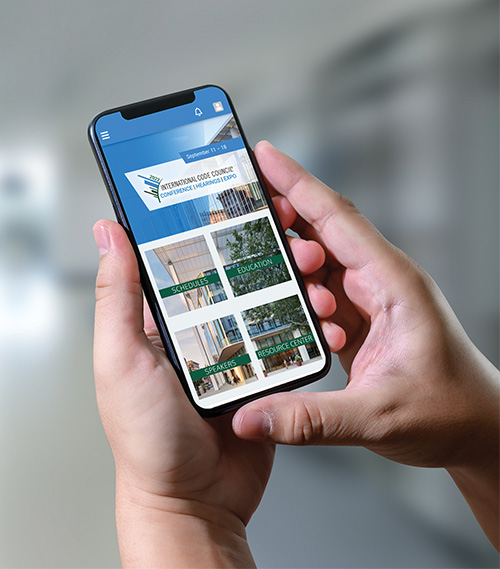
This year’s ICC Conference App, your source for all schedules and information, is now available!
All schedules, information and class materials will only be available on the ICC Conference App this year. It features conference schedule, speakers, session handouts, maps, directory, and events.
Download the App
The App is accessible from all devices: smartphones, tablets, laptops and desktops and is available for Apple and Android devices. It’s also available on the web.
Find the App quickly in stores by searching for: iccac22.
You can use the Mobile App to:
- Create your own schedule
- Search for classes and events
- Stay up-to-date with event announcements
- Learn about speakers and sponsors
- See who else is attending and network
- Access speaker presentations and documents
- Learn about local hotels, dining and attractions
2022 Group B Hearing Orders
2022 Group B Hearing Orders
2022 Public Comment Hearings (Group B Codes)
Hearing Orders
* Word Document(s): To download, right click icon, select "save target as" and save to your computer.
 |
IADMIN Grp B Hearing Order | Published 08/22/22 | 13 KB |
|
|
IEBC Grp B Hearing Order | Published 08/22/22 | 13 KB |
|
|
IBC S Grp B Hearing Order | Published 08/22/22 | 14 KB |
|
|
IRC B Grp B Hearing Order | Published 08/22/22 | 20 KB |
Updates to the Hearing Orders
* Word Document(s): To download, right click icon, select "save target as" and save to your computer.
|
|
IADMIN Grp B Hearing Order 9 14 22 3PM | Published 09/14/22 | 13 KB |
|
|
IBC S Grp B Hearing Order 9 16 22 | Published 09/16/22 | 15 KB |
|
|
IRC B Grp B Hearing Order 9 16 22 6 30PM | Published 09/16/22 | 20 KB |
Federal Grants
Funding Building Safety, Resilience, and Sustainability
As the frequency and severity of hazard events increase, household energy bills grow and the nation looks to reduce energy related emissions, U.S. federal grant programs are now available to assist state, local, tribal, and territorial (SLTT) governments in implementing solutions. These grants are either exclusively or significantly designated for building code related activities.
The Code Council stands ready to work with SLTT governments to access these funds. We’ve also established relationships with other industry leaders to provide a suite of solutions that can meet any jurisdiction’s needs.
Why Apply
See how Federal Grants can support community goals.
What to Apply For
See what types of Federal Grants are available.
How to Apply
See how to apply for federal grants.
ICC is here for you throughout the process.
Jurisdictions may be able to use funding to support these goals
- Adopt a new code or update their current building codes
- Support custom code development through consultant services and publication (including stretch codes)
- Train code officials, designers, and contractors on code provisions
- Fund code official certifications
- Seek building department accreditation
- Develop and implement software tools
- Build departmental capacity and capabilities including through digitization
- Implement innovative approaches to enforcement
- Conduct compliance studies
- Access codes electronically through Digital Codes Premium, to provide continuity of services during public health or disaster events.
- Enhance plan review capacity through ICC NTA Plan Review Services
Why use your funding for building codes?
Building codes are the foundation for safety in the built environment. A 2019 report, Natural Hazard Mitigation Saves, by the congressionally-established National Institute of Building Sciences (NIBS) found that adopting and enforcing the 2018 International Building Code (IBC) and International Residential Code (IRC) provides communities with an $11 benefit for every $1 invested. These benefits represent avoided casualties, property damage, business interruptions, first responder expenses, and insurance costs, and are enjoyed by all building stakeholders – from developers, titleholders, and lenders, to tenants and communities. The NIBS report also found that retrofitting structures to current codes’ flood mitigation requirements can provide $6 in mitigation benefits for every $1 invested and that retrofitting structures to the Code Council’s Wildland-Urban Interface Code could provide $2 to as much as $8 in mitigation benefits for each $1 invested.
Communities that regularly adopt energy codes like the International Energy Conservation Code (IECC) save money for residents and businesses and improve community health and resilience. According to the DOE Pacific Northwest Laboratory (PNNL), the 2021 IECC represents a 9.4% site energy savings improvement and an 8.7% improvement in carbon emissions for residential buildings relative to the 2018 IECC, saving homeowners an average of $2,320 over the life of a typical mortgage. Although there is significant evidence of the value of energy code implementation, studies also show millions of dollars of untapped energy savings in states across the country. DOE has also observed, across 7 states studied, that training code officials on adopted codes can help reduce annual energy costs due to varying levels of code compliance by an average of about 45 percent.
FEMA affirmed NIBS findings in their Building Codes Save: A Nationwide Study, stating that, “...adopting building codes is the single most effective thing we can do! One change in building codes can save lives and protect property for generations to come.” The study found that if all new buildings across the U.S. were built to modern editions of the I-Codes, the country would save more than $600 billion by 2060.”
Embracing technology solutions to simplify code enforcement and compliance will give communities a wide array of new solutions that provide better economics and efficiency in workflows and continuity during disasters. Investment in Digital Codes and digital codes practices gives 24/7 access to the codes and standards that the building and safety community are founded on. Electronic collaboration tools can support consistency in code enforcement and identification of common compliance challenges and training needs. Embracing technology solutions to simplify code enforcement and compliance will give communities a wide array of new solutions that provides better economics and efficiency in the workflows and continuity during disasters. Digital solutions can produce lasting reductions in operational costs and permitting timelines. The Code Council has found a 20 percent increase in code department productivity by moving from paper to electronic inspection logs. Reduced processing times leads to savings for both consumers and the construction industry.
Assessing the current construction practices, establishing compliance and enforcement goals, and accessing intake plan review inspection tools are the first steps to successful compliance and enforcement. Training requirements are equally important. The gap that exists between the efficiency levels required in codes and the efficiency levels achieved in the field is influenced by the extent of code official training on the energy code. Although about two-thirds of states require code official certifications, only seven states require training on energy code provisions.
Navigating Current Federal Grants Policies
Important Update: FEMA Ends BRIC Program
April 4, 2025 — On April 4th, the Federal Emergency Management Agency (FEMA) announced the termination of its Building Resilient Infrastructure and Communities (BRIC) program.
FEMA will cancel a $750 million notice of funding opportunity issued earlier this year. In addition, FEMA is reallocating all outstanding funding that the Agency has not yet dispersed for projects that have been selected in prior years.
The BRIC program had been designed to fund local projects aimed at reducing damage from disasters such as flooding, tornadoes and other weather-related events.
The Code Council recognizes the dedication and hard work of building, fire and emergency management offices. For questions regarding the BRIC termination, please reach out to your regional Government Relations representative or contact us through advocacy@iccsafe.org.
Past Funding Programs & Deadlines
Energy Focused Grants
Fire Focused Grants
Resilience Focused Grants
Pro Tip: Bookmark this quarterly updated page to stay up to date on availability of federal funding programs for building departments.
How to apply for federal funding for building safety
The grant application process can be daunting if you don’t know where to start. Some tips are provided below to start the process. The Code Council, working with other leading solution providers, can help identify eligible activities and work with jurisdictions to develop their grant applications. For common building safety strategies including training, personnel certifications, department accreditation, and department modernization, we’ve developed templates to help start the application process. We also can work with jurisdictions to develop innovative strategies to address specific challenges.
- Research which grants you are eligible for and make a spreadsheet of all available grants and their deadlines; set calendar notifications to remind yourself.
- Develop relationships with potential partners, co-applicants and entities responsible for submitting state level grant applications (state energy offices, state hazard mitigation officers, state building code departments, etc.)
- Understand the proposal criteria including award limitations, scoring, formatting and deadlines. Pay particular attention to any cost-share requirements and what can be applied to fulfill these requirements.
- Note which building codes in your jurisdiction are out of date and familiarize yourself with the up-to-date versions of those codes.
- Assemble all the necessary supporting documents you’ll need to apply for the grants.
- Identify the government entity or department with authority to apply for the grant and discuss the opportunity and the importance of submitting the application.
- Be clear on your needs and your asks when developing your applications.
- Clearly articulate your desired outcomes and how external funding is needed to achieve those outcomes. Also focus on how initiatives will be maintained once funding is no longer provided.
- Identify potential public and private sector partners to help develop the grant application and implement the funded activities.
- Begin filling out your applications and have someone proofread them thoroughly.
- Make yourself available for any follow-up from the grant administrator.
- Set up a grant tracking spreadsheet including expense tracking and project management tools.
- Maintain discussions with co-applicants and other stakeholders to assure a smooth ramp up upon receiving the award.
- Be prepared for audits.
This fall ICC is launching a Grant Basics for Code Officials training which will be available for members. If you are interested in hosting this training for your community, chapter, or at a conference please fill out this interest form.
Other resources for communities applying for grants
The following resources will help you get organized and make the grant application process easier.
- How to apply for federal grants
- Tools to assist with FEMA Grants
- Tips and advice for better grant seeking.
- National League of Cities Grant Application Bootcamp
- Federal Funding to Help Municipalities Implement Modern Energy Codes
Contact the Code Council for Assistance on Developing Your Grant Application
- Innovative technical and policy-driven solution development with the ICC Centers of Focus
- Grant application development assistance
To leverage our expertise and for information concerning federal grants contact federalgrants@iccsafe.org.
2022 Conference – Covid
COVID-19 Preparedness
We are looking forward to seeing you at our Annual Conference and Public Comment Hearings in Louisville, KY. As we prepare to gather, we want to assure you that your safety is of primary importance to us.
Here’s what you can expect:
- There will be readily available hand-sanitizing stations
- We will offer complimentary disposable masks for those who wish to wear one
- We will make any adjustments necessary to adhere to local, state, and federal safety guidelines in place at the time of the event
We will continue to monitor the situation with COVID-19 and stand ready to implement increased safety measures if needed. You’ll also be updated accordingly in the coming days if there are any additional protocols added.
Stay Safe and we look forward to seeing you in Louisville!
U.S. President signs into law legislation with largest-ever federal investment in building efficiency and sustainable construction
Washington, D.C. – On August 16, 2022, U.S. President Biden signed into law the Inflation Reduction Act, a broad package of economic policy changes including the largest ever investment in building efficiency, sustainable construction and distributed generation. The International Code Council worked with policymakers to support the provided resources. These resources will help communities update their energy codes, promote low-carbon construction materials, and encourage energy-efficient retrofits and distributed energy generation including solar thermal and small-scale wind.
Building upon last year’s Infrastructure Investment and Jobs Act, the Inflation Reduction Act provides $1 billion to support jurisdictions seeking to adopt, update and improve the implementation of current energy codes. More specifically, the new legislation supports codes and standards or local amendments that meet or exceed the 2021 International Energy Conservation Code (IECC), and zero-energy building codes, including codes and standards or local amendments that meet or exceed 2021 IECC’s net zero appendices.
The bill makes further historic investments in sustainable construction, including $250 million through the U.S. Environmental Protection Agency (EPA) for work toward enhanced standardization for low-embodied carbon construction materials through environmental product declarations (EPDs), as well as assistance for the manufacturing industry to more widely use and validate EPDs. The EPA will receive an additional $100 million to work with the U.S. Department of Transportation (DOT) and General Services Administration (GSA) on expanded labeling with EPDs for low-carbon construction materials used in building and infrastructure projects. The GSA, DOT and the Federal Emergency Management Agency (FEMA) will be provided with roughly $4.2 billion in funding to incentivize low-carbon material use in federally funded projects.
The Inflation Reduction Act further includes provisions to boost efficiency in both multi-family and single-family housing and extends tax credits for building efficiency, distributed generation, and energy storage (including through hydrogen as a medium). These provisions include a total of $9 billion in consumer-focused home energy rebate programs. An additional program would provide $1 billion for a new grant program to make the U.S. Department of Housing and Urban Development-assisted housing more energy and water efficient, resilient, and sustainable. The Code Council will continue to engage with the Administration and Congress to support additional provisions for community resilience and to expand incentives that enable jurisdictions to meet climate goals through a range of energy sources.
“The Inflation Reduction Act makes historic investments to support U.S. communities seeking to update their building energy codes and to promote sustainable construction,” said Code Council Chief Executive Officer Dominic Sims, CBO. “These efforts will cut consumers’ energy bills, significantly curb building emissions, and kick-start the market for green construction materials. The Code Council looks forward to working with industry, as well as federal, state, local, tribal, and territorial governments to ensure that these investments and incentives are utilized to their fullest potential.”
###
About the International Code Council
The International Code Council is the leading global source of model codes and standards and building safety solutions. Code Council codes, standards and solutions are used to ensure safe, affordable and sustainable communities and buildings worldwide.
International Code Council Board of Directors appoints new Ad Hoc Committee on Diversity, Equity and Inclusion
Washington, D.C. – The International Code Council Board of Directors announced the committee members of the newly established Ad Hoc Committee on Diversity, Equity and Inclusion (DEI). The goal of this committee is to increase DEI in the membership association while helping Code Council members diversify their own organizations and, ultimately, the building safety profession overall.
The committee will also support the Code Council’s Safety 2.0 program, by encouraging individuals representing a wide range of perspectives and backgrounds to consider careers in building safety.
In alignment with the Code Council’s guiding statement, the Ad Hoc Committee on Diversity, Equity and Inclusion will research best practices, collect information from current and potential members to inform the committee’s recommendations and provide a list of these recommendations for the Code Council Board of Directors to consider.
“The Code Council encourages teamwork and innovation. It is in everyone’s best interest to acknowledge diversity as a way of addressing the critical shortage of building safety professionals,” said Code Council Board President Cindy Davis, CBO. “The individuals serving on this committee are dedicated to empowering our members with resources to engage new and underrepresented voices in the profession and continue to build a community of welcoming and belonging which drives shared success.”
View the list of committee appointees and learn more about the committee here.
###
About the International Code Council
The International Code Council is the leading global source of model codes and standards and building safety solutions. Code Council codes, standards and solutions are used to ensure safe, affordable and sustainable communities and buildings worldwide.
2022 Forum on Federal Funding
Forum on U.S. Federal Funding Opportunities
Presented by the ICC Government Relations Team
Tuesday, September 13, 8 – 11 am
Louisville Convention Center | Room M101/102
The federal government is making available to code officials and building safety professionals an unprecedented amount of resources – hundreds of millions of dollars – in grants, technical assistance and additional support to encourage the adoption and effective implementation of safe, resilient, and sustainable building codes. The ICC Government Relations Team has been working hard to line up these resources and to connect Code Council members with these opportunities.
Join us to hear from FEMA, HUD, and DOE on the resources their organizations are making available and from the City of Chicago on how it successfully navigated FEMA’s Hazard Mitigation Grant Program (HMGP).
Presentations will be followed by breakout sessions with FEMA, HUD, and DOE.
Speakers

Jeremy Williams,
Energy Technology Specialist, Department of Energy (DOE)

Jennifer H. Carpenter,
Assistant Director of Policy for the Disaster Recovery & Special Issues Division, U.S. Department of Housing and Urban Development (HUD)
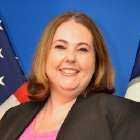
Camille Crain,
BRIC Section Chief, Federal Emergency Management Agency (FEMA)

Matthew Beaudet,
Commissioner, City of Chicago Department of Buildings, and FEMA HMPG Grant Recipient.
Program Highlights
DOE
- Infrastructure Investment and Jobs Act (IIJA) Energy Code Implementation Program and Inflation Reduction Act (IRA) Energy Codes Funding
FEMA
- Building Resilient Infrastructure in Communities (BRIC)
- Hazard Mitigation Grant Program (HMGP)
- Post-Disaster Code Administration and Enforcement Assistance (DRRA sec. 1206)
HUD
- Community Development Block Grant – Disaster Recovery (CDBG-DR) and Disaster Mitigation (CDBG-MIT)
2022 Water Reuse Working Group
Water Reuse Working Group: Preparing Our Buildings and Communities for Water Reuse in the 21st Century
Sunday, Sep. 11, 2 – 4 pm
Given an increasingly limited water supply, and with more jurisdictions adopting ONWS as a result, comprehensive water quality requirements for reuse are necessary. Greater uniformity protects public health and facilitates the consistency necessary for advances in reuse products, reduction in cost, and increased availability of reuse solutions.
The Code Council is establishing a Water Reuse Working Group of code development leaders and reuse experts to, in partnership with the National Blue Ribbon Commission (NBRC), explore opportunities to protect public health and to better support state, local, tribal, and territorial governments seeking to advance water reuse opportunities through integration of best practices into the I-Codes that govern water quality and additional reuse issues.
Potable water from a public drinking water treatment plant is required to meet Safe Drinking Water Act (SDWA) standards. But no national regulations exist for onsite non-potable water systems (ONWS) for reuse treatment, storage, and delivery. A handful of jurisdictions have adopted requirements, but they are varied.
The I-Codes (including the IPC, IRC, IgCC, and CSA B805/ICC 805) address construction, installation, alteration, and repair of on-site non-potable water reuse systems, non-potable rainwater collection and distribution systems, and reclaimed water systems. Generally speaking, these codes and standards address delivery, and to an extent, the quality of potable and non-potable water. But none of these codes and standards address pathogen and chemical contaminants.
The National Blue Ribbon Commission for Onsite Non-potable Water Systems (NBRC) was established in 2016 to craft model policy and develop resources for the safe, practical, and sustainable implementation of onsite non-potable water systems. It is composed of leaders from all levels of government across the United States.
Scope
This diverse working group will research all aspects of onsite water reuse, develop a roadmap, and propose needed resources, including recommended updates to the International Codes (I-Codes) – that are necessary to meet jurisdictions’ water reuse goals. The Code Council will entrust the working group to complete the following actions:
- A comprehensive review of current I-Code requirements as they relate to onsite water reuse.
- A comprehensive review of existing adopted codes, guides, executive orders, white papers, reports, and standards, as they relate to design standards, preparedness, water quality, health considerations, and tools for installing and maintaining onsite water reuse systems.
- Develop a report with recommendations concerning potential code change proposals to include the most recent technologies, design standards, water quality, health considerations, and minimum requirements for on-site water reuse systems.
- Develop model code proposals to based on the report and above objectives.
The working group will include a broad range of experts from the building safety, construction, design, health, regulatory, and insurance industries.
 Please join ICC and industry Stakeholders on Sunday September 11, 2022, for this inaugural meeting taking place in a hybrid platform to find out more about the Water Reuse Working Group. Join us in person at the Kentucky International Convention Center, 221 S 4th St Louisville, KY 40202, room L007/008 or virtually.
For virtual and in-person attendance please register using the link below.
Media Relations
International Code Council Media Resources
The International Code Council is the leading global source of model codes and standards and building safety solutions. Code Council codes, standards and solutions are used to ensure safe, affordable and sustainable communities and buildings worldwide.
How to Get in Touch
International Code Council staff members are available to provide expert commentary and analysis on a broad range of building code and safety-related topics. If you’d like to speak with one of our staffers for research or media interviews, please contact:
Donna Stanley
(734) 660-6518
dstanley@iccsafe.org
Our Recent Press Releases
For recent press releases distributed by the Code Council, visit our press release webpage
Subscribe to Our Newsletter
The Building Safety Journal (BSJ) Weekly is a weekly newsletter from the International Code Council that covers the latest news on the building safety and construction sectors. It offers everything from in-depth technical articles about innovative technologies to quick tips on how best to prepare your home for the season.
Copyright Permission
Third parties who wish to reproduce Code Council materials must receive advance written permission from the Code Council for any incorporation of Code Council copyrighted material into external materials. For more information, please visit our Rights and Usage Policy webpage.