Oceania Solutions

ICC Solutions for the Oceania Region

The ICC family of solutions ensures the safety, affordability and sustainability of buildings worldwide. Our team of experts is here to guide you through your building safety initiatives, ensuring compliance with local regulations. We take the time to understand the unique needs of each partner, user or client, offering tailored advice to meet those specific requirements.

Learn more about product approval in Australia / New Zealand

ES Mark


WaterMark logo

CodeMark/WaterMark

Environmental Product Declaration

Off-Site Construction

Off-Site Construction

Accreditation

Accreditation

Codes & Standards

Codes & Standards

ES Mark

ES Horz RGB 200pw ol

With more than ninety years in product evaluation, ICC Evaluation Service (ICC-ES) offers certification services for building and plumbing products to demonstrate compliance with the Australian National Construction Code (NCC) or New Zealand Building Code’s (NZBC) evidence of suitability requirements.

Under its Joint Accreditation System of Australia and New Zealand (JASANZ) endorsed ES Mark scheme, Evaluation Service Reports (ESRs) or Evaluation Service Listings (ESLs) issued by ICC-ES can be used as evidence to demonstrate compliance with the NCC and NZBC.

ICC-ES also maintains accreditation from the American Association of Laboratory Accreditation (A2LA) and ANSI National Accreditation Board (ANAB) for building product approval in compliance with Australian and New Zealand building codes, covering a comprehensive range of services.

Evaluation Reports

Product Compliance is a major pillar in the regulatory framework. ESRs verify that innovative building products comply with code requirements.

Evaluation Service Listings (ESLs)

Product Compliance is a major pillar in the regulatory framework. ESLs verify that building products comply with standards referenced in code requirements.

Evaluation Reports

International Scope

ESRs are widely accepted internationally, including in North, Central and South America, parts of the Middle East, Europe and Asia. These reports can be used to demonstrate compliance with building codes, particularly where prescriptive standards do not exist for new and innovative products. The products that receive ESRs are evaluated for compliance with Acceptance Criteria (AC), a normative document that is developed by ICC-ES technical experts and reviewed and approved by an independent panel.

Click here to see the extensive list of approved ACs developed by ICC-ES to facilitate market-entry for innovative products.

Australia and New Zealand

In the case of Australia, an ESR can be considered to be a certificate issued by a certification body stating that the properties and performance of a material, product, form of construction or design fulfil specific requirements of the BCA under (1) (c) of provision A5G3.

In the case of New Zealand, an ES Mark Scheme ESR can be considered to be the equivalent of an Appraisal, where ICC-ES is a third-party assessor of a product’s performance, independent of the product manufacturer or distributor, where using AC, the product is evaluated to the requirements of the NZBC.

Evaluation Service Listings

Building products/systems abiding to a specific standard requires proof of compliance through a listing report. An ESL allows manufacturers of building products covered by existing consensus standards to show their product compliance with applicable standards/national scheme referenced in the building codes and other applicable codes.

In the case of Oceania, an ESL would be determined having regard to standards referenced in either the BCA or NZBC. If the normative document is a reputable international standard not referenced in either of the local codes, at present this could not be regarded as an ESL and would need to be assessed as an ESR or CodeMark to establish compliance with the BCA or NZBC.

Interested in having your product listed to any of the outlined schemes or evaluated as per the local requirements?

CodeMark Australia

ICC-ES is a Joint Accreditation System of Australia and New Zealand (JASANZ) accredited conformity body for CodeMark Australia.

As a voluntary building product certification scheme, CodeMark Australia can be used by product manufacturers and suppliers to demonstrate compliance with the requirements of the NCC for both innovative products and where there are referenced standards. Reports from accredited test laboratories can be used, or alternatively ICC-ES can assist in undertaking the tests if within its scope of accreditation.

CodeMark Australia certification is accompanied by mandatory acceptance subject to use in accordance with a certificate's scope and limitations.

WaterMark

Through its Plumbing, Mechanical and Fuel Gas (PMG) program, ICC-ES is accredited by JASANZ as a WaterMark Conformity Assessment Body (WMCAB) to provide plumbing product certification for WaterMark and WaterMark Lead-Free under the Plumbing Code of Australia (Volume Three of the National Construction Code).

Read more about WaterMark Certification Scheme or Lead Free Plumbing Products.

WaterMark Certification Scheme

WaterMark logo

In Australia, WaterMark is a mandatory certification scheme for certain types of plumbing and drainage products, principally those that come into contact with the potable water supply. The scheme is designed to protect community health and safety, where once a product is certified, it is fit for purpose and authorized for installation by a licensed plumber.

A product that is listed on the Australian Building Codes Board’s (ABCB) Schedule of WaterMark Products and is to be installed in Australia must be WaterMark certified and provided with a Scope of Use statement by an accredited CB specifying its intended use.

In New Zealand, plumbing and drainage systems must be constructed using materials and products fit for their intended purpose to achieve the relevant requirement of the NZBC. WaterMark Certification can be accepted as proof of compliance with NZBC.

Lead Free Plumbing Products

WaterMark Lead Free logo

ICC-ES has been accredited by JASANZ for the purpose of certifying products to the requirements of the Plumbing Code of Australia to satisfy the Lead Free WaterMark status, which will also be accepted in New Zealand. ICC-ES is also able to offer its laboratory capabilities in the U.S. to test for lead free products to NSF/ANSI/CAN 372.

As part of the 2022 edition of National Construction Code (NCC) Volume Three (Plumbing Code Australia) adopted on May 1, 2023, ABCB has limited allowable lead content in plumbing products that contain copper alloys and are intended for use in contact with drinking water to a weighted average lead content of no more than ≤ 0.25 percent.

This requirement is accompanied by a transition period to enable the industry to have new and existing products certified to conform to NSF/ANSI/CAN 372. Beginning May 1, 2026, these provisions will be in effect, and only products that conform to the new requirements will be authorized for installation in Australia. New Zealand has instituted equivalent requirements.

Environmental Product Declaration and Life Cycle Assessment

Environmental Product Declarations (EPDs) are designed to meet the global market demand for science-based, transparent, quality assured information about product environmental performance.

ICC-ES is an accredited Program Operator and its expert engineers can guide a manufacturer through the process from start to finish.

Off-Site/Prefabricated Construction

In North America and other global locations, ICC-ES provides manufacturing site inspections by certified inspectors, design review and evaluation for off-site/prefabricated construction pods, systems and components. With over 40 years of industry expertise, ICC-ES is well-positioned to support the growing demand for this form of construction in Australia and New Zealand.

ICC-ES has also created Acceptance Criteria for product evaluation of off-site components and assemblies (e.g. office pods, volumetric structures, 3D printing, mass timber, shipping containers, etc.).

Accreditation

IAS H RGB WEB

The ICC Family of Solutions includes the International Accreditation Service (IAS), an ILAC-MRA signatory and member of IAF, APAC, and IAAC, that provides accreditations and related services in compliance with ISO/IEC 17011, national and international conformity assessment requirements, and the needs and requirements of its customers.

Codes and Standards

ICC technical experts are available to provide advice or develop reports that assess the applicability of I-Code content to local requirements as input to a Performance Solution in the case of Australia, or Alternative Solution in New Zealand.

While they aren’t the mandated building codes in Australia and New Zealand, the I-Codes and ICC Standards may contain evidence that can be used to demonstrate compliance with the Performance Requirements of the Building Code of Australia and New Zealand Building Code.

The I-Codes and ICC standards can also be used or adapted for use by Indo-Pacific nations that may have less well-developed building regulations, and which can also access ICC training for capacity building.

2024 International Codes

2024 International Codes

View the latest versions of the International Codes.

ICC Periodic Table

ICC Periodic Table

Download the International Code Council Periodic Table as a quick reference to all of the Code Council's codes, standards and guidelines.

Performance/Alternative Solutions for Design

International Code Council (ICC) technical experts are available to provide advice or develop reports that assess the applicability of International Code (I-Code) content to local requirements as input to a Performance Solution in the case of Australia, or Alternative Solution in New Zealand.

While not the mandated building codes in Australia and New Zealand, the I-Codes and ICC Standards may contain evidence that can be used to demonstrate compliance with the Performance Requirements of the Building Code of Australia and New Zealand Building Code.

The I-Codes and ICC standards can also be used or adapted for use by Indo-Pacific nations that may have less well-developed building regulations, and which can also access ICC training for capacity building.

An architect in Australia whose client wanted to construct a tiny home as a Class 1a building required a Performance Solution for an internal feature of the design in the absence of a Deemed to Satisfy provision being available.

The architect was aware that the International Residential Code possibly contained a technical solution for the design feature and sought a review of the plan to determine if this could be used. A report was provided by an ICC technical expert concluding that the International Residential Code solution would satisfy the relevant Performance Requirement of the National Construction Code.

From this a Performance Solution was developed by the local practitioner and accepted by the authority having jurisdiction.
A New Zealand based architectural practice that designs residential properties that they intend to be adapted for use “anywhere in the world” and that comply with the New Zealand Building Code, sought ICC advice to establish if the designs will comply with the International Residential Code.

This request involves a plan review by a technical expert at the ICC to determine if compliance with the International Residential Code is possible, which would enable the design to be used in the United States and wherever else the I-Codes are adopted, allowing for any local adaptations.

This particular service provides for export opportunities to international markets, but can also be used in reverse if a design cannot meet all the requirements of the domestic code and standards, there may be a ready-made solution within the I-Codes that can contribute to the development of a Performance Solution in the case of Australia, or an Alternative Solution in New Zealand.

Technology/Digitization

Local government officials, practitioners and constituents need easy access to planning ordinances. The ICC family of solutions offers building code solutions that make it possible to digitally link planning ordinances, land use zoning, building codes, planning and building approval documentation and other essential content with local procedures and public service platforms. Learn more

ICC cdpACCESS CODES

ICC cdpACCESS STANDARDS

ICC DIGITAL CODES PREMIUM

Continue the Conversation with Our Team

Protect California’s Building Safety Codes – Oppose AB 306

ICC Pulse Web Header v1

Protect California’s Building Safety Codes – Oppose AB 306

California Assembly Bill 306 (AB 306) is moving rapidly through the legislature and could have serious consequences for building safety and local authorities. It is expected to be voted on in the Assembly later this week.

AB 306 would freeze state code updates for residential units for nearly a decade, and could prevent updates aimed at addressing earthquake risk, flooding, energy storage systems, energy and water utility costs and structure fires. It would also prohibit updates that simplify the code or reduce construction costs, including updates within the 2024 International Residential Code® (IRC) that are estimated to save homeowners as much as $2,200 on newly constructed homes that are built to the 2024 IRC.

FEMA estimates that California’s codes offer the mitigation equivalent of $470 million every year in avoided losses from earthquakes, structure fires, wildfires and flood risks. Studies have repeatedly demonstrated that modern model building codes have no appreciable implications on housing affordability.

The International Code Council shares the bill sponsors’ concerns regarding housing affordability and welcomes the opportunity to work together to develop possible solutions. However, because it risks building safety and resiliency updates and restricts the state’s ability to incorporate alternative cost-saving updates, the Code Council joins CALBOCalifornia’s Fire Prevention Officials and dozens of state and national organizations in opposing AB 306.

Act now – voice your opposition to AB 306 by clicking here.

Credentialing – Maintain/Renew

CREDENTIALING

Maintain/ Renew

To renew your certifications, you must first earn Continuing Education Units (CEUs) by participating in continuing education and professional development activities.

Renewing Your Certifications

You can accrue CEUs to meet the renewal requirement within your three-year renewal period. For more information read the Renewal Bulletin.

Continuing Education Units (CEUs)

01

ICC Training

Visit ICC Training and earn CEUs from seminars, training, and other education credit opportunities in your area.

Learn more

02

Preferred Provider course listing

Check out the Preferred Provider course listing for training opportunities approved for Code Council CEUs.

Learn more

03

myICC Account

Use your myICC account to track and/or enter your CEUs. Renew your certification once you've accumulated the necessary CEUs.

Login to you myICC account

NOTE: The paper application requires an additional processing fee. Please email certrenewal@iccsafe.org to request.

Retain proof of all CEUs manually entered. ICC Training CEUs are automatically added to your myICC account.

ICC conducts renewal audits every month. If audited, you must provide proof of each activity submitted during the three (3) year renewal period. If proof of CEUs cannot be provided, the renewal will be voided, and your certifications will be reverted to their previous status. Renewal fees are not refundable. Proof will only be required if staff is unable to verify the activity internally.

close-up of students in a row taking notes

Expired Certifications

Certifications are valid for three years. Certificates must be renewed on or before the expiration date (when they become inactive) to be current. All certifications renewed after their expiration date will incur an additional fee upon renewal.

My Certification Expired for Less than 6 years

If your certification(s) have been expired for less than six (6) years, you can still renew them on your myICC account.

woman sitting at desk working on laptop

overhead view of a group on construction workers and code officials looks over plans on a makeshift table

My Certification Expired for More than 6 years

If your certification has been expired for more than six (6) years, you may be eligible to reinstate it - no retesting required. Simply log in to your myICC account to get started.

For full details and guidance, review the Reinstatement Bulletin. 


Pricing:

  • Member: $450.00
  • Non-Member: $530.00

CEUs Required to Reinstate International Code Council-issued Certifications:

Number of Certifications Being Reinstated
Total # of CEUs Required
(50% from ICC or PPN)
1
3.0 (1.5)
2 through 5
6.0 (3.0)
6 through 10
9.0 (4.5)
11 or more
12.0 (6.0)
Certified Building Official or Master Code Professional
12.0 (6.0)

NOTE: The paper application requires an additional processing fee. Please email certrenewal@iccsafe.org to request.

My Legacy Certification

If your certification from the International Code Council or its legacy organizations (ICBO, BOCA, SBCCI, CABO) has expired, you may still be eligible for reinstatement.

If your Legacy certification is in Expired status, you can log in to your myICC account to get started. For full details and guidance, review the Reinstatement Bulletin.

Pricing:

  • Member: $530.00
  • Non-Member: $630.00

CEUs Required to Reinstate Legacy-issued Certifications:

Number of Certifications Being Reinstated
Total # of CEUs Required
(50% from ICC or PPN)
1
3.0 (1.5)
2 through 5
6.0 (3.0)
6 through 10
9.0 (4.5)
11 or more
12.0 (6.0)
Certified Building Official or Master Code Professional
12.0 (6.0)

NOTE: The Legacy Reinstatement Paper Application requires an additional processing fee. Please email certrenewal@iccsafe.org to request.

one woman and two men in hard hats looking over construction plans

Questions? Contact Us

ICC Credentialing
Email: customersuccess@iccsafe.org
Phone: 1-888-ICC-SAFE (422-7233) ext. 0

Certification Policies

ICC understands the importance of impartiality in carrying out our certification activities, managing conflict of interest, and ensuring the objectivity of our certification activities.

To learn more about our certification and education policies, please read the following:
Council Policy 45, CC Rules of Procedure, Records Release, and ICC Credentialing Compliance Principles.

Credentialing – UST-AST

CREDENTIALING

UST/AST

Petroleum storage tanks are regulated by federal and state laws. Many states require that tank workers be licensed or certified before installing, retrofitting, or decommissioning UST and/or AST systems or components.

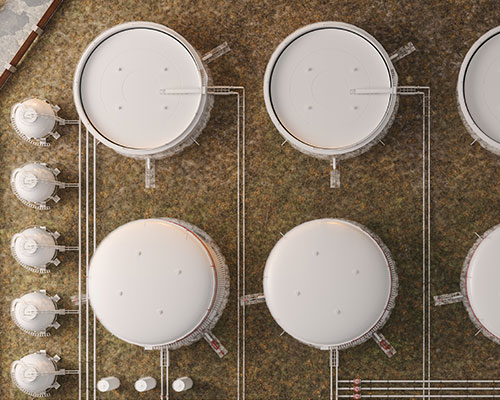
overhead view of above ground storage tanks

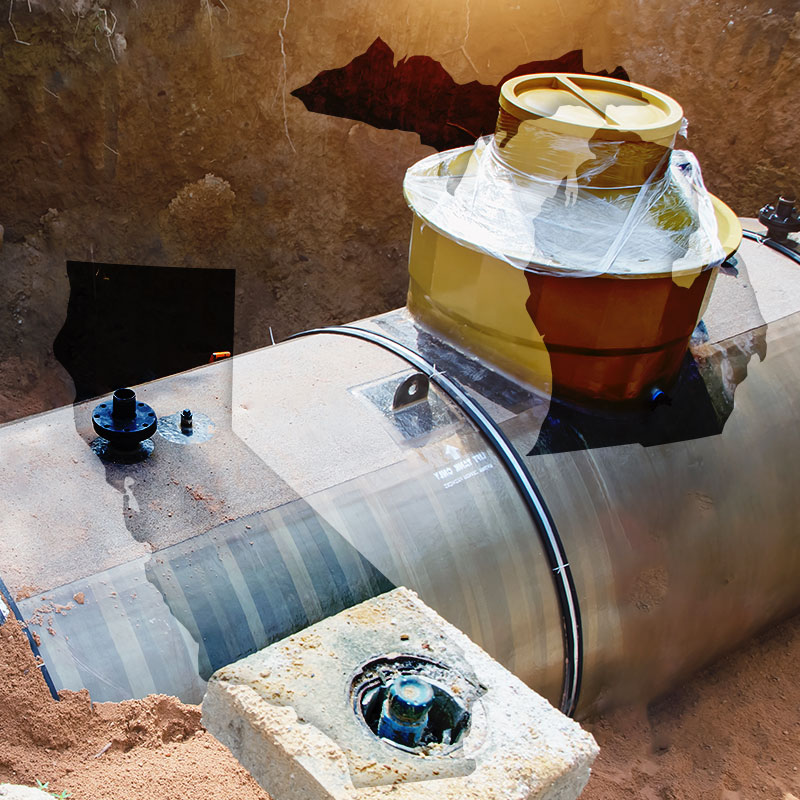
tops of underground storage tanks

International Code Council UST/AST examinations can complement state licensing programs. In some states, individuals are required to pass state-specific examinations.

The program is used as a mandatory requirement in whole or in part by some states. It is available as a voluntary credential in several other states where there is not yet a mandatory UST or AST licensing requirement.

Anyone seeking a state or local license should first contact the appropriate licensing agency regarding specific local requirements.

Most ICC UST/AST credentials are valid for a period of two (2) years. Individuals who wish to renew their credential for an additional two-year period must do so by taking and passing the examination again.

UST/AST Exams

ICC offers National UST/AST exams as well as specific exams for Alaska, California, Michigan, New Jersey, Oregon, Puget Sound, Washington State and Wyoming.

close up of hands typing on a laptop

underground storage tank with state shapes of Michigan and California overlay

Renewable UST Certifications

Michigan Class A & B UST System Operator Certifications (NA/NB) are now available for renewal in your myICC account.


California UST Inspector (UI) Certification has two renewal options:

  • Renewal Option 1: Re-taking and Passing the exam.
  • Renewal Option 2: Obtaining continuing education units (CEUs)                                                                                          Keep in mind:
    • Renewal is available within 60 days of the expiration date,
    • CEUs are submitted through your myICC account, and
    • CEUs must be approved by the CA State Water Resources Control Board.

Click here for CEU data entry instructions and requirements.

Start Your Journey

Learn everything you need to know about before, during and after the exam.

Admin Rules and Policies

Be sure to review all rules and policies before exam day.

Other Credentialing Categories

Certifications

The International Code Council offers several certification oppportunities to support career advancement.

Contractor/Trades

The International Code Council’s Contractor/Trades examination program is an independent testing program designed to provide licensing agencies with information regarding qualified contractors and trades professionals.

Questions? Contact Us

ICC Credentialing
Email: customersuccess@iccsafe.org
Phone: 1-888-ICC-SAFE (422-7233) ext. 0

Certification Policies

ICC understands the importance of impartiality in carrying out our certification activities, managing conflict of interest, and ensuring the objectivity of our certification activities.

To learn more about our certification and education policies, please read the following:
Council Policy 45, CC Rules of Procedure, Records Release, and ICC Credentialing Compliance Principles.

Promoting Housing Affordability through the I-Codes (BIRC)

Promoting Housing Affordability through the I-Codes
Code Council Board IRC Review Committee (BIRC)

Promoting Housing Affordability through the I-Codes Advisory Committee

Housing costs and affordability have become critical issues across the United States and many parts of the world. The Code Council supports development of the International Residential Code (IRC) through a consensus process involving stakeholders from throughout the home building industry.

The IRC is updated every three years, resulting in incremental changes between each edition using consensus-based methods. Code Council policy requires each proposed change to include cost impact data, which serves as the basis for debate during code development hearings.

Contemporary peer reviewed studies continue to find that building codes do not have meaningful implications on homes’ purchase price. However, some industry surveys and projections have suggested stronger interactions. Additional cost drivers often include land development regulations, local development charges, availability of skilled labor, material prices, and interest rates.


Project Leads:  Clemson University, Western Michigan University, and San Jose State University 

Principal Investigators:  Ehsan Mousavi Rizi (Clemson), Bilal Mahmoud Hammad Alhawamdeh (WMU), Farzan Kazemifar (SJSU), Ondrej Pekarovic (WMU), Gary Lewis (Retired Code Official NJ)


ICC Codes & Standards Home | Committee List

Committee Overview

STATUS
Active

MEETING INFO
Meeting Notices

MEMBERSHIP
Roster

DOCUMENTS
Documents

SECRETARIAT
Russ Manning, SVP

Project News

25.11.04 | BIRC Study Team Appoints the Advisory Committee (AC).

The BIRC Advisory Committee (AC) was appointed by the research team.   The AC list is available by looking at the "Roster" tab above.


25.10.09 | Input Sought - Multi-Disciplinary Research Team Seeks Input on International Residential Code Improvements

Earlier this year, ICC announced a wholistic review of the International Residential Code® to identify potential changes that can reduce construction costs and simplify the code without degrading existing life safety requirements.  (BSJ Article link)


25.08.13 | ICC Awards Study to University Team

The ICC has awarded the study to a Clemson University.  The multi-disciplinary team consists of experts from
Clemson University, Western Michigan University, and San Jose State University and includes a code official with over 30 years of industry experience.


25.05.27 | BIRC Conducts Down Select Interviews / Presentations

The ICC BIRC and ICC staff conducted interviews and heard presentations by the selected bidders on May 27-28, 2025.


25.04.30 | Proposal deadline extended to May 2, 2025

The ICC CEO has extended the deadline for proposals submittals to May 2, 2025, at 11:59 PT.


25.03.20 | Notice of RFP for the Promoting Housing Affordability through the I-Codes Project.

The ICC Board of Directors approved a project promoting housing affordability.  Details can be found in the Building Safety Journal Article.  This incudes the Request for Proposal (RFP) for supporting work effort.

Schedule
Published Editions
FAQs
Q&A RFP

International Code Council Community Development Honored with the Digital Transformation Award

Washington D.C. – ICC Community Development, a member of the International Code Council’s family of solutions, has been recognized with the prestigious Digital Transformation Award at the 2025 Laserfiche® Winners Circle event. This award represents the highest honor given to a solution provider for outstanding sales performance and exceptional client support.

Over the past year, ICC Community Development has demonstrated remarkable growth, achieving a 245% year-over-year increase in Cloud Sales and maintaining its position as a Top 5 solution provider of Laserfiche. This exceptional performance highlights the organization’s leadership in providing cutting-edge digital solutions that empower local governments to streamline operations and enhance service delivery.

“Receiving the Digital Transformation Award is a tremendous honor and a testament to the dedication of our team,” said Dan Foster, General Manager at ICC Community Development. “We are proud to partner with Laserfiche in equipping our clients with innovative technology that drives efficiency, transparency and digital transformation, and offering the highest level of support to industry organizations.”

The award further solidifies ICC Community Development’s position as a trusted provider of government-focused digital solutions, particularly as organizations increasingly adopt cloud-based document management and process automation. Laserfiche’s industry-leading Enterprise Content Management (ECM) platform has played a crucial role in this transformation, empowering municipalities to modernize operations and serve their communities more effectively.

As ICC Community Development continues to expand its impact, the company remains committed to helping local governments and organizations harness the power of Laserfiche’s industry-leading technology to build more efficient, resilient and digitally enabled communities.

###

About the International Code Council
The International Code Council is the leading global source of model codes and standards and building safety solutions. Code Council codes, standards and solutions are used to ensure safe, affordable and sustainable communities and buildings worldwide.

About ICC Community Development

ICC Community Development is a member of the International Code Council’s family of solutions and offers software solutions that allow municipalities to streamline their workflows and automate processes.  They are a Laserfiche Premier Partner.  

Global Solutions – Media Center

ICC Global Solutions – Media Center

The ICC Global Solutions team, often in conjunction with the Global Membership Council, facilitates discussions on globally-relevant topics related to building safety.
View the latest webinars below or go to our YouTube channel for a list of all recordings.

Recent Presentations

Over the past several decades, there has been a continuous increase in human and economic loss from disaster events. However, examples of resiliency planning and more stringent building code requirements still lag. In this presentation, Ms. Shamim Rashid-Sumar, Senior Vice President, Codes and Standards for the National Ready Mixed Concrete Association, offers a view on emerging risks and opportunities as human and economic losses from disasters increase, with the overarching goal of supporting and advancing resilience in future construction of buildings and critical infrastructure.

The Global Membership Council Meeting Guest Speaker: Dr. Kimberly Martin, Senior Engineer – Innovation & Sustainability at Keller on “Advancing Sustainability in the Geotechnical Industry“ November 25, 2024 – This Global Membership Council meeting was proud to feature guest speaker Dr. Kimberly Martin who provided excellent insights into sustainability in the geotechnical industry.

A brief overview of her presentation follows

Although the term “sustainability” is becoming more widespread, it can be challenging to know what tangible steps we can take as geotechnical engineers and contractors to further the goals of sustainable development. This talk will provide a brief background on sustainability, demonstrate how geotechnical engineers and contractors can significantly impact environmental sustainability, and present ideas to push our industry forward on social sustainability. Also, case studies will be provided to show how the EFFC-DFI Carbon Calculator can be used to calculate the carbon footprint of a geotechnical foundation solution and how changes to the design and/or materials can reduce the environmental impact of that solution.

Mr. Paul Robinson introduces ConstructReach, which he founded in 2018, a national workforce development consultancy, proposed to address the underrepresentation of minorities within the construction & design industry. ConstructReach now works nationally and partners with educational institutions, construction, design & manufacturing companies and enterprises to support organizational health, diversity initiatives, build new talent pipelines, and create career opportunities for a younger demographic.

California Strengthens Resiliency with Adoption of 2024 International Wildland-Urban Interface Code®

Sacramento, California – On February 26, 2025, the State of California adopted the 2024 International Wildland-Urban Interface Code® (IWUIC®) as the basis for Title 24, Part 7, 2025 California Wildland-Urban Interface Code to address escalating wildfire risks, enhance fire resilience with science-based standards, and set the benchmark for safer, more sustainable communities in fire-prone areas.

California’s adoption of the 2024 IWUIC is the result of a multi-year collaboration between the CAL FIRE Office of the State Fire Marshal, the California Fire Prevention Officers (CAL FPOs), California Building Officials (CALBO), the International Code Council (ICC), the California Building Industry Association (CBIA), and wildfire stakeholders culminating with rulemaking by the California Building Standards Commission (CBSC).

“Today marks a milestone that represents the hard work of many to update and modernize Wildland-Urban Interface building codes,” said California State Fire Marshal Daniel Berlant. “While these aren’t necessarily new requirements, it’s a reorganization of many sections into a singular code with the goal of making it easier for local officials to ensure that new homes and buildings built in wildfire-prone areas have an increased chance of surviving a wildfire.”

“With the help of expert volunteers, CAL FIRE’s Office of the State Fire Marshal has shifted the basis of Title-24’s Wildland Urban Interface standards to a nationally developed model code. The IWUIC is developed though the collaborative efforts of the foremost experts in the field of wildland construction safety from across our country. By utilizing this model code, California will benefit from the continual code development cycle that the Code Council uses to ensure that all its codes are the best in the world,” said Code Council Immediate Past President Stuart D. Tom, P.E., CBO, FIAE – Superintendent of Building and Fire, Pasadena, California.

“The adoption of the California Wildland-Urban Interface Code as Part 7 of Title 24 marks a significant milestone in protecting communities from the devastating impacts of wildfires. This accomplishment highlights the dedication and collaboration of the CAL FPOs and the California Office of the State Fire Marshal in adapting the IWUIC to address California’s unique challenges. Our members remain dedicated in their commitment to enhancing fire prevention, improving life safety measures and developing codes that safeguard our homes and neighborhoods,” said Tim Spears, Fire Marshal, CAL FPOs North Division President and Joe Morelli, Fire Marshal, CAL FPOs South Division President.

This decision comes after careful consideration and is a testament to the state’s commitment to upholding the highest standards in wildfire resiliency and mitigation. 

“There has never been a more essential time for collaboration in the name of public safety, and the newly approved use of the Code Council’s IWUIC is a testament to this shared effort.  California’s building, fire and code professionals came together to work in concert with the California State Fire Marshal to usher in a new era of fire-safe development standards and defensible space provisions that will enhance fire safety in the built environment.  With the definitive actions of the Building Standards Commission, CALBO looks forward to enforcing the IWUIC and its model provisions into the future,” said Jeff Janes, President of California Building Officials.

“While CBIA was initially concerned with this effort, we are now pleased to strongly support the California State Fire Marshal’s plan to use the Code Council’s IWUIC as the basis for California’s new stand-alone Wildland-Urban Interface fire safety code. This new document will combine three fire safety measures (building standards, defensible space provisions and fire-safe development standards) and publish them all under one cover,” said Christopher E. Ochoa, Esq., CBIA Senior Counsel – Codes, Regulatory and Legislative Affairs.

Title 24, Part 7 replaces the previous Title 24, Chapter 7A of the California Building Code –Materials and Construction Methods for Exterior Wildfire Exposure adopted in 2005.

Learn more about the 2024 IWUIC here.

###

About the International Code Council
The International Code Council is the leading global source of model codes and standards and building safety solutions. Code Council codes, standards and solutions are used to ensure safe, affordable and sustainable communities and buildings worldwide.

Credentialing – Certifications

CREDENTIALING

Certifications

The International Code Council offers several certification opportunities to support career development.

Certification Options

Certification Exams

ICC maintains one of the most historic and prestigious credentialing programs for construction codes and standards. We are committed to upholding the highest standard through continuous review and partnership with experienced professionals.

Reciprocity/
Transitions

ICC offers reciprocity for various certifications from the NCPCCI and ProBoard Accredited Fire Inspector I and II certifications.
lCC provides transitions for California-related certifications and the 85-Structural Steel and Welding Special Inspector certification.

Combination
Designations

Achieving an ICC Combination Designation demonstrates your proficiency and flexibility in diverse building safety disciplines that open many doors to a broad array of job opportunities.

Featured Programs

IAEI

ICC/IAEI Electrical Inspector certificate holders can expect to receive recognition in the U.S. nationally, experience increased job opportunities, and improve mobility within the building safety industry.

ICC Code Enforcement Program

The International Code Council is expanding its support of the code enforcement community with new professional development resources. The program features three new examinations for administrative, inspector and management levels of code enforcement.

NAFED

The International Code Council and National Association of Fire Equipment Distributors (NAFED) have a joint certification program. ICC administers the examination and NAFED provides training and certification renewals.

RESNET HERS/RFI

The International Code Council (ICC), in cooperation with RESNET, is offering certified RESNET HERS/RFI Raters the opportunity to build their professional qualifications and enjoy the valuable benefits offered exclusively to ICC Members.

Other Credentialing Categories

UST/AST

Code Council UST/AST examinations can be used to complement state licensing programs. In some states, individuals are required to pass state-specific examinations.

Contractor/Trades

The International Code Council’s Contractor/Trades examination program is an independent testing program designed to provide licensing agencies with information regarding qualified contractors and trades professionals.

Start Your Journey

Learn everything you need to know about before, during and after the exam.

Admin Rules and Policies

Be sure to review all rules and policies before exam day.

Questions? Contact Us

ICC Credentialing
Email: customersuccess@iccsafe.org
Phone: 1-888-ICC-SAFE (422-7233) ext. 0

Certification Policies

ICC understands the importance of impartiality in carrying out our certification activities, managing conflict of interest, and ensuring the objectivity of our certification activities.

To learn more about our certification and education policies, please read the following:
Council Policy 45, CC Rules of Procedure, Records Release, and ICC Credentialing Compliance Principles.