Batteries and Energy Storage Ad Hoc Committee

Batteries and Energy Storage Ad Hoc Committee
(AH-BES)

Batteries and Energy Storage Ad Hoc Committee

Established by the Code Council Board of Directors, this ad hoc committee will explore how building safety is impacted by the manufacturing, storage, use and recycling of batteries and energy storage systems.

This committee will identify any increased risk to the built environment and pinpoint gaps in codes and standards needing to be addressed to strengthen building, fire and life safety requirements for batteries and energy storage systems.

The committee will then identify and recommend areas of change to the Code Council Board for relevant codes and standards. Upon completion of its stated objectives, the committee will prepare and submit a final report of its activities and findings to the Board.

The committee will follow the Code Council’s established procedures and is expected to conduct its activities through the 2024-2026 Code Development Cycle.


ICC Codes & Standards Home | Committee List

Committee Overview

STATUS
Inactive | Sunset

MEETING INFO
BES Meeting Notices

MEMBERSHIP
BES Roster

DOCUMENTS
BES Documents

SECRETARIAT
Russ Manning, SVP
Christine Reed, Staff Coordinator
Karl Fippinger, Staff SME Fire
Kris Stenger, Staff SME Energy

Committee News

25.08.08  | Keep engaged with the Code Related Work at the FCAC.

The code related work continues in this effort within the ICC Fire Code Action Committee (FCAC).  You can find information on the FCAC page.

You are encouraged to sign up for the FCAC related workgroup as an interested party (IP).  Sign up for the "Code  |  FCAC - Fire Code Action Committee  |  WG04 Energy Technologies" workgroup IP list on the ICC Applications & Interested Parties site. (Click on the "Interested Party..." button.)


25.07.12  | Ad HOC BES Committee Report is Published.

The final committee report is published for public viewing.  This industry leading report provides insights from experts across the building and manufacturing industry on Lithium Battery Energy Storage Systems (BESS) for safety in the built environment.  (See BSJ Article)   Report:  English Version | Spanish Version


25.04.26  | ICC Board of Directors Receives Final Report.

The ICC Board of Directors was presented with the final report from the Ad Hoc Committee and sunset the committee.


23.10.20  | ICC Board of Directors Appoints Committee

The ICC Board of Directors appointed the AD HOC Committee members.  (See "Membership" / "Roster" above)

Apply
Published Editions
FAQs

2024 IECC Appeals

2024 IECC Appeals

The rigorous, transparent development process for the International Energy Conservation Code® meets the fundamental principles of Office of Management and Budget Circular No A-119 (Federal Participation in the Development and Use of Voluntary Consensus Standards and in Conformity Assessment Activities), a key principle of which, is an appeals process.

Read on to view information about appeals that have been made to the 2024 International Energy Conservation Code.

Latest News
April 2024
  • 2024 IECC Appeals – IECC Feedback Form Click here.
  • 2024 IECC Appeals – ICC Board of Directors Actions Report Read here.
March 2024
  • 2024 IECC Board of Directors Final Decision Read here.
  • 2024 IECC Appeals Board Report Now available.
  • 2024 IECC Appeals – ICC Board of Directors Hearing More info.
February 2024
January 2024
  • 2024 IECC Appeals – Notice of Hearing The International Energy Conservation Code® (IECC) Notice of Hearing is now available. Download it here. Updated 2/16/24
  • 2024 IECC Appeals – Appeals Notice Read an update on the 2024 IECC appeals process and download the Appeals Notice. Download notice
November 2023
  • 2024 International Energy Conservation Code Update: Appeals Deadline Extended and Next Steps
    Includes information on 2027 Next Steps and 2027 Call for Committees. Read article

​​2024 IECC APPEALS​ – SUBMITTED APPEALS

In accordance with CP-01 Appeals process, the International Code Council has received appeals on the 2024 IECC (Commercial & Residential) committee actions. The appeal deadline was January 2, 2024 (see BSJ Notice). Details on the appeals process can be found on the ICC Corporate Governance web page. Further information on the 2024 IECC Appeals Process Overview can be found here.

The nine appeals received are as follows:

​​2024 IECC APPEALS​ – BOARD OF DIRECTORS HEARING

Pursuant to CP-01, the International Code Council Board of Directors shall review each of the appeals and the report of the Appeals Board and shall take appropriate action on each of the appeals. With respect to the appeals filed in connection with the 2024 IECC, the Board will hear from interested parties, in accordance with the guidelines in the “Procedures for Interested Parties to Present to ICC Board of Directors.” The Board meeting will be held at 8:00 AM PT on Monday, March 18, 2024.

For those who are interested in watching the proceedings, a YouTube link is available below, and will go live Monday, March 18 at 8:00 AM PT.

​​Procedures for Interested Parties to Present to ICC Board of Directors

​​Hearings Webcast

The 2024 IECC Appeals ICC Board of Directors Hearing occurred on March 18, 2024.

​​2024 IECC APPEALS​ – APPEALS HEARINGS

The Appeals Board has decided to consider the appeals in four groups as noted below.

  • Scope and Intent (AGA, APGA, NMHC/BOMA, Region VI)
  • Consensus Building Approaches (AGA, APGA, Region VI)
  • Procedural Specific Issues (AHRI, APGA, Region VI)
  • Subject Specific Issues (AHRI, NMHC/BOMA, Region VI)

Hearing Schedule by Group
See the Hearing Schedule by Group by clicking here ▼

Appeal Basis Hearing Date/Time Category Related Issues
Scope and Intent [Day 1] February 21 at
7 am Pacific Time
  1. Whether the IECC residential and commercial scope and intent statements permit provisions aimed at encouraging decarbonization of buildings or greenhouse gas reduction to be placed in the main code text or require such provisions to be placed in appendices
  2. Whether specific code changes fall within scope based on definition of terms “building,” “occupant,” or “occupancy”
Consensus Building Approaches [Day 2 Part A] February 22 at
7 am Pacific Time
Whether the consensus building approach utilized by the IECC residential consensus committee was consistent with ICC’s policies
Procedural Specific Issues [Day 2 Part B] February 22
following the completion of
Day 2 Part A.
  1. Committee balance / membership
  2. Calling of votes (Robert’s Rules)
  3. Cost analysis approach
  4. Commenting (substantive change procedures)
Subject Specific Issues [Day 3] February 23 at
7 am Pacific Time
  1. Cost-effectiveness
  2. Increasing efficiency
  3. Principle of not prioritizing any fuel sources
  4. Consistency with other codes, including the IBC
  5. Feasibility of implementation
  6. Any other subject specific issues
 

Submitted Viewpoints
See all of the viewpoints by clicking here ▼
See appeals by number in the Submitted Appeals section.

Viewpoint Submitted Pertains to
350 Contra Costa Action – Farber In Opposition: 1, 2, 3, 4, 5, 6
Day 1, Day 2, Day 3
AIM Associates – Beeler In Opposition:  1, 2, 3, 4, 5, 6, 7, 8, 9
Day 1, Day 2, Day 3
Alliance for Transportation Electrification – Tempchin In Opposition: 3, 6, 7, 8
Day 1, Day 2, Day 3
American Council for an Energy-Efficient Economy – Waite In Opposition: 1, 2, 3, 4, 5, 6, 7, 8, 9
Day 1, Day 2, Day 3
American Gas Association – Murray In Support: 7
Day 1, Day 2
Atmos Energy Corporation – Tate In Support: 7
Day 1, Day 2
CAIOUs – Surana In Opposition: 6, 7, 8
Day 1, Day 2, Day 3
California Electric Transportation Coalition – Corby In Opposition: 1, 2, 3, 4, 5, 6, 7, 8, 9
Day 1, Day 2, Day 3
City and County of Denver – Office of Climate Action, Sustainability and Resiliency – Anderson In Opposition: 1, 2, 3, 4, 5, 6, 7, 8, 9
Day 1, Day 2, Day 3
Drive Electric Dayton – Hankins In Opposition: 1, 2, 3, 4, 5, 6, 7, 8, 9
Day 1, Day 2, Day 3
Edison Electric Institute – Rosenstock In Opposition: 3, 6, 7, 8
Day 1, Day 2, Day 3
Electric Drive Transportation Association (EDTA) – Cullen In Opposition: 3, 7, 8
Day 1, Day 2, Day 3
Energy Solutions – Burk In Opposition: 1, 2, 3, 4, 5, 6, 7, 8, 9
Day 1, Day 2, Day 3
EV Charging for All Coalition (EVCAC) – Warheit In Opposition: 1, 2, 3, 4, 5, 6, 7, 8, 9
Day 1, Day 2, Day 3
Leading Builders of America – Crone In Opposition: 2, 3, 4, 5, 7, 8
Day 1, Day 2, Day 3
Lutron Electronics Co., Inc. – Jouaneh In Opposition: 2
Day 1, Day 3
Municipal Gas Authority of Georgia – Tolleson In Support: 8
Day 1, Day 2
National Electrical Manufacturers Association (NEMA) – Holland In Opposition: 1, 2, 3, 4, 5, 6, 7, 8, 9
Day 1, Day 2, Day 3
National Glass Association, Aluminum Extruders Council – Culp In Opposition: 7, 8
Day 1, Day 2
National Multifamily Housing Council – Johnson – 1 In Support: 6
Day 1, Day 2, Day 3
National Multifamily Housing Council – Johnson – 2 In Support: 3, 6
Day 1, Day 2, Day 3
National Propane Gas Association – Swiecicki In Support: 3, 4, 5, 6, 7, 8, 9
Day 1, Day 2, Day 3
New Buildings Institute – Rabe In Opposition: 1, 2, 3, 4, 5, 6, 7, 8, 9
Day 1, Day 2, Day 3
ONE Gas Inc – Rhodes In Support: 7
Day 1, Day 2
Philadelphia Gas Works – Zuk In Support: 8
Day 1, Day 2
RESNET – Baden In Opposition: 1, 2, 3, 4, 5, 6, 7, 8, 9
Day 1, Day 2, Day 3
Rinnai – McGuire In Support: 8
Day 1, Day 2
RMI – Kocher In Opposition: 1, 2, 3, 4, 5, 6, 7, 8, 9
Day 1, Day 2, Day 3
Self – Bunger In Opposition: 1, 2, 3, 4, 5, 6, 7, 8, 9
Day 1, Day 2, Day 3
Self – Collignon In Opposition: 7, 8
Day 1, Day 2
Self – Guhl In Opposition: 1, 2, 3, 4, 5, 6, 7, 8, 9
Day 1, Day 2, Day 3
Self – Guinan In Support: 1, 2, 3, 4, 5, 6, 7, 8, 9
Day 1, Day 2, Day 3
Self – Kostka In Opposition: 1, 2, 3, 4, 5, 6, 7, 8, 9
Day 1, Day 2, Day 3
Self – Penniman In Opposition: 1, 2, 3, 4, 5, 6, 7, 8, 9
Day 1, Day 2, Day 3
Self – Swoape In Support: 8
Day 1, Day 2
Self – Van Sickle In Opposition: 1, 2, 3, 4, 5, 6, 7, 8, 9
Day 1, Day 2, Day 3
Self – Vijayakumar – 1 In Opposition: 5, 6, 7, 8
Day 1, Day 2, Day 3
Self – Vijayakumar – 2 In Opposition: 6
Day 1, Day 2, Day 3
Self – Vijayakumar – 3 In Opposition: 9
Day 1, Day 2, Day 3
Southeast Sustainability Directors Network – Livingston In Opposition: 1, 2, 3, 4, 5, 6, 7, 8, 9
Day 1, Day 2, Day 3
Southwest Energy Efficiency Project (SWEEP) – Meyers In Opposition: 3, 4, 6
Day 1, Day 2, Day 3
SWTCH Energy, Inc. – Cohen In Opposition: 3, 5, 6, 7, 8
Day 1, Day 2, Day 3
Tesla, Inc – Sanchez In Opposition: 3, 5, 6, 7, 8
Day 1, Day 2, Day 3
Town of Eagle – Koppel In Opposition: 1, 2, 3, 4, 5, 6, 7, 8, 9
Day 1, Day 2, Day 3
 

​​Hearings Webcast

The 2024 IECC Appeals Hearings occurred over three days, February 21 – 23, 2024.

​​2024 IECC APPEALS​ – PRESENTATIONS

​​Procedures for Interested Parties to Present to Appeals Board

Presentation Requirements

  • Slides should use 16:9 Ratio
  • Images on slides are recommended to be at least 5" x 7" for visibility on the screen
  • Please do not include audio or video files
  • Text size is recommended to be at least 32pt (larger if possible) for visibility on the screen
​​2024 IECC APPEALS​ – BOARD MEMBERS​

David Spencer, CBO, ACO

David Spencer, CBO, ACO
Appeals Board Chair

Mr. Spencer has been a Building Official in Washington since 2011, with over 30 years overall within the construction industry with 18 years in the code compliance industry. He has worked for five different municipalities throughout the state of Washington, and is currently in a State Operations Manager Role. Currently serving as International Code Council Vice President and served on the Board of Directors from 2017 to present.

Thomas Allen, CBO, MCP,CFM, LEED AP

Thomas Allen, CBO, MCP,
CFM, LEED AP

Mr. Allen is the Building Official for Orange County, FL. He has over 42 years’ experience in the construction industry, with over 29 years in the enforcement side of the industry. He has worked as an inspector, plans examiner, fire inspector, floodplain manager, building official, fire marshal, and ICC Regional Manager for Government Relations. He is currently serving as Director of the Building Officials of Florida (BOAF) and is the Immediate Past President of the ICC Gulf Coast Region IX.
Alex Olszowy III

Alex “Cash” Olszowy III

Mr. Olszowy joined Lexington, Kentucky’s Division of Building Inspection in 1997 as a Residential Inspector, eventually becoming a supervisor, ultimately retiring as the Director of Code Enforcement for Lexington in October 2023. He holds Kentucky’s highest level of certification as a Level III Plans and Specifications Inspector. He is a Past President of the International Code Council, Board of Directors, serving on the Board from 2010-2017. He has served as a moderator at the code development hearings.

Michael Shannon, PE, CBO

Michael Shannon, PE, CBO

Mr. Shannon was appointed Development Services Director for the City of San Antonio, Texas in May 2017 and is currently the city’s Building Official. He is a registered Professional Engineer (PE) in Texas in the discipline of Fire Protection Engineering, holds multiple ICC certifications including Certified Building Official, and is a Texas state-licensed Code Enforcement Officer. He has served multiple times on the ICC IBC-Fire Safety and IBC-General Code Development Committees.

​​2024 IECC APPEALS​ – ​​PROCESS OVERVIEW​

​Summary Overview

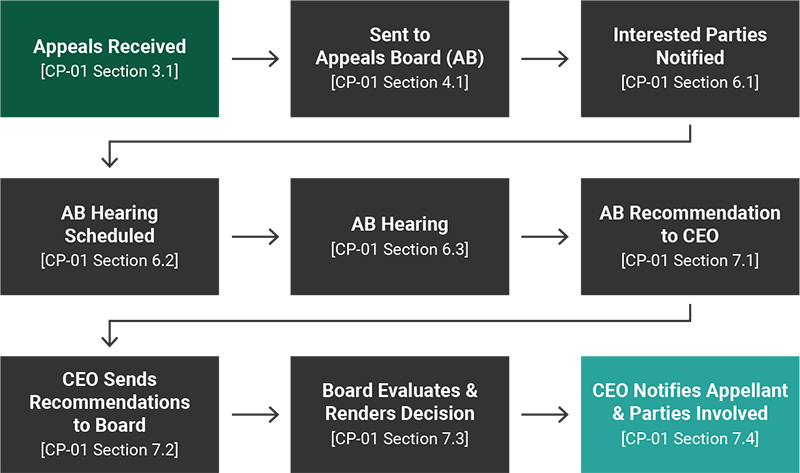
The appeals process is defined in CP-01. The 2024 IECC appeals process will use CP-01 following the prescribed procedures utilizing section 4.1 as the pathway for processing appeals, as approved by the Code Council Board of Directors.

The following main milestones exist based on that approach:

  1. The public can appeal against the final decisions made by the IECC committees (commercial and residential) at the conclusion of the Final Balloting. [CP-01 Section 3.1]
  2. The appeal will be placed before the Appeals Board within 30 days of the receipt of the appeal. [CP-01 Section 4.1]
  3. The appeals board must be established. [CP-01 Section 5]
    Note: This can occur concurrently with the earlier steps.
  4. ICC must notify all interested parties that the appeal was received within 30 days. [CP-01 Section 6.1]
  5. The Appeals Board Chair (ICC Board Vice President) will schedule an appeals board hearing to review the appeal within 30 days of the appeals board receiving the appeal. [CP-01 Section 6.2]
  6. The Appeals Board conducts the appeal hearing. [CP-01 Section 6.3]
  7. The Appeals Board renders a recommendation to the ICC CEO. [CP-01 Section 7.1]
  8. The ICC CEO submits the Appeals Board report and recommendations to the ICC Board of Directors. [CP-01 Section 7.2]
  9. The Board of Directors reviews the appeal(s) and provides a decision to the ICC CEO. [CP-01 Section 7.3]
  10. The ICC CEO notifies the appellant and parties of the Board decision. [CP-01 Section 7.4]

​Summary Appeals Steps Graphic

​Questions?

Appeals Hearings FAQs

Contact Dr. Russ Manning, Senior Vice President of Technical Services, with additional questions at rmanning@iccsafe.org.

BSM – Member – Printable Materials

Printable Materials

This page is sponsored by

Are you hosting an in-person event, giving a classroom presentation or do you have a display shelf or countertop for educational materials? Below you'll find printable materials as well as content specific to each weekly theme. If you'd like to bulk order printed brochures and resources, head over to Building Safety Month shop.

General Printable Materials


Building Safety Month Digital Poster

Building Safety Month
Digital Poster

Download jpg

Week 1 Materials – Safe Homes, Strong Communities


Defining Building Safety

Defining Building Safety
Download pdf

The Code Council at Home

The Code Council at Home
Download pdf

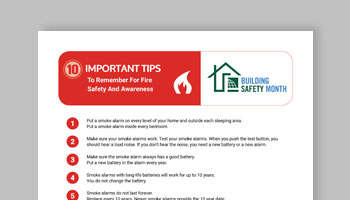
10 Tips on Fire Safety

10 Tips on Fire Safety
Download pdf

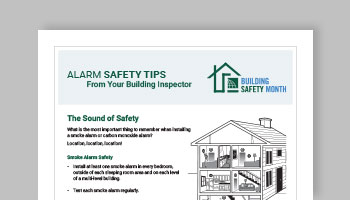
Alarm Safety Tips

Alarm Safety Tips
Download pdf

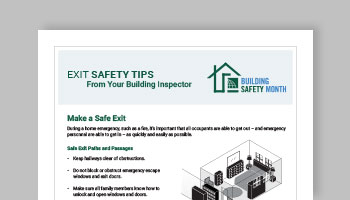
Exit Safety Tips

Exit Safety Tips
Download pdf

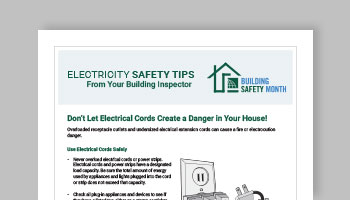
Electricity Safety Tips

Electricity Safety Tips
Download pdf

10 Tips for Energy Efficient Homes

10 Tips for Energy Efficient Homes
Download pdf

Do I Need a Permit?

Do I Need a Permit?
Download pdf

Week 2 Materials – Voices of the Built Environment


Careers in Building Safety

Careers in Building Safety
Download pdf

Value of the Code Official

Value of the Code Official
Download pdf

ICC Career Step by Step Infographic

ICC Career Step by Step Infographic
Download pdf

Benefits of Building Permits

Benefits of Building Permits
Download pdf

Remote Virtual Inspections

Remote Virtual Inspections
Download pdf

Building Safety in Your Home Checklist

Building Safety in Your Home Checklist
Download pdf

Building Safety Month Press Release Template

Building Safety Month
Press Release Template

Download Word doc

Building Safety Month Letter to Editor Template

Building Safety Month
Letter to Editor Template

Download Word doc

Week 3 Materials – Prepared to Protect


10 tips for Disaster Safety

10 tips for Disaster Safety
Download pdf

Disaster Prep Brochure

Disaster Prep Brochure
Download pdf

Are You Ready?

Are You Ready?
Download pdf

12 Ways to Prepare Postcard

12 Ways to Prepare Postcard
Download pdf

Resilience in the Building Codes

Resilience in the Building Codes
Download jpg

Mitigation for Homeowners

Mitigation for Homeowners
Download pdf

ICC Fire and Disaster Mitigation

ICC Fire and Disaster Mitigation
View webpage

Week 4 Materials – Communities Without Limits


ICC 30: Standard A117.1 thumbnail

ICC 30: Standard A117.1
Watch video

BSJ Accessibility Podcast article

ICC Pulse Podcast: Building Accessibility Standards in the U.S. and Beyond
Read article

BSJ History of the A117.1 article

History of the A117.1 Accessibility Standard and What’s to Come
Read article

BSJ Approval of the Code Council’s First Edition of the Accessibility Standard article

The Approval of the Code Council’s First Edition of the Accessibility Standard
Read article

BSJ article Improve Accessibilty

An Inside Look at How Adult Changing Table Advocates are Improving Accessibility
Read article

Other Resources


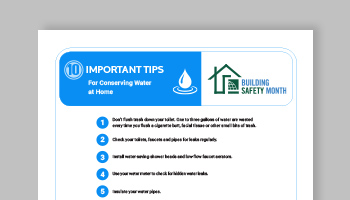
10 Tips for Conserving Water at Home

10 Tips for Conserving Water at Home
Download pdf

10 Tips for Energy Efficient Homes

10 Tips for Energy Efficient Homes
Download pdf

Building Green, Living Better

Building Green, Living Better
Download pdf

Non-Potable Water Reuse

Non-Potable Water Reuse
Download pdf

Region III Customer Support

ICC Upper Great Plains Region III Educational Institute
Customer Support

If you need assistance:

  • Email ICC Training: learn@iccsafe.org
  • Utilize the chat feature on the main ICC website (iccsafe.org). Be sure you mention that your question is for Region III Educational Institute.
  • Call us: 1-888-ICC-SAFE (422-7233) and be sure to say you have a question about the Region III Educational Institute.


BSM Week 1

Safe Homes, Strong Communities

Week 1: May 1–10

Foundation Sponsor AGA 2 

Building Safety Month 2025 Week 1 - Safe Homes, Strong Communities

A safe community starts with safe homes. During Week 1 of Building Safety Month, we’re shining a spotlight on the everyday hazards that often go unnoticed, and the simple steps every homeowner and occupant can take to prevent incidents before they happen

Join the Building Safety Month conversation all month long – tag the International Code Council on social media, and use #BuildingSafetyMonth2026 and #BuildingSafety365 to help spread the word!

Spotting Common Household Hazards

Woman inspector with laptop inspecting a home construction site

Many home dangers are preventable with awareness and routine care. Identifying and understanding these risks is the first step toward reducing them.

Here we've listed a few of the most common potential risks, including:

  • Fire hazards such as overloaded outlets, unattended cooking and aging appliances
  • Electrical issues like damaged cords, outdated wiring or improper use of extension cords
  • Water safety concerns including slippery surfaces, leaky pipes, unsecured pools and malfunctioning water heaters
  • Fall hazards including poor lighting in hallways and stairwells, broken or missing handrails or uneven flooring
  • Blocked emergency exits

The Power of Regular Maintenance

Simple, routine efforts can make a big difference in household safety, and a well‑maintained home protects everyone who lives in it. Regular inspections and upkeep help prevent costly damage and keep your household safe. Consider:

  • Testing smoke and carbon monoxide alarms and replacing batteries once a year
  • Checking electrical panels and outlets for heat, buzzing or discoloration
  • Inspecting plumbing for leaks
  • Cleaning dryer vents and replacing HVAC system filters per your appliance’s manufacturer recommendations
  • Cleaning gutters and removing overgrown plants and debris from the outside of your home

Know Your Safety Features

Modern homes include built‑in protections, but only if they’re working properly. Whether you own or rent, being familiar with these features helps prevent emergencies or empowers you to act quickly in an emergency.

  • Smoke alarm and carbon monoxide alarm coverage in compliance with local building codes
  • Clearly marked and accessible emergency exits
  • Fire extinguishers placed in key locations, including hallways, near exit doors, in kitchens, garages, etc.
  • Ground‑fault circuit interrupters (GFCIs) in kitchens, bathrooms, garages and outdoor areas
  • Safety gates for stairs and self-latching self-closing pool gates

Building Safely Starts with the Right Permits

Renovations and additions can improve your home, but they must be done properly. Following building codes isn’t just a requirement; it’s a commitment to community safety. Proper permits and code‑compliant construction promote:

  • Structural integrity, so homes are built to better withstand wear, weather and time
  • Safe electrical and mechanical systems, which often result in lower utility bills, better indoor air quality, etc.
  • Property value and marketability, reducing insurance risks and providing confidence to current and future occupants

Resources

The Code Council at Home

The Code Council at Home
Download pdf

Defining Building Safety

Defining Building Safety
Download pdf

10 Tips on Fire Safety

10 Tips on Fire Safety
Download pdf

Alarm Safety Tips

Alarm Safety Tips
Download pdf

Exit Safety Tips

Exit Safety Tips
Download pdf

Electricity Safety Tips

Electricity Safety Tips
Download pdf

10 Tips for Energy Efficient Homes

10 Tips for Energy Efficient Homes
Download pdf

Do I Need a Permit?

Do I Need a Permit?
Download pdf

International Code Council Initiative Supports the Buildings Breakthrough to Advance Sustainable and Resilient Buildings

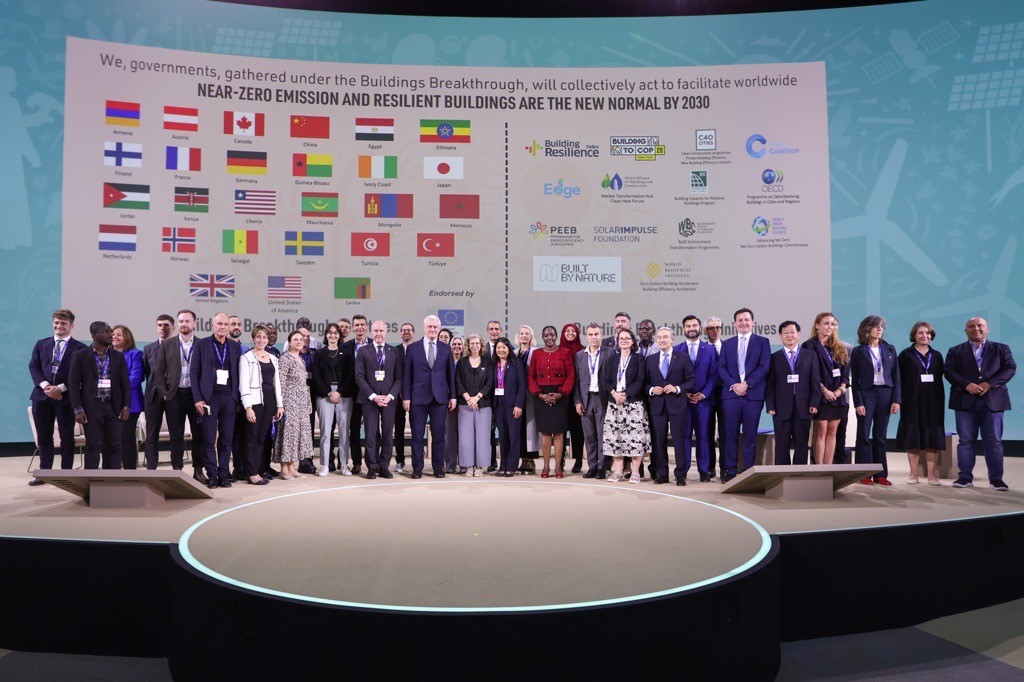
Dubai, UAE– During the thematic day for Multilevel Action, Urbanization and Built Environment/Transport held on December 6 at the global climate conference, COP28, the Buildings Breakthrough was formally launched. The Buildings Breakthrough is a cross-sectoral campaign to support governments in the universal adoption and implementation of near-zero emission and resilient buildings by 2030. It is supported by 18 private-sector led initiatives, including the Building Capacity for Sustainable and Resilient Buildings Initiative led by the International Code Council.  

“The International Code Council has long recognized the essential role buildings play in our world and the impact they have on the sustainability and resilience of people and the planet,” said International Code Council Chief Executive Dominic Sims, CBO. “We applaud the attention global leaders have placed on supporting advances in the sector and stand ready to assist in the development and implementation of the solutions that governments and the building industry need to achieve climate adaptation and mitigation goals.” 

Because of the work that the International Code Council has done to advance the importance of employing a holistic approach to the building safety regulatory ecosystem and the essential need for capacity building, the organization was recognized during the official launch, along with representatives from the supporting countries and other supporting initiatives.  

The focus on the adoption and enforcement of modern building codes was reinforced by White House National Climate Advisor Ali Zaidi during the launch. Zaidi said of the U.S. participation in the Breakthrough, “We’re working just like many of you across jurisdictional levels, providing grants through the president’s infrastructure law to state and local governments to level up their capability to design standards, implement and enforce them. Because codes are only as good as the enforcement that follows.” 

The next steps under the Breakthrough include developing priority actions to drive progress. This action setting will occur at a first of its kind meeting of building and construction related ministers in March 2024 in Paris, France. While building and energy codes have already been recognized as a key component of achieving the Breakthrough’s objectives, the International Code Council has developed a brief released at COP on Building Codes and the International Breakthrough Agenda providing specific opportunities to leverage existing code solutions. 

The International Code Council-led capacity building initiative recognized today is also supported by Architecture 2030, ASHRAE, Building Designers Association of Australia (BDAA), Global Alliance for Buildings and Construction (GlobalABC), HOK, International Building Quality Center (IBQC), International Living Future Institute (ILFI), Materials and Embodied Carbon Leaders’ Alliance (MECLA), +LAB Architects, ResALLience, Saint-Gobain, and U.S. Green Building Council (USGBC). 

Photo courtesy of COP28 

### 

About the International Code Council 
The International Code Council is the leading global source of model codes and standards and building safety solutions. Code Council codes, standards and solutions are used to ensure safe, affordable and sustainable communities and buildings worldwide. 

International Code Council Partners with U.S. Environmental Protection Agency to Address Water Scarcity and Public Safety

Washington, D.C. – On December 5, 2023, the International Code Council signed a Decentralized Wastewater Management Memorandum of Understanding (MOU) between the U.S. Environmental Protection Agency (EPA) and its partner organizations. Through this agreement, the Code Council will provide leadership and resources to regulate and educate on the importance of responsible management of wastewater systems. 

One in five homes in the U.S. relies on private decentralized wastewater systems. The MOU is a continuation of a decades-long collaboration between the Code Council and the EPA which included information sharing on system technology, training initiatives, public awareness campaigns about septic system care and maintenance, and the development of materials on decentralized wastewater systems. 

“We are honored to join in this partnership and look forward to working collaboratively to help implement wastewater and sanitation best practices,” said Code Council Plumbing, Mechanical and Fuel Gas Executive Director, Matt Sigler. “When this type of wastewater system fails, the results are catastrophic, often polluting drinking water and creating public health hazards. Changes in flood plains like rising sea levels brought on by a changing climate are exacerbating these system failures and they must be addressed.” 

The Code Council facilitates the development of the International Private Sewage Disposal Code® (IPSDC), which has been adopted in communities across 17 U.S. states and by Puerto Rico and Guam, required by the General Services Administration, and recognized by FEMA’s Community Rating System, which provides federal flood insurance discounts for communities undertaking disaster mitigation measures. The Code Council is currently improving upon the existing code through development of the ICC 825 – Private Sewage Disposal Systems Standard, a new international standard that builds on the IPSDC to integrate newer technologies and methods, and most importantly, the impacts of a changing climate. 

### 

About the International Code Council 
The International Code Council is the leading global source of model codes and standards and building safety solutions. Code Council codes, standards and solutions are used to ensure safe, affordable and sustainable communities and buildings worldwide.