Why the ISPSC

Why the ISPSC?

Why should a state, city or jurisdiction adopt the
International Swimming Pool and Spa Code (ISPSC)?

The ISPSC is the most widely adopted swimming pool and spa code across the United States. The ISPSC is currently adopted in 33 states across the U.S. and is also adopted in the District of Columbia and Puerto Rico. Approximately 246 million people, or 72% of the US population, live in areas that have adopted the ISPSC.

International Swimming Pool and Spa Code (ISPSC)

International Swimming Pool and Spa Code (ISPSC)

The ISPSC is a vital part of a complete building safety system, providing an integral component necessary to achieving a safe and healthy environment for users of swimming pools, spas, hot tubs and aquatic facilities.

The ISPSC establishes minimum requirements for the design, construction, alteration, repair and maintenance of swimming pools, spas, hot tubs and aquatic facilities.

  • The ISPSC is derived from, and fully supported by, the ANSI/PHTA and ANSI/APSP national consensus standards.
  • All design and construction aspects of residential and public pools and spas are addressed in the ISPSC.
  • The Model Aquatic Health Code (MAHC) could easily compliment the ISPSC by addressing maintenance and operation of public pools and spas; the MAHC is not a complete substitute for adoption of the ISPSC because it does not cover all aspects of design and construction of public pools.
  • The American Hotel & Lodging Association (AHLA) and its member organizations support the adoption of the latest edition of the ISPSC.

The I-Codes, when adopted as a family of codes, correlating as they do, provide a consistent system of regulations that designers, builders, and regulators can rely on,
across city, county, or state lines.

The adoption of building codes, including the swimming pool and spa code, is not just about the codes. Technical support, in the form of expert advice, code opinions, and technical resources are some of the most sought-after services following adoption of a code.

The Code Council’s expert technical staff provides advice, code opinions, and resources to our more than 70,000 members as a complimentary benefit.

We have several resources, including commentaries and study companions, to support our members and industry professionals in achieving a better understanding of the code and implementing inspection programs.

Numerous training resources are available on the ISPSC including face to face training and webinars which are led by qualified instructors and industry leaders.

The Code Council also has a world class digital platform where codes, industry standards and resources can be accessed from one’s computer, tablet, or phone.

The ISPSC is developed through a governmental consensus process

that involves many interest groups including public safety officials, pool and spa contractors, manufacturers, standards development organizations, academia, consumers and many more;

cannot be influenced by vested financial interests;

and is conducted every three years.

Click here for more information on the process or
one of the links below to see an infographic of the process.

(Click to download a jpg or pdf)

Non-Member State of the Industry Report


Welcome to the building safety profession’s most comprehensive report compiling invaluable insights into the industry’s current state as well as the trends that are moving it forward. This important research is offered exclusively to ICC members to help set goals and continue to steer their careers—and industry—in a positive direction.  

The robust, data-driven report summarizes thousands of survey responses representing a broad range of generations, trade specialties, and income levels.

Informative graphs, charts, and tables provide key information that can help you:

  • Benchmark your organization’s or jurisdiction's opportunities and challenges against other organizations, including staffing and compensation.
  • Discover work setting trends, priorities when considering a job and which factors impact overall career satisfaction.
  • Better understand what’s next for the industry as 56% of respondents plan to retire in the next five years.

Florida Case Study

The Florida Building Code Story: Building Safety, Resilience and Affordability

Key Takeaways and Lessons Learned

If you built to code with new construction, you can withstand hurricanes in Florida.”

—Ron DeSantis, Governor of Florida via
Building Codes: The Florida Resilience Story

The Need for a Statewide Building Code

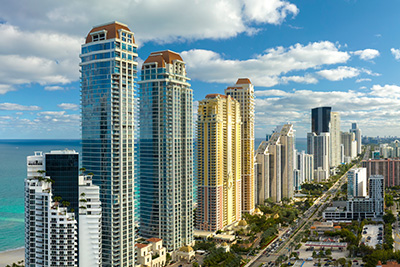
Florida remains one of the fastest-growing states in America with nearly 1 million people moving there in 2023 alone. Many are attracted to the warm weather and beautiful beaches, but residents also gain the benefits of a statewide building code that was designed to protect the health, safety and welfare of its citizens.

Florida faces 41 percent of U.S. hurricanes and dozens of tornadoes each year, putting its infrastructure and its building codes to the test.

According to the National Oceanic and Atmospheric Administration (NOAA) Office for Coastal Management, natural disasters are occurring more frequently and with greater severity. Between 2020 and 2024, the U.S. experienced 115 weather and climate disasters with damages of more than $1 billion per event.

Per NOAA, total losses (2024) reached $182.7 billion in damages across 27 disasters, exceeding the five-year annual average of 23 events and $149.3 billion in losses.

Florida, in particular, has a long history of devastating hurricanes before the 1990s, including the Great Miami Hurricane (1926), Labor Day Hurricane (1935) and Hurricane Donna (1960), resulting in thousands of fatalities and billions of dollars in damages.

Natural disasters have cost Florida billions of dollars in damage since 1980. Through 2024, the total damage is estimated to have reached:

While these hurricanes were among those that led to the first building codes in Florida, it wasn’t until Hurricane Andrew in 1992 that the state realized it was time for a significant change.

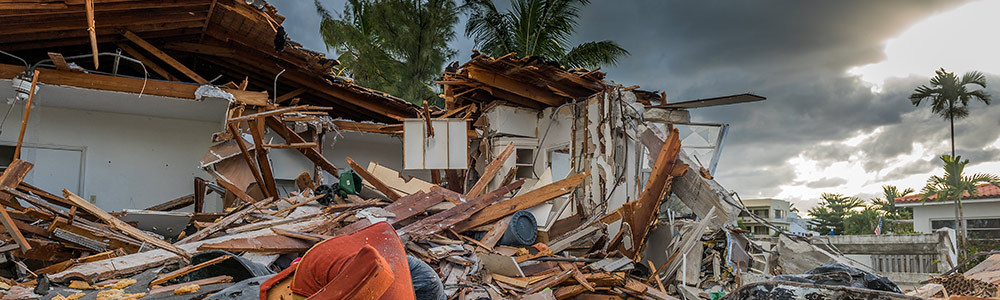
Andrew, another Category 5 hurricane, blasted Florida with 165 mph winds, causing 23 direct deaths and $27 billion in damage. Miami-Dade County’s urban landscape was severely damaged by the storm, which destroyed 25,000 homes (including 99 percent of all mobile homes in the City of Homestead) and left 160,000 residents homeless.

Andrew’s wrath was twofold: in addition to being a particularly intense storm, Florida’s varied collection of building codes and lenient enforcement ($4 billion in insured losses was attributed to Miami-Dade County's poor code enforcement) left residents especially vulnerable. The results were so severe that Florida Governor Lawton Chiles decided it was time to take action.

The Birth of the Florida Building Code: A New Era in Building Safety

With an eye on strong, standardized regulations that would guide Florida’s built environment moving forward, Governor Chiles established the Governor's Building Codes Study Commission in July 1996. The Commission was made up of a balanced group of stakeholders who acted in the interests of the State of Florida as a whole. Dominic Sims, former CEO of the International Code Council, and at the time, Executive Director for Palm Beach County, served the Commission as Vice Chairman.

At the time, Florida had multiple building codes. With 67 counties and more than 400 municipalities doing things their own way, and no overarching code to guide them, enforcement was difficult, and uniformity was impossible.

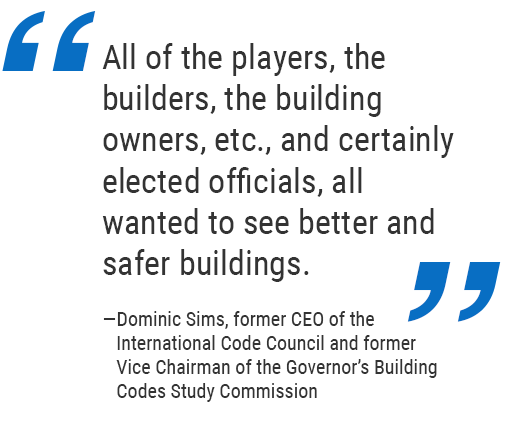
“This patchwork of regulations was really an obstacle to better and safer building construction,” said Sims.

Without clear guidelines for what they should and should not do throughout the state, builders faced significant variations jurisdiction to jurisdiction.

Few realized the enormity of this problem until Hurricane Andrew and the storms that followed, including the “Storm of the Century” in March 1993. Tropical Storms Alberto and Beryl came a year later in 1994, followed by Hurricane Erin and Hurricane Opal in 1995.

The 28-member Governor’s Building Codes Study Commission included:

  • Chairman Tom Lewis, Jr., Vice President of Walt Disney Imagineering
  • Vice Chairman Dominic Sims, Executive Director for Palm Beach County
  • Pete J. Mitchell, Chief of Staff with the Office of Treasurer and Insurance Commissioner
  • Florida Senators Matthew Meadows and Charlie Clary
  • Florida Representatives Ken Pruitt and Mary Brennan
  • Representatives from several industries, including engineering, building, construction, architecture, real estate, insurance, banking and more

Resiliency Starts with the Florida Building Code

As residents dealt with ongoing damage and the fear of future storms, many insurers abandoned the market, viewing Florida as a losing proposition. Florida’s climate led to a far greater number of claims than anticipated, creating a new problem for Florida residents: they could lose their homes at any time and have no way to pay to rebuild them.

A statewide Building Code was viewed as a solution by creating stronger, more resilient buildings with rules and regulations that are properly enforced.

The Florida Building Code includes codes and provisions from the I-Codes®:

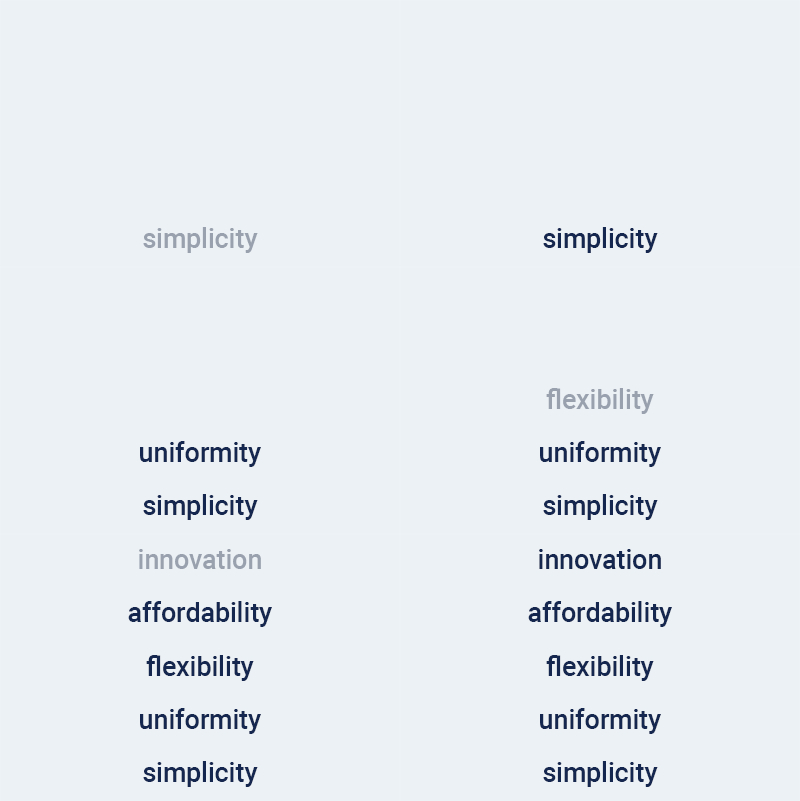
The Governor’s Building Codes Study Commission’s criteria for a successful statewide Building Code:

  1. Be simple to use and clearly understood;
  2. Be uniform and consistent in its administration and application;
  3. Be flexible;
  4. Be affordable; and
  5. Promote innovation and new technology.

The Commission started with the Assessment Phase (October 1996 – January 1997), which included public hearings, panel discussions and a variety of presentations to inform the best possible decisions. The Commission then evaluated all its information and determined the criteria for a code that would protect the health, safety and welfare of the citizens of Florida.

The Characteristics of an Effective Statewide Building Code

In the aftermath of Hurricane Andrew, the Commission ultimately issued Five Foundations for a Better Built Environment.

The Foundations presented five characteristics for an effective statewide Building Code, which were ultimately adopted:

  1. A single, statewide Building Code (“The Code”) will be implemented which will govern all technical requirements for Florida's public and private built environment and which will take into account appropriate local variations such as climatic conditions, soil types, termites, weather-related events, risks associated with coastal development, life safety issues and maintenance inspections. The Code will be effective for use statewide, without the need for subsequent adoption by local jurisdictions.

The Florida Building Code is bolstered by several Technical Advisory Committees (TACs) that focus on accessibility, structural, fire, electrical, energy, hurricane research, mechanical, roofing, plumbing and more.

While the Florida Building Code is updated triennially, it may be updated more frequently in accordance with criteria set out in Section 553.73, Florida Statutes.

  1. Enforcement of The Code will occur solely at the local level with updates accomplished by a newly constituted, independent, state-level Florida Building Code Board (“The Board”) on a three-year cycle. Board members could provide either broad or specialized expertise in the areas of building code enforcement, building material manufacturing, fire prevention, life safety, finance, property insurance or general business. Local governments will have the ability to address local and regional concerns through an amendments process.
  1. To ensure strong consistency, decisions of local Officials or Boards of Appeal will be reviewable by The Board, and The Board will have the power to issue Binding Interpretations.
  2. There will be a strengthened Enforcement and Compliance Program, based on a clear and precise definition of roles and responsibilities for all participants in the System and reinforced with expanded education, training and discipline.
  3. There will be a strong Product Evaluation and Approval Process which is responsible, but streamlined and affordable and which will promote innovation and new technology.

During the development process, the Commission conducted monthly meetings in various locations in Florida and allowed time for public input and comment.

The trend of public input continues to this day with two 45-day public comment periods during the development of each three-year code cycle.

The Florida Building Code Saves Lives, Protects Property and Reduces Insurance Claims

The first Florida Building Code (FBC) was adopted in 2001 and implemented on March 1, 2002. Based on the International Codes® (I-Codes), the FBC superseded all local building codes, putting an end to the era of confusion and inadequate enforcement. From this point forward, all stakeholders had a clear understanding of what they needed to do in order to achieve compliance.

This includes manufacturers, which now had instructions on what they needed to do to produce compliant products. These instructions are critical to the development of new solutions that will further harden buildings from the next set of hurricanes.

Florida also requires building inspectors and plan reviewers to be licensed in each trade they inspect or review.

The Florida Building Code requires new products to be tested by an independent third party to ensure they function as intended.

Hurricane Ian in Florida: A Mitigation Success Story for Building Codes

Following Hurricane Ian, the Code Council, the Federal Emergency Management Agency (FEMA) Mitigation Assessment Team (MAT) and the Florida Department of Emergency Management work together to assess how Florida's building codes performed.

Karl Fippinger, Vice President, Fire and Disaster Mitigation for the International Code Council, visits Fort Myers Beach, FL, to review how older (pre-FBC) homes fared when compared to newer (post-FBC) homes.

The study found that, since the 1980s, the quantity and average total of insurance claims declined significantly with each subsequent decade of building code advancements.

When comparing buildings elevated to comply with modern codes with nonelevated residential buildings, the latter led to more than twice as many claims that cost more than three times as much as homes that were elevated.

Source: FEMA Mitigation Assessment Team Report, Hurricane Ian in Florida.

Florida's Strong Codes Save Lives and Protect Communities

FEMA estimates that Florida building codes help the state avoid more than $1 billion in annual losses across more than one million structures due to building damages.

This estimate includes $911 million in losses associated with hurricane winds across 891,000 structures, and $152 million in avoided losses associated with floods across 150,000 structures.

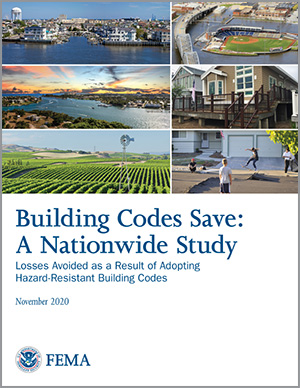
FEMA's Building Codes Save: A Nationwide Study found that I-Code adoption could help communities avoid between $132B and $171B in cumulative losses through 2040, and $600B+ by 2060.
Building Codes Save: A Nationwide Study

According to the National Institute of Building Sciences, states and jurisdictions that adopt the latest building code requirements can save up to $11 for every $1 invested. In Florida, additional savings are already apparent.

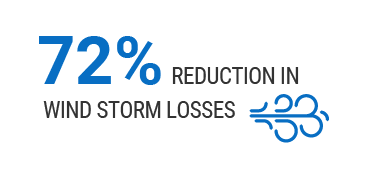
The FBC is also credited with reducing windstorm losses by up to 72 percent. And by ensuring codes are properly administered and enforced, researchers found an additional loss reduction value on the order of 15 to 25 percent. Additionally, modern building codes decreased the expected spike in post-hurricane mortgage delinquency rates in Florida by about 50 percent.

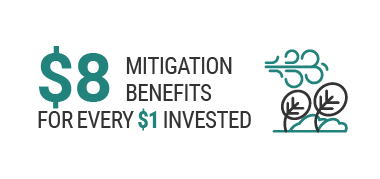
Prior to Hurricane Ian, researchers estimated that every $1 added to construction costs – to comply with the latest version of the FBC – saved $8 in structural damage.

Addressing Existing Structures

Although updated codes integrate the best practices and the latest science, most buildings were constructed before the FBC came into effect. Protecting occupants within these structures is equally important.

Following the collapse of Champlain Towers South in Surfside, Florida, which caused nearly 100 fatalities, Florida’s leaders took swift action to better assess risks from existing structures. Miami-Dade County quickly updated its building recertification program to require threshold buildings (those with 4+ stories) to be inspected by a structural engineer with experience working on that specific type of building. Random inspections will be conducted to verify that a building's condition matches reports from architects and engineers.

The county also now requires electrical panels to be inspected via thermal imaging and added a façade requirement to evaluate the danger of non-structural components that could become dislodged.

Looking to prevent future tragedies, the National Institute of Standards and Technology (NIST) has spent nearly four years investigating the Surfside incident. As Floridians await NIST’s final report, there are other building safety challenges that must be considered.

As a result, the Code Council assembled experts from Florida and around the county to create the Existing Building Safety Inspection Guideline, which will soon become ICC 1500 Standard for Existing Building Safety Inspection.

The standard will establish the minimum timeframes for condition assessments, therefore enabling the building owners to reasonably maintain their buildings, such that identifiable potential or current unsafe conditions have been noted and remedied.

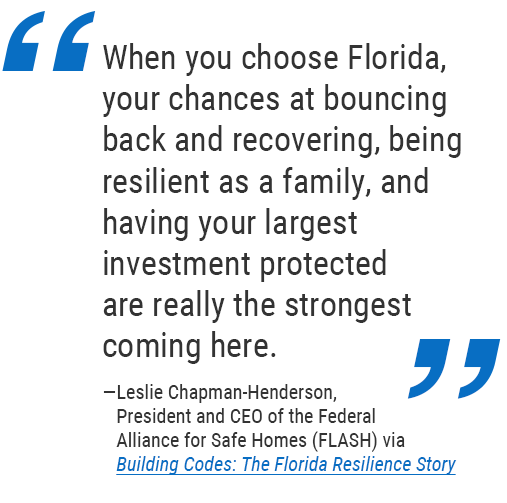
When you choose Florida, your chances at bouncing back and recovering, being resilient as a family, and having your largest investment protected are really the strongest coming here.

Sergio Ascunce, Deputy Building Official at Miami-Dade County, expects the changing climate to play a role in future code developments.

“Sea level rise is included in that topic,” said Ascunce. “I think elevating buildings further is going to be something you’re going to look at in the future. In the FBC, we have a one-foot freeboard [above the Base Flood Elevation] that applies across the board to all construction. Could that change to become two or three feet? It’s a possibility. It has to be analyzed carefully.”

“Buildings over three stories that are 30 years old by December 31, 2024, must undergo a recertification inspection, with follow-ups every 10 years. Buildings within three miles of the coastline must be inspected when they reach 25 years by December 31, 2024, and must also comply with inspections every 10 years thereafter. The inspection assesses the integrity of the building’s foundation, load-bearing walls, beams, columns, floors and roofs. If signs of distress, such as cracks, rust, corrosion or deflection, are identified, an additional assessment must be performed.”

The Future of the Florida Building Code

Florida has remained proactive with its implementation and adoption of the FBC. For more than 20 years, the FBC has helped save lives, protect property and safeguard Floridians’ way of life by improving building resiliency and ensuring that new construction is built to withstand Florida’s challenging climate.

As the frequency and severity of storms rises, the need to regularly update adopted codes to keep pace with advancements in technology, lessons learned and best practices will only increase.

That’s why the Florida Building Commission has remained vigilant in updating the FBC every three years while considering new solutions and innovations that could strengthen how buildings are constructed and improved. Their research and continuous updates provide a model for other states and jurisdictions that want to protect residents and businesses against hazards while facilitating economic growth.

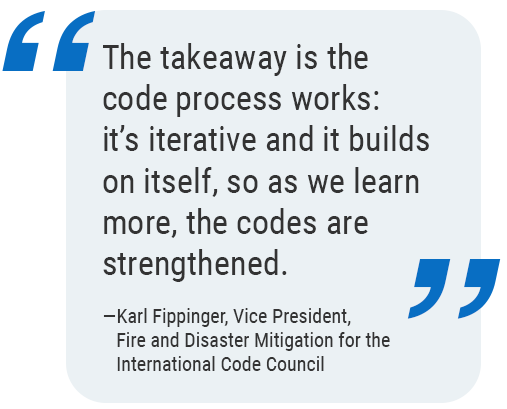
The takeaway is the code process works: it's iterative and it builds on itself, the codes are strengthened.

What Communities Can Learn from the Florida Building Code

All you gotta do is see the communities that are built to the [Floria] Building Code and compare those to the ones that aren't, and it's pretty easy to see. you don't have to be a rocket scientist.

Florida’s experience offers several key lessons for improving building safety and resilience through effective code development and implementation:

  • Strong, regularly updated and well-enforced building codes are essential for building safety and resilience;
  • The FBC stays effective by continuously incorporating new updates, allowing it to adapt to evolving challenges;
  • A statewide code helps unify regulations across disaster-prone regions, making enforcement more efficient and consistent;
  • Proper code enforcement is vital to prevent violations that can lead to serious risks for lives and properties;
  • Public education and awareness are critical to gaining support for building codes; Florida’s proactive approach serves as a model for other states;
  • Ongoing communication with stakeholders ensures smoother implementation and greater compliance with code changes.

More Resources

Screenshot of ICC Government Relations home page

ICC Government Relations
View website

Modern Building Codes: A Path to Affordable, Resilient Housing web page screenshot

Modern Building Codes: A Path to Affordable, Resilient Housing
View website

BSJ Article screenshot - Joint Study

Joint Study Examines the Influence of Building Codes on Mortgage Delinquency After Hurricanes
View article

2023 Florida Building Code Cover

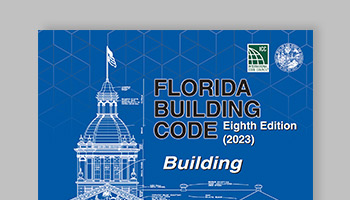
2023 Florida Building Code, Building, Eighth Edition
View code

When Disaster Strikes web page

When Disaster Strikes
View website

FEMA guides web page

FEMA Planning Guides
View website

FEMA P-2055 Post Disaster Building Safety Evaluation Guide

FEMA P-2055, Post Disaster Building Safety Evaluation Guide
View website

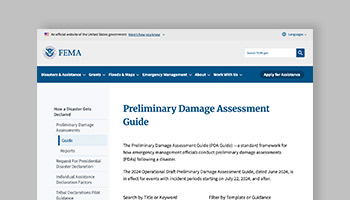
FEMA Preliminary Damage Assessment Guide

FEMA Preliminary Damage Assessment Guide
View website

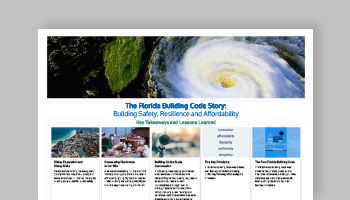
Florida Building Code Story

Florida Building Code Story
View pdf

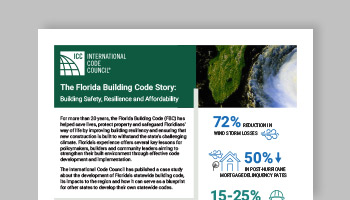
Florida Building Code Story – Regional Flyer

Florida Building Code Story – Regional Flyer
View pdf

Credentialing – During Exam

CREDENTIALING

During the Exam

What Happens on Exam Day and Important Rules

Strategies During your Exam

Everyone differs in how they approach an exam. No matter how you tackle the test, here are some tips we recommend:

  1. Understand how much time you have to answer a question

You may want to turn the clock off, but make sure you check periodically. Time does seem to fly during high-pressure situations, and you never want to be caught with five minutes left and 20 questions unanswered.

  1. There is no penalty for guessing, even if it's the wrong answer

There is no penalty for a wrong answer. Choose the answer that you think is best.

  1. If you don't know, bookmark the question and come back.

Make sure to take the time to answer questions, but if you don't know, you can skip and come back to it later. You may have time to return.

Your exam platform gives you the opportunity to bookmark a question so you can return to it before submitting your exam.

  1. Read carefully

Pay attention to words such as “except” and “not;” “minimum” and “maximum.” These words can drastically change the question.

Read all choices before deciding on the answers.

Exam Administration Options

PRONTO exams for high stakes ICC Certifications are accessible 24/7, can be scheduled up to 90 minutes in advance, and include advanced security features to ensure the integrity of your testing and results.

Pearson VUE

Pearson VUE provides high-stakes ICC Contractor Trades and UST/AST exams to assist professions with certifying and licensing individuals who contribute to the safety and progress of communities worldwide.

You may NOT bring the following items into the exam administration:

    • No food or drink (unless approved through testing accommodations)
    • Any kind of writing instruments, writing paper, or briefcase
    • Personal items such as purses, wallets, or watches
    • Calculators with print capability (i.e. adding machines) and/or that store formulas (i.e. construction calculators)
    • Copying, recording, or photo devices
    • No electronic devices other than the device utilized for the examination (unless approved through testing accommodations)

NOTE: Remotely proctored PRONTO exams must have a phone available during the check-in process.

PRONTO candidates utilize an on screen “Global Notepad” during their examination.

Pearson VUE candidates are supplied with a small dry erase board and a marker. This marker can ONLY be used to write on the white board. Candidates using the marker/pen to write in their reference materials are subject to disciplinary action by the CC.

Continue Your Journey

Learn everything you need to know about after the exam.

Admin Rules and Policies

Be sure to review all rules and policies before exam day.

Questions? Contact Us

ICC Credentialing
Email: customersuccess@iccsafe.org
Phone: 1-888-ICC-SAFE (422-7233) ext. 0

Certification Policies

ICC understands the importance of impartiality in carrying out our certification activities, managing conflict of interest, and ensuring the objectivity of our certification activities.

To learn more about our certification and education policies, please read the following:
Council Policy 45, CC Rules of Procedure, Records Release, and ICC Credentialing Compliance Principles.

Credentialing – Before Exam

CREDENTIALING

Before the Exam

Here's how we develop our exams and some best practices for studying before AND during test day!

How Exams are Developed

01

Define the Job Scope

We begin with defining a job or profession, also called a scope of practice.

Professionals in the field develop the final scopes, subject matter experts, who form the Exam Development Committees (EDC). These scopes can be found on the Code Council Exam Catalog.

02

Define Job Tasks

Job tasks are based on the frequency and importance of the work in a given profession.

We define these tasks through surveying hundreds of individuals currently working in a given profession.

These job tasks must be performance-related, linked to the exam scope, based on written standards, and directly relevant to the protection of public health, safety and welfare.

03

Create the Exam

The EDC uses the job tasks to create the exam's blueprints, or Content Outlines.

The Content Outlines are used to create the actual exam forms.

So when you're looking for what's on your Code Council exam, start with reviewing the Content Outline for your exam on the Exam Catalog.

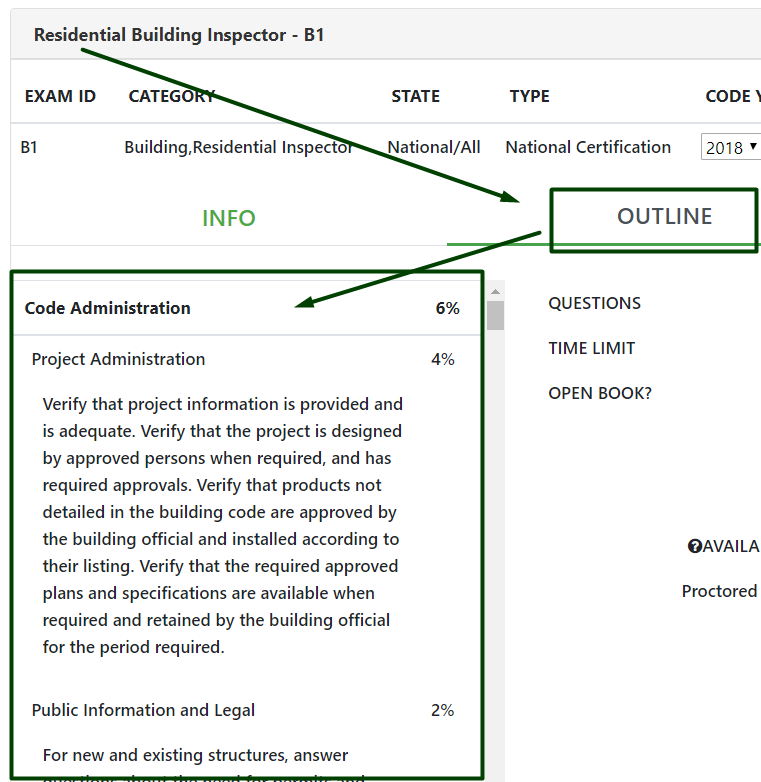
Here's an example of what the Outline looks like on the Exam Catalog. You'll notice it's broken down into its job content and task areas that you'll be tested on for your exam:

overhead view of people in an office sitting at a large conference table deep in discussion

Exam questions are developed by the EDC based on the first printing of the code book.

All exam questions are presented in a four-option, multiple choice format, with one option on each question scored as correct.

While your exam will have content based on building codes, here are a few examples of how the questions are structured in the exam (with answers in bold):

What sea creature has eight legs?

  1. A whale
  2. A dolphin
  3. An octopus
  4. A crocodile

Given: A scientist needs to research colors not visible in a rainbow. The scientist would need to research which color?

  1. Red
  2. Teal
  3. Indigo
  4. Yellow

All of the following are planets except:

  1. Mars
  2. Orion
  3. Jupiter
  4. Mercury

two people looking at plans and a laptop on a desk

How we set the score

National Certification Exam Scoring

For National Certification exams, a passing score is the score set by the Code Council and the EDC as the minimum score needed to pass the exam. This score is technically called a scale score and is set as 75.
Learn more about scaled scoring here.

Contractor/Trades Exam Scoring

For Contractor/Trades exams, a candidate must answer at least 70 or 75 percent of the questions correctly in order to pass the exam, depending on the exam title or jurisdiction.

Where to Start?

01

Decide Which Exam You Need to Take

Start with your local jurisdiction or employer: What requirements are needed for your job? 
Maybe it's a certification, license, or passing an exam relevant to your career.

Click below to explore additional information.

03

Get in the Study Zone

  • Create a Calendar – By creating a calendar of your study timeline before your exam day, you'll be able to make a realistic commitment of how much time you plan to study and what content you will focus on reviewing each day.
    TIP: Planning what you are going to review each day helps mentally prepare for the exam
  • Review Your Exam's Content Outline – The exam content outline shows the major content and the job tasks that you're being tested on, including the weight (percentage of questions). This will help you decide how to best use your time in studying, as well what code sections or chapters require the most attention.
    When you search for your exam in the exam catalog, click on the "Outline" column to view. See example.
    TIP: Use your exam's outline to find where this information is in your book!
  • Appendix and Footnotes – Exam questions may reference the appendices of the reference material, as well as footnotes, exceptions, and other content integral to a task but not immediately obvious.
  • Know Reference Material – Be very familiar with the content structure of the reference material. While the Code Council does not require prerequisites to take an exam, it is highly unlikely that someone with little knowledge of the codes or profession will pass an exam.
  • Study all Climates – You will be tested on climate and geographical conditions represented by all regions in the United States when taking a National-based exam.
  • Buy Code Books and References: Purchase books through the ICC Store, or view exam catalog for list of books to purchase
  • Take Courses with ICC Training: The Code Council offers a variety of training options for every individual to earn continuing education units, learning units and/or Professional Development Hours (CEUs, LUs and/or PDHs) that can be used toward Code Council certification renewal. Explore ICC Training.

04

Exam Registration Tips

Taking a Certification Exam? Here are a few registration tips:

  • Log in to myICC: You must be logged in to myICC to make an exam purchase.
  • Pay Before You Schedule: You'll have one year to officially schedule or reschedule your purchased exam.
  • Identification: You must enter your first and last LEGAL NAME exactly as it appears on your government-issued photo identification ready to show the proctor (e.g. driver's license, passport).

a woman and a man sitting at a desk talking

Continue Your Journey

Learn everything you need to know about during the exam.

Admin Rules and Policies

Be sure to review all rules and policies before exam day.

Questions? Contact Us

ICC Credentialing
Email: customersuccess@iccsafe.org
Phone: 1-888-ICC-SAFE (422-7233) ext. 0

Certification Policies

ICC understands the importance of impartiality in carrying out our certification activities, managing conflict of interest, and ensuring the objectivity of our certification activities.

To learn more about our certification and education policies, please read the following:
Council Policy 45, CC Rules of Procedure, Records Release, and ICC Credentialing Compliance Principles.

Week Three of the International Code Council’s Building Safety Month Focuses on Disaster Preparedness

Washington, D.C. – The International Code Council’s Building Safety Month campaign continues into its third week with an emphasis on building safety preparedness. Preparing and planning for potential disasters can significantly diminish building damage and help ensure the resiliency and sustainability of communities around the world.

Week Three: Building Your Defense, emphasizes how building safety impacts everyday lives and highlights the things people can do at home to stay safe. Learn about fire and water safety tips, as well as how to limit damage to buildings during natural disasters.

“Strong communities start with good preparation,” said Code Council Board President David Spencer, CBO. “Through small actions like developing a fire escape plan and preparing an emergency kit, you’re not just planning ahead, you’re protecting what matters most.”

Communities across the United States are issuing proclamations declaring May 2025 as Building Safety Month. View the proclamations here or submit one here.

To participate in Building Safety Month:

American Gas Association is the foundation sponsor of 2025 Building Safety Month. To learn about sponsorship, click here.

###

About the International Code Council
The International Code Council is the leading global source of model codes and standards and building safety solutions. Code Council codes, standards and solutions are used to ensure safe, affordable and sustainable communities and buildings worldwide.

Early Bird Registration Now Open for the International Code Council’s 2025 Annual Conference, Expo and Hearings

Washington, D.C.– Registration is now open for the International Code Council’s Annual Conference, Expo and Hearings to be held in Cleveland, Ohio from October 19-30, 2025. This year’s conference offers industry-leading educational sessions, networking events, an insightful keynote speaker and opportunities to volunteer in the local community. Immediately following the conference is the second Committee Action Hearings of Group B proposals for the 2027 International Codes®.

Register now to receive the early bird discount and a free conference polo shirt. Early bird discounts end on Friday, September 12, 2025.

Conference attendees will have the opportunity to expand their knowledge and expertise through networking events and educational sessions. Attendees can also attend the Annual Business Meeting where important updates and decisions about Code Council leadership are made. Generational Consultant Kristin Scroggin (genWHY) will deliver a dynamic keynote session on interacting with different generations in the workplace including attracting and retaining the next generation. For more information, visit www.iccsafe.org/conference.

“Our annual conference is more than just a gathering- it’s a forum to reimagine the future of building safety,” said Code Council Chief Executive Officer John Belcik. “We believe it’s important to support building safety professionals with opportunities to learn and expand their expertise so that they can continue to protect their communities.”

Returning for its third year, the Building Safety Leadership Experience offers Code Council members an exclusive opportunity to advance their careers, network and hone their leadership skills. Participants receive complimentary registration to the annual conference and reimbursement for associated airfare, ground transportation and lodging costs. Candidates will be selected by the Executive Committee of the Board of Directors.  Click here to apply.

A thank you to this year’s sponsors, including 4Leaf, Inc., Archistar, Johnson Controls, Plastic Pipe and Fittings Association, Safebuilt, Spatial Data Logic and Verisk. To learn more about sponsorship and opportunities to exhibit, click here.

###

About the International Code Council
The International Code Council is the leading global source of model codes and standards and building safety solutions. Code Council codes, standards and solutions are used to ensure safe, affordable and sustainable communities and buildings worldwide.

2025 Chapter Leadership Academy

2025 Chapter Leadership Academy

Alan Ellis Running A Chapter Like A Business Published 05/08/25 2490 KB
Amy Jones & Meg Foley Certification Rule Changes ICC Presentation Published 05/08/25 6260 KB
Ashley Delgado AD Chapter Leadership Academy Published 05/08/25 2441 KB
Dawn Neil & Cindi Somers Chapter Best Practices Final Published 05/08/25 4316 KB
Gabe Maser Chapter Advocacy Presentation Published 05/08/25 4254 KB
Gary Hansen & Ben Pothoff Growing ICC Chapters & Cultiveting Future Leaders Published 05/08/25 3848 KB
Michael Viazanko Opportunity Favors The Prepared Mind Published 05/08/25 3337 KB
Rachel Parrish How To Build A Successful Leadership Team 250401 Published 05/08/25 6111 KB
Tamika Dunning Benefits And Wrap Up Chapter Leadership Academy Published 05/08/25 3654 KB

2025 CLA Break Slides - View video

Credentialing – Pronto-at-Work

CREDENTIALING

PRONTO @ work

PRONTO@work recognizes jurisdictions that establish a dedicated ICC PRONTO testing area on-site.

What is PRONTO@work?

By creating a space where employees can complete their proctored remote online test, jurisdictions demonstrate their commitment to building safety and their employees’ professional development. They also limit the time out of office necessitated by computer-based testing, which must be taken at approved ICC testing centers.

Not sure what is needed to establish a dedicated PRONTO@work testing area in your office? PRONTO provides overview resources to help you get started, as well as recognition for organizations that have committed to providing this valuable opportunity on-site for their staff.

PRONTO is a proctored online remote testing option now available to all code officials. This secure and convenient online exam delivery service is even better when integrated into your jurisdiction through a dedicated on-site testing area.

PRONTO Perks

Convenient Access

Exams are available 24/7

Real-time Results

Results are provided upon test completion

Test Integrity

Advanced exam security features ensure test integrity and accuracy

One-of-a-kind solution

PRONTO was the first proctored remote online testing option available for building professional certifications

Pronto logo on cropped Laptop screen

PRONTO@work Dedicated Exam Space On-site Benefits

Efficiencies

Increase efficiencies with less staff time-off for travel to exams

Testing

Provide a peak testing environment for success with a controlled, distraction-free setting

Certifications

Encourage more employees to pursue certifications and advancement

Communities

Commit to safer communities through increased number of staff with code credentials

Professionalism

Be known as an innovative partner dedicated to ensuring code compliance and professionalism within your department with recognition as a PRONTO@work organization

About Requirements

01

IT and Equipment Requirements

Full equipment requirements can be found here.

02

Additional Requirements

  • Guardian Secure Browser
  • A functioning microphone (some web cameras have this built-in)
  • Test your equipment
  • View Ports and Allow List Requirements

03

Not Supported

  • Google Chromebooks (supported for G Suite Certificaiton and G Suite Administrator exams)
  • Tablets (Nexus, iPad, Tab, Note, etc.)
  • Linux operating systems
  • Windows 10 in S mode or Surface RT
  • No running inside a virtual machine. You will be asked to reconnect using your host operating system to take your exam

closeup of woman sitting at deskp typing on a laptop

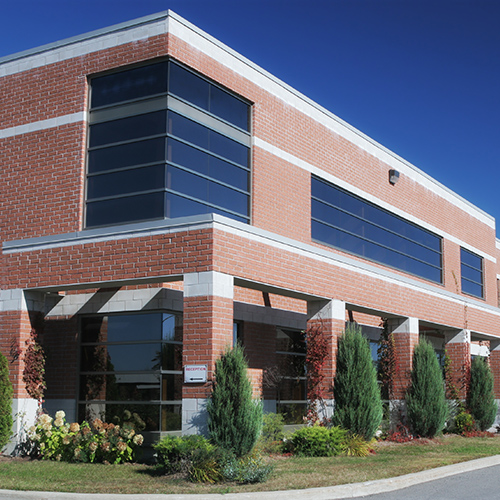
exterior of a two story office building

PRONTO@work FAQs

For Candidates Taking an Exam on the Meazure Exam Platform

Before you test, you will be prompted to download a one-time minor software installation. You have the option to delete the software after your exam or keep it on your browser if you are planning to take another PRONTO exam in the future.

We Can Help

Need Assistance or have questions about becoming a PRONTO@work site?
Contact our Client Relationship Manager stidwell@iccsafe.org

What a PRONTO@work site has to share

emtpy desk with a computer monitor on it with the pronto @ work logo on the screen

Are You Interested in Becoming a PRONTO@work site?

Are you already a PRONTO@work site?

Tell us about it by filling out the form. Established sites will be added to our proud list of PRONTO@work testing sites listed below.

Thank you to our current PRONTO@work testing areas

  • ABG Roofing
  • Anderson Fire Safety
  • Apprenticeship Skill and Improvement Program (Operating Engineers Local 150)
  • AREI LLC
  • Caln Township Department of Building and Life Safety
  • CertaSite, LLC
  • City of Asheville
  • City of Auburndale Florida
  • City of Aurora Illinois
  • City of Cullman
  • City of Denison Iowa
  • City of Elkhart
  • City of El Paso Texas
  • City of Hagerstown
  • City of Katy
  • City of Kent
  • City of Lake Wales Florida
  • City of Lancaster, PA
  • City of Lovelock
  • City of Marble Falls TX (Development Services Dept.)
  • City of Morgantown
  • City of New Smyrna Beach Florida
  • City of North Las Vegas
  • City of Oak Ridge, TN
  • City of Philadelphia (Dept. of Licenses and Inspections)
  • City of Phoenix, Arizona
  • City of Phoenix Fire Department
  • City of Port St. Lucie, Florida
  • City of Roanoke
  • City of Sheridan
  • City of Safford
  • City of Strongsville, OH
  • City of Tomball
  • City of Tracy
  • City of Vacaville
  • Complete Fueling Solutions
  • Contour Engineering, LLC
  • County of El Dorado Building Department
  • Crawford Roofing, LLC
  • DILP, Howard County MD 21046
  • Eagle County Colorado
  • East Norriton Township
  • GFAC Engineering
  • Howard County Inspections DILP‑2
  • Joplin JATC
  • Kaza
  • Larry M Jacobs & Associates, Inc.
  • Liberty Fire Solutions, LLC
  • Louisville Metro Codes and Regulations
  • Materials Testing & Consulting, Inc.
  • MHA Nation Construction Management
  • MNSPECT, LLC
  • Montgomery County Department of Permitting Services
  • Municipality of Norristown
  • New Castle County Government
  • Pickaway County Building Department
  • Pletchers Plumbing and Mechanical Services
  • Renova Concept
  • Seattle Fire Department
  • S & ME, Inc.
  • Standard Mechanical, Inc.
  • Terracon
  • Tierra, Inc.
  • Townzen & Associates, Inc
  • Town of Clarkdale, AZ
  • Town of Summerville
  • T&T Construction Enterprises LLC
  • Universal Engineering and Science
  • Village of Bourbonnais
  • Village of Elk Grove Village
  • Village of Lisle, IL

Questions? Contact Us

ICC Credentialing
Email: customersuccess@iccsafe.org
Phone: 1-888-ICC-SAFE (422-7233) ext. 0

Certification Policies

ICC understands the importance of impartiality in carrying out our certification activities, managing conflict of interest, and ensuring the objectivity of our certification activities.

To learn more about our certification and education policies, please read the following:
Council Policy 45, CC Rules of Procedure, Records Release, and ICC Credentialing Compliance Principles.

Contractor Training – Apprenticeship

Plumbing Apprenticeship

Introducing a US Department of Labor Plumbing Registered Apprenticeship Program via a unique combination of self-paced, online, and hands-on components.

  • ✔ Important Work.
  • ✔ Huge Demand.
  • ✔ No College Debt.
  • ✔ Fast-Track Licensing.
  • ✔ National Credentials.
  • ✔ Unlimited Potential.

THIS…is plumbing registered apprenticeship!

Important Work
Don’t let any stereotypes fool you, plumbing is important! Think about your life without clean drinking water, effective waste disposal, or medical gases available in the hospital. You would be living in a third-world, poverty-stricken country, all because a single profession is missing—Plumbing! Yes, plumbing is a profession, with national standards, state licensing, and continually evolving technologies.

Huge Demand
According to the Department of Labor, there are more than 6 million jobs available in the US. With high growth in the Texas economy, the shortage is profound, especially in the construction trades responsible for building our state and country. Social media, job listings, and discussions with business owners all confirm a single fact—Texas needs licensed plumbers and is willing to pay for them, now!

No College Debt
The number of young people attending 4 years of college, stacking up tens of thousands in debt (or more), then finding no job available to them is reaching epidemic proportions! With a plumbing apprenticeship, you earn while you learn. There is a cost, as there is with anything worth having, but our programs are structured to keep the cost as affordable as possible.

Fast-Track Licensing
As a regulated profession, it normally takes a minimum of 4 years after high-school to become a Journeyman Plumber, then another 4 years to become a Master Plumber in Texas. However, participants in our Department of Labor Plumbing Registered Apprenticeship Program can shorten that cycle in several ways:

  • Reduce the apprenticeship program based on prior experience or training (before enrolled)
  • Receive exemption from the usual 48 hours of required courses (while enrolled)
  • Reduce the required experience for licensing by 1,000 hours (upon completion)
  • Reduce the period from Journeyman to Master by 3 years (upon completion)

National Credentials
Our program is approved by the US Department of Labor and completion earns a certificate issued by the Office of Apprenticeship–the gold standard in construction industry education. Our curriculum is published by the National Center for Construction Education & Research (NCCER).

Unlimited Potential
The US Department of Labor reports that 9 out of 10 Americans completing an apprenticeship program find a job immediately and the average starting salary is $60,000. Compare that to the odds facing America’s 13 million college students. If you want to aim even higher, a Master plumber in Texas can take an additional 3-day course and be ready to open their own company anywhere in the state.

How long does it take?
The Plumbing Registered Apprenticeship Program takes up to 4 years, with 144 hours of training each year and at least 6,375 hours of employment (on-the-job-learning). However, credit may be given for previous plumbing experience and/or plumbing training, reducing these requirements by up to 50%.

How much will I make?
The Department of Labor requires a plumbing apprentice to make at least 55% of what a journeyman plumber earns in your specific market, increasing to 85% by the end of the program. Local employers can pay more and usually do because of the high demand for plumbers. Your value can rise quickly with the added advantage of this formal plumbing education.

What is the program like?
Our program utilizes a unique hybrid model that includes self-study reading, online videos, hands on practice, and supervised experience to engage every possible learning style while incorporate flexibility and pursuing the end goal of competency in every topic (see program outline). The program components include:

  • Reading each module at your own pace, on your own schedule, wherever you are
  • Watching online video instruction to emphasize key concepts, answer questions, and apply the material to everyday practice
  • Completing brief online quizzes covering the material of each module (retaken if necessary to ensure understanding)
  • Having a licensed plumber sign off on hands-on tasks related to each module to demonstrate competency
  • Continuing employer supervised experience throughout the program, documented quarterly
  • Accessing WCE instructors if you experience any challenges with a topic (via email, calls, or live if necessary)

How much does it cost?
The cost of our program is $900 per year (across 4 years). Participants who have at least two years of broad experience may apply to begin in Year 3 (Level 3), in which case the cost is $1,000 annually over 2 years (we still provide the written materials from all 4 years/levels).

What if I already work in plumbing?
That’s great! If your employer agrees, we can evaluate your experience and grant credit for up to 50% of the program. In that case, you would begin in Level 3 (Year 3) rather than revisit material you already know and you are on the super fast-track to certification. However, because the program assumes participants have direct supervision at all times, it is not available for someone who already has a Journeyman plumbing license.

What if I don’t already work in plumbing?
Not to worry. That’s basically the point of an apprenticeship program. We will help match you with an employer in your area who wants to (or already does) participate in the program. In fact, you must become employed full-time in the plumbing industry to fully participate in the apprenticeship process. You may begin the training portion of the program without being employed, but the full benefit and credit doesn’t materialize until you are employed in the industry.

What if I am still in high-school?
Full apprenticeship registration requires you to be at least 16. However, younger high-school students can begin this journey as a pre-apprentice in two ways, both of which would allow us to grant advanced placement in the program upon graduation:

  1. Put us in contact with your high-school if they might be willing to host a program.
  2. Begin the training portion as a pre-apprentice without the employment requirement.

What if I don’t live in Texas?
Anyone can participate in our programs, but they must confirm reciprocity with our Texas program. We will soon be launching this model in other states, but that will likely come later in 2020.

Is the program recognized by Texas?
Our program is approved by the US Department of Labor, which is then automatically recognized by the State of Texas. This can be seen in the following Texas State Board of Plumbing Examiner’s rules:

  • For exemption from the usual training requirements while enrolled in the program, see TSBPE Rule 363.5(e)(2) for the Journeyman Exam, 363.6(d)(2) for the Tradesman Exam.
  • For reduction in the required hours of experience resulting from completion of the program, see Rule 363.4(a)(2)(B) for the Master exam, 363.5(c)(1) for the Journeyman exam, 363.6(b)(1) for the Tradesman exam.

The references above specifically include any plumbing program approved by the US Department of Labor. Our approval from the US Department of Labor is also on file with Executive Director of the TSBPE.

How do I get started?
Simply register at the bottom left of this page to access the application packet. No payment is due and this does NOT commit you to the program, it simply registers your interest and allows you to review the full program details. If you aren’t concerned about Department of Labor Registration and simply want to learn, you may register for any level of the program immediately. If you have general questions, email Apprenticeship@iccsafe.org.

Employers interested in hiring registered apprentices or enrolling their current employees are critical to this partnership and we welcome your participation.

Here are the major details you should know about the Plumbing Registered Apprenticeship Program:

  • 4-year program which may be shortened up to 50% based on previous experience
  • 144 hours of training each year as described above
  • Utilizing NCCER Plumbing curriculum, Levels 1-4
  • Available to current staff as well as a source for new, motivated prospects
  • Participants must work full-time in plumbing throughout (approx 2,000 hours yearly)
  • Employers decide how much (if any) of the cost they share with apprentices
  • A student (at least 16) may register for the classroom portions as a pre-apprentice

While we know you recognize the value of systematic training, we also recognize you have a business to run, so we have several options available for you and your participating staff:

  • Hybrid: This modern option mixes printed NCCER curriculum, online self-paced instruction with knowledge assessment by ICC instructors, and hands-on competency assessment by your licensed professionals on-the-job or in shop settings. This option is $900 per year for each participant, $1,000 if they have significant experience and begin at Year/Level 3 since we will still deliver the first two years of the curriculum to them as well.
  • Internal: This option certifies instructors within your organization to use the same NCCER curriculum on the schedule most convenient for you and your participants, allowing emphasis on the most relevant topics of concern to your focus and competitive needs. This option is $600 per year for each participant, $700 if they have significant experience and begin at Year/Level 3 since we will still deliver the first two years of the curriculum to them as well.
  • Private: This most traditional option allows participants to attend sessions across each year of the program on a schedule we mutually determine beforehand, reading the material between each session and engaging with ICC licensed/certified instructors during each gathering. This could be just for your company or a consortium of companies, with pricing dependent upon the total number of participants (10 minimum).

To explore which option would best serve your needs, please contact us via email Apprenticeship@iccsafe.org.

Our program, including the pre-apprentice aspects, represent a tremendous opportunity for high-school, community & junior colleges to usher more students toward jobs in high demand right now. Through our meetings with the Texas Workforce Commission, we have ensured our Plumbing Registered Apprenticeship Program aligns with the Texas 60X30 education goal: 60 percent of young Texans having a degree or certificate by the year 2030.

Texas High Schools: The Texas Education Agency (TEA) requires Texas high school students enrolled in various Career & Technical Education (CTE) programs to receive industry-based certifications as a significant component of the state’s school accountability program. Click here for details of our NCCER Sponsorship Services.

Community & Junior Colleges: We want to partner with you in preparing young Texans to make a living wage in the construction trades. Please contact us via email (Apprenticeship@iccsafe.org) so we can schedule a call or meeting to discuss the possibilities.

  • Introduction to the Plumbing Profession
  • Plumbing & General Construction Safety
  • Tools of the Plumbing Trade
  • Introduction to Plumbing Math
  • Introduction to Plumbing Drawings
  • Plastic Pipe & Fittings
  • Copper Tube & Fittings
  • Cast-Iron Pipe & Fittings
  • Carbon Steel Pipe & Fittings
  • Introduction to Plumbing Fixtures
  • Introduction to Drain, Waste & Vent (DWV) Systems
  • Introduction to Water Distribution Systems
  • Plumbing Math Two
  • Reading Commercial Drawings
  • Structural Penetrations, Insulation, and Fire Stopping
  • Installing and Testing DWV Piping
  • Installing Roof, Floor, and Area Drains
  • Installing and Testing Water Supply Piping
  • Type of Valves
  • Installing Fixtures and Valves
  • Installing Water Heaters
  • Basic Electricity
  • Fuel Gas and Fuel Oil Systems
  • Applied Math
  • Sizing Water Supply Piping
  • Potable Water Treatment
  • Types of Venting
  • Sizing DWV and Storm Systems
  • Sewage Pumps and Sump Pumps
  • Corrosive-Resistant Waste Piping
  • Compressed Air
  • Service Plumbing
  • Business Principles for Plumbers
  • Introductory Skills for the Crew Leader
  • Water Pressure Booster and Recirculation
  • Indirect and Special Waste
  • Hydronic and Solar Heating Systems
  • Plumbing and Related Codes
  • Private Water Supply Well Systems
  • Private Waste Disposal Systems
  • Swimming Pools and Hot Tubs
  • Plumbing for Mobile Homes and Travel Trailers
  • Introduction to Medical Gas & Vacuum Systems

EQUAL OPPORTUNITY PLEDGE: ICC will not discriminate against apprenticeship applicants or apprentices based on race, color, religion, national origin, sex (including pregnancy and gender identity), sexual orientation, genetic information, or because they are an individual with a disability or a person 40 years old or older. ICC will take affirmative action to provide equal opportunity in apprenticeship and will operate the apprenticeship program as required under Title 29 of the Code of Federal Regulations, part 30.

If an applicant or an apprentice believes an issue exists that adversely affects the apprentice’s participation in the apprenticeship program or violates the provisions of the apprenticeship agreement or standards, the applicant or apprentice may seek relief. Nothing in these complaint procedures precludes an apprentice from pursuing any other remedy authorized under another Federal, State, or local law. Below are the methods by which apprentices may send a complaint:

Complaints regarding discrimination. Complaints must contain the complainant’s name, address, telephone number, and signature, the identity of the respondent, and a short description of the actions believed to be discriminatory, including the time and place. Generally, a complaint must be filed within 300 days of the alleged discrimination. Complaints of discrimination should be directed to the following contact:

Alex Kerr
Manager, Next Generation Training
International Code Council, Inc.
750 E US Highway 80, STE 200-671, Forney, TX 75126
(855) 899-4667
Apprenticeship@iccsafe.org

Other General Complaints. The sponsor will hear and attempt to resolve the matter locally if written notification from the apprentice is received within 15 days of the alleged violation(s). The sponsor will make such rulings as it deems necessary in each individual case within 30 days of receiving the written notification. Any complaint described in that cannot be resolved by the program sponsor to the satisfaction of all parties may be submitted to the Registration Agency. Complaints may be filed with the Registration Agency at:

Texas State Director, Dallas Field Office of Apprenticeship
525 S. Griffin Street, Suite # 406, Dallas, TX 75202
972-850-4693

NCCER logo

US Department of Labor, Office of Apprenticeship, Program 2017-TX-369, Registered 07/25/2017

Contact Us

We’re here to help you with any questions you have about Contractor Training at the Code Council.
Email contractortraining@iccsafe.org or call 855-899-4667.