New Mexico has adopted the 2021 International Energy Conservation Code, taking a significant step toward ensuring the safety, efficiency and resiliency of its communities.

New Mexico has adopted the 2021 International Energy Conservation Code, taking a significant step toward ensuring the safety, efficiency and resiliency of its communities.
Albuquerque, New Mexico – The New Mexico Construction Industries Commission adopted the International Code Council’s 2021 International Energy Conservation Code® (IECC®), which addresses energy efficiency and the energy usage of buildings. With this adoption, New Mexico joins communities across nearly 20 states covering more than a third of the U.S. population in providing its residents with state-of-the-art building design and performance.
The adoption of the IECC will bring numerous benefits to New Mexico’s residents. According to U.S. Department of Energy estimates, residents will save 12 percent on their utility bills, which equates to $266 in energy savings annually. Adoption of the 2021 IECC will also reduce the statewide greenhouse gas emissions by over 20,000 metric tons in the first year and by 11 million metric tons over 30 years. For perspective, the 30-year emissions reduction is equivalent to 2.4 million passenger vehicles or 1.4 million homes. Not only will it result in significant energy, emissions and cost savings for heating, cooling and lighting, but it will also enhance construction quality.
“By adopting the 2021 IECC, New Mexico is helping ensure the health and welfare of its communities through improved air quality and lower utility bills,” said Code Council Chief Executive Officer Dominic Sims, CBO. “We commend the New Mexico Construction Industries Commission for prioritizing and leveraging building codes to improve energy efficiency within the construction industry.”
“This update will ensure that the standards and codes for the process of energy efficiency in our state are understandable,” said New Mexico Regulation & Licensing Department General Construction Bureau Chief Martin Romero, CBO. “This mandate will allow our state to be in accordance with current codes, and that the latest energy efficiency provisions are included taking into account the unique qualities of our state. These codes provide clarification in recognition of practical issues arising in the industry while ensuring more efficient energy savings.”
Additional information on energy efficiency and carbon reduction can be found here. More information on the 2021 IECC can be found here. Learn more about code adoptions here.
###
About the International Code Council
The International Code Council is the leading global source of model codes and standards and building safety solutions. Code Council codes, standards and solutions are used to ensure safe, affordable and sustainable communities and buildings worldwide.
Washington, D.C. – The International Code Council and American Society of Heating, Refrigerating and Air Conditioning Engineers (ASHRAE) have announced the release of the full publication public review draft for the proposed ASHRAE/ICC Standard 240P – Quantification of Life Cycle Greenhouse Gas Emissions of Buildings. The proposed standard aims to assess and document greenhouse gas (GHG) emissions across a building’s life cycle.
The public comment period is open from February 2, 2024, to March 18, 2024, and comments are sought from all interested parties. The committee is seeking comments on the full publication public review draft following the advisory public review period in May 2023. To review the publication public review draft of Standard 240P and provide comments, visit here.
Standard 240P provides a methodology to quantify the embodied and operational GHG emissions associated with buildings and their sites. The standard also provides minimum requirements for documentation of life-cycle GHG emissions.
The proposed standard is not intended to set benchmarks or establish levels of building performance and is not intended for use to circumvent any safety, health or environmental requirements. Instead, its purpose is to assist building industry stakeholders, governments, and the finance and investment industry in implementing a common platform for measuring, reporting and acting upon the GHG emissions of buildings.
“The Code Council is pleased to collaborate with ASHRAE in the development of Standard 240P and acknowledges the exceptional work of the standards committee in providing its time and expertise to this process. We look forward to receiving feedback from stakeholders,” said Code Council CEO, Dominic Sims, CBO. “This standard will be a valuable tool for communities across the globe for achieving their decarbonization goals.”
###
About the International Code Council
The International Code Council is the leading global source of model codes and standards and building safety solutions. Code Council codes, standards and solutions are used to ensure safe, affordable and sustainable communities and buildings worldwide.
About ASHRAE
Founded in 1894, ASHRAE is a global professional society committed to serving humanity by advancing the arts and sciences of heating ventilation, air conditioning, refrigeration and their allied fields.
 |
A New Blueprint To Chapter Engagement | Published 01/25/24 | 4590 KB |
 |
Building Futures Opening Doors For The Next | Published 01/25/24 | 5696 KB |
|
|
Building Talent Foundation | Published 01/25/24 | 2240 KB |
|
|
Chapter Benefits Overview | Published 01/25/24 | 3570 KB |
|
|
Chapter Leadership Program 2023. Coalition Building | Published 01/25/24 | 2430 KB |
|
|
CLA Break Slides 2023 No 1 | Published 01/25/24 | 5474 KB |
|
|
CLA Opening Closing Slides 2023 | Published 01/25/24 | 1363 KB |
|
|
Region V Recruiting New Members | Published 01/25/24 | 1718 KB |
Washington, D.C. – This year marks the International Code Council’s 30th anniversary as an international nonprofit dedicated to building safety, affordability and sustainability. With over 100 years of impact through its legacy organizations, the Code Council has driven the development and implementation of the International Codes® (I-Codes) in all 50 U.S. states and many other countries.
Formed on December 9, 1994, by its three legacy organizations and officially consolidated in 2003, the Code Council was created to develop a single set of comprehensive and coordinated model codes. To date, the I-Codes are the most widely used and accepted model codes available to support the built environment, impacting the safety of nearly 2 billion people globally. The I-Codes reference more than 1,600 standards developed by the Code Council and other standards developing organizations.
Since its formation, the Code Council has grown to offer a wide range of solutions to the building safety community. Currently, the Code Council has eleven offices in three different countries and is active in more than 100.
“Over the past 30 years, we have helped communities on a global scale create a safer built environment,” said Code Council Chief Executive Officer Dominic Sims, CBO. “We remain committed to serving our members and customers — hundreds of thousands of dedicated building safety professionals who uphold public safety in communities across the world day after day — and we owe a debt of gratitude to them for the building codes and standards we have today.”
To kick off the year-long celebration, the Code Council has launched a 30th anniversary website for members and stakeholders to reflect on the past three decades. Featuring an interactive timeline, photo gallery, documentary and digital guestbook, the site spotlights important milestones from the past three decades.
Those interested can get involved in the celebration by sharing what the Code Council and its mission mean to them in the digital guestbook.
Learn about the most recent 30th anniversary celebratory efforts here.
###
About the International Code Council
The International Code Council is the leading global source of model codes and standards and building safety solutions. Code Council codes, standards and solutions are used to ensure safe, affordable and sustainable communities and buildings worldwide.
The International Energy Conservation Code® (IECC) Notice of Appeals Hearings is now available. Download it here.
The Appeals Board has decided to consider the appeals in four groups as noted below.
The Appeals Board hearings will be conducted virtually and are scheduled for February 21, 22, and 23, 2024.
Interested parties, or their representatives, are hereby invited to respond to the appeal(s) by submitting their comments in writing for consideration by the ICC Appeals Board and/or participating in and presenting information at the Appeals Board hearings pursuant to Council Policy 1. Written comments and a notice of attendance must be submitted by all interested participants, including appellants, by filling out the online form “Appeals Viewpoint and Notice of Attendance.”
The deadline for submissions is 11:59 pm Pacific Time (PT) on February 5, 2024.
Interested parties not wishing to present can view the Appeals Board hearings live online without registering for the event. The links to watch the Appeals Board hearings live will be posted on the 2024 IECC Appeals web page.
For more information, visit www.iccsafe.org/2024-iecc-appeals.
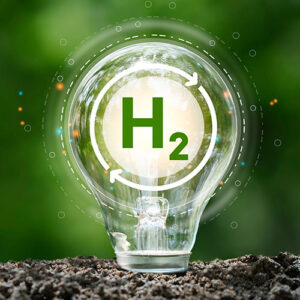
On October 13th, 2023, the U.S. Department of Energy (DOE) announced the allocation of $7 billion dollars to develop seven Regional Clean Hydrogen Hubs (H2 Hubs) strategically located across the U.S. as part of the Bipartisan Infrastructure Law.
The H2Hubs will accelerate the commercial-scale deployment of low-cost hydrogen to meet the nation’s climate and energy security goals.
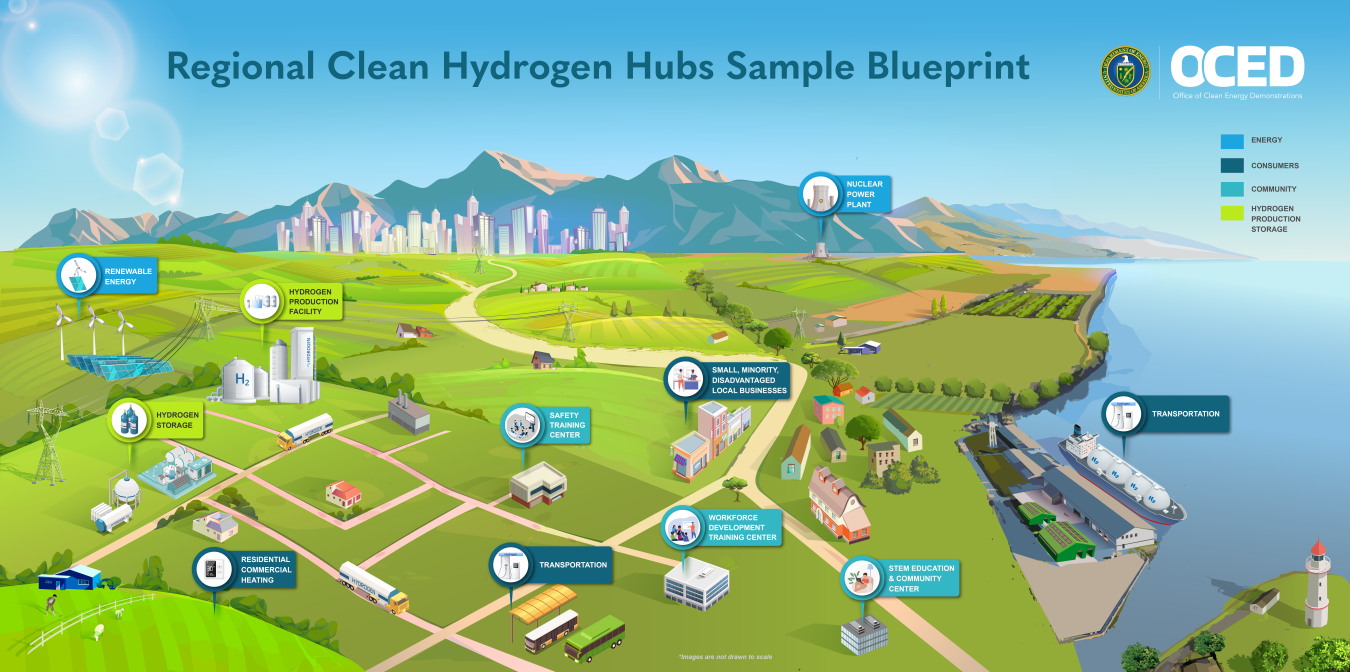
The H2Hubs are anticipated to generate a combined output of three million metric tons of hydrogen each year, contributing to almost one-third of the 2030 U.S. production goal while reducing emissions from hard-to-decarbonize industrial sectors.
Additionally, the H2Hubs are projected to decrease carbon dioxide emissions by 25 million metric tons annually, as well as generate and maintain tens of thousands of jobs nationwide while promoting healthier communities.
Model codes and standards must be updated to address safety gaps when hydrogen is blended into the natural gas supply. The Code Council is currently in the process of developing the 2027 International Codes® (I-Codes), which includes code proposals developed by the PMG and Fire Code Action Committees that address the blending of gaseous hydrogen with natural gas in the built environment.
Gaseous hydrogen fuel at least 95 percent by volume and no more than 1 percent oxygen, has had code requirements included in the International Fuel Gas Code® (IFGC®) and many other publications for years. The working group’s scope was to expand the minimum safety provisions to address natural gas including gaseous hydrogen admixtures.
The PMGCAC Hydrogen Working Group was composed of representatives from academia, national and international associations, national testing laboratories, manufacturers of appliances/equipment/piping systems, contractors, engineers, natural gas energy suppliers, standard development organizations, building and fire officials and other stakeholders.
This group assessed existing I-Code requirements related to hydrogen use, considering current industry practices and safety needs in the built environment.
Through collaborative efforts, rigorous code proposal development and proactive regional outreach, the Code Council is ensuring codes address the global paradigm shift towards a safer, more sustainable and efficient hydrogen-fueled future.
The Code Council actively engages in opportunities to support hydrogen codes and standards development. Some of these activities include:
Fuel Cell and Hydrogen Energy Association (FCHEA) National Hydrogen and Fuel Cell Codes and Standards Coordinating Committee – Member
Read details▼
Development of Canada’s National Hydrogen Deployment Codes and Standards Roadmap through Standards Council of Canada and National Resources Canada – Committee Task Group Member
As an active member of the Center for Hydrogen Safety (CHS), the Code Council is involved in developing tools and best practices to address several education gaps related to hydrogen production, storage, transportation and end-use. This involvement extends to both national and international levels. Specifically, the Code Council focuses on developing permitting and inspection guidance for H2 projects, along with training programs covering hydrogen manufacturing, transportation, storage and usage, among other aspects of guidance development.
CHS Culture Working Group – Participant
NFPA 2 Hydrogen Technologies Code Technical Committee – Member
ASTM D03 Gaseous Fuels Main Committee – Member
ASTM D03.14 Subcommittee for Hydrogen and Fuel Cells assisting in the development of gaseous hydrogen related standards – Committee Member
Read details▼
Served as panelist at ASTM Natural Gas Hydrogen Blends Workshop Dec. 5-6, 2023, performing presentations on codes and standards associated with the use of hydrogen
ASTM D7606-17 Standard Practice for Sampling of High-Pressure Hydrogen and Related Fuel Cell Feed Gases – Committee Member
Code Council PMGCAC H2 – Working Group Liaisons
Center for Hydrogen Safety (CHS) Hydrogen Hubs Working Group
Read details▼
Worldwide, there's a noteworthy surge in activities and substantial funding allocated toward advancing hydrogen hubs.
As these initiatives proceed, there will naturally arise inquiries about safety protocols and optimal practices. In the realm of hydrogen safety, the preeminent global authority is the Center for Hydrogen Safety (CHS). To meet the needs of these developing hubs CHS is establishing a Hydrogen Hubs Working Group that will be open to any CHS member that is a part of a global hub.
The Hydrogen Hubs Working Group will provide a forum for hub participants to:
Technical committee member for the following appliance and equipment standards developing requirements for blended H2 and natural gas
Read details▼
For more information, contact Mark Fasel Director of PMG Technical Resources at mfasel@iccsafe.org.
Washington, D.C. – On December 21, 2023, the International Code Council and Women in Plumbing & Piping (WiPP) signed an MOU to collaboratively promote opportunities for women to pursue successful careers in the plumbing industry. This partnership advances the Code Council’s Safety 2.0 mission to welcome and engage a new generation of members and leaders in building safety and illustrates the Code Council’s commitment to increasing inclusivity within the plumbing and piping industries.
WiPP is a nonprofit membership organization that focuses on the inclusion and support of women in the plumbing and piping industries. Founded in 2022, WiPP’s mission is to provide a community of connection and empowerment for women in those trades to thrive personally and professionally.
The Code Council will work with WiPP to help bring the plumbing and piping industries to a new level of excellence by advancing gender inclusivity in the trades. As a founding sponsor, the Code Council will provide resources, support, training and educational opportunities to better serve WiPP’s and the Code Council’s members and stakeholders.
“This collaboration reflects a shared commitment to advancing standards and inclusivity within the plumbing and piping industries,” said Kim Gill, Executive Director, Women in Plumbing & Piping. “By joining forces with the Code Council, WiPP is poised to make an even greater impact, ensuring that women continue to play an essential role in shaping the future of these vital trades.”
“This relationship is the latest in a series of actions we’ve taken to continue our long-time support of the plumbing industry,” said Code Council Plumbing, Mechanical and Fuel Gas Executive Director, Matt Sigler. “We are thrilled to begin this relationship with WiPP and help support their mission of advancing gender inclusivity in the plumbing field.”
More information on Women in Plumbing & Piping can be found here.
Learn more about the Code Council’s plumbing, mechanical, fuel gas, swimming pool & spa, and private sewage disposal codes here.
###
About the International Code Council
The International Code Council is the leading global source of model codes and standards and building safety solutions. Code Council codes, standards and solutions are used to ensure safe, affordable and sustainable communities and buildings worldwide.
About Women in Plumbing and Piping
Women in Plumbing and Piping, founded in 2022, is driven by visionary women committed to creating a thriving community for women in the plumbing and piping industries. WiPP members are advancing the industry to new levels of excellence by supporting and promoting the contributions of women as an essential component in shaping the future of these trades.